Bill Kristol Condemns GOP for 'Rationalizing' Trump's Nominees After Blanche Confirmation
Key Takeaways
- •Todd Blanche was confirmed as U.S. attorney general in a 50-49 Senate vote after Sen. Bill Cassidy switched to support him despite reservations.
- •Kristol argued that Republicans routinely rationalize support for Trump-related nominees instead of challenging them.
- •He cited Blanche’s prior role as Trump’s personal defense attorney as part of the concern over the nomination.
- •Kristol also pointed to House Republicans’ decision not to intervene in the case of Ohio Rep. Max Miller.
- •Texas Sen. John Cornyn was the deciding vote to advance Blanche out of committee, and he said nothing could assuage Jeffrey Epstein survivors’ concerns.
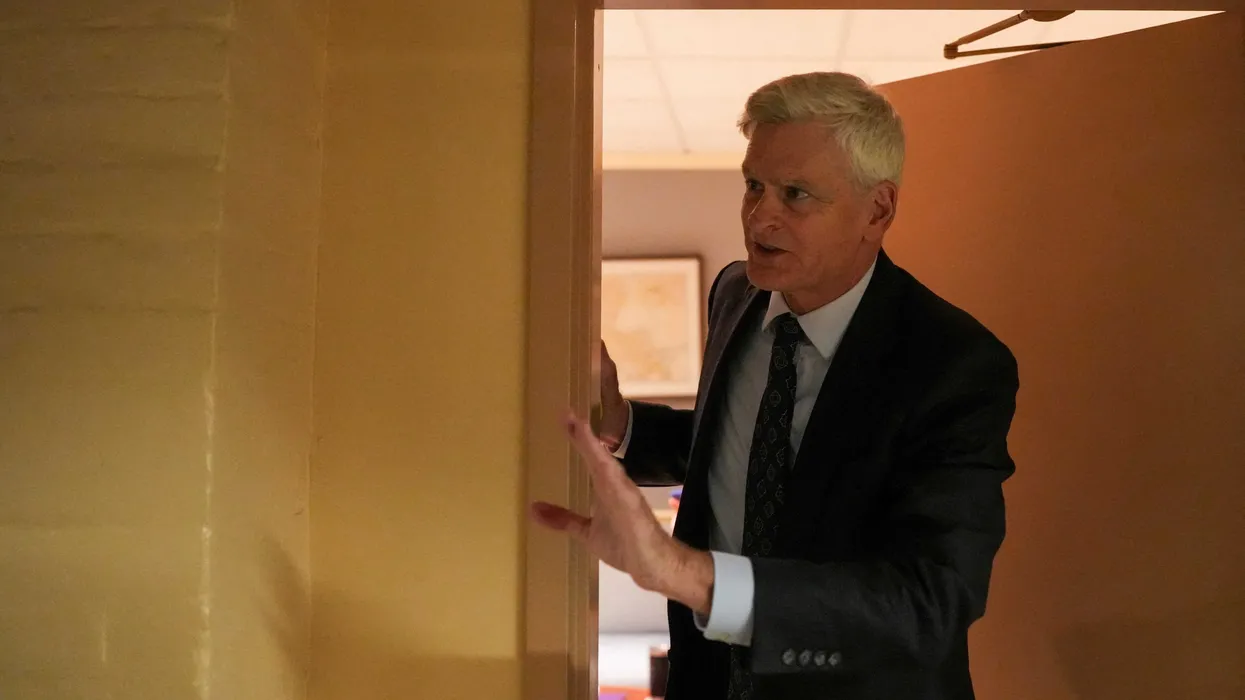
Conservative commentator Bill Kristol has sharply criticized the Republican Party for what he describes as a recurring pattern of rationalizing support for President Donald Trump's policies and nominees, following the narrow confirmation of Todd Blanche as U.S. attorney general.
Blanche was confirmed in a 50-49 Senate vote after Sen. Bill Cassidy (R-Louisiana) ultimately voted in favor despite expressing reservations. Cassidy provided a detailed list of justifications for his decision, a move Kristol views as emblematic of a broader Republican tendency. The razor-thin margin underscored the leverage even a single Republican senator holds in a narrowly divided chamber.
Writing for The Bulwark, Kristol — a prominent Never Trump conservative who served as chief of staff to Vice President Dan Quayle and edited The Weekly Standard for two decades — argues that Republicans consistently rationalize their compliance with Trump regardless of how egregious his actions or appointments may be.
Kristol frames his critique by invoking George Orwell: "The Party told you to reject the evidence of your eyes and ears. It was their final, most essential command."
However, Kristol draws a distinction between Orwell's fictional dystopia and the current political landscape. "But we're not yet living in Orwell's totalitarian society," he writes. "So the members of our ruling party don't quite reject the evidence of our eyes and ears. They simply avert their eyes and ears from the evidence around them. They minimize its importance and rationalize its significance. And above all, they do nothing about it."
Blanche's confirmation, Kristol contends, is merely one instance of this pattern. Blanche previously served as Trump's personal defense attorney in the Manhattan hush-money criminal case, and his elevation to a top Justice Department role places a former personal lawyer for the president inside the same department that historically prosecuted that case. He points to the case of Ohio Rep. Max Miller as another illustration.
"Ohio Rep. Max Miller's Republican colleagues are well aware of his behavior," Kristol writes. "They know of what Sen. Bernie Moreno, his ex-father-in-law, calls 'the clear pattern of abuse (Miller) has left in his wake.' They understand why Moreno said that Miller 'should not serve in the House of Representatives.'"
Kristol notes that House Republicans had multiple options for responding to Miller's situation. "They could easily have spoken up last week and told Miller to leave. They could have said they wouldn't endorse his reelection. They could have announced they wouldn't help fund his race," he observes. Instead, Miller remained in the House and on the ballot, backed by President Trump and Speaker Mike Johnson, while House Republicans declined to act.
Meanwhile, 50 of 52 Senate Republicans voted early Saturday morning to confirm Blanche as attorney general, as PBS NewsHour reported.
"This probably shouldn't have been a surprise," Kristol continues. "The GOP-controlled Senate had previously voted to confirm Pam Bondi for that job, along with rubber-stamping other flawed humans like Kristi Noem, Tulsi Gabbard, Kash Patel, and Pete Hegseth for various positions."
Kristol also highlights the role of Texas Sen. John Cornyn, the deciding vote in moving Blanche's nomination out of committee. When asked to respond to Jeffrey Epstein survivors who warned that a yes vote on Blanche would have a chilling effect on survivors of sexual assault coming forward, Cornyn replied: "I don't believe there is anything we could do to assuage them at this point."
Kristol laments what he sees as a prevailing attitude among Republicans: "What's the point, if you're a Republican House member, of speaking up against Max Miller?"
He closes by connecting Orwell to another historical thinker, John Stuart Mill. "Mill was concerned about the fate of personal liberty and public spirit in modern democracy," Kristol notes, referencing Mill's 1867 inaugural address at the University of St. Andrews. In that address, Mill remarked: "Bad men need nothing more to compass their ends, than that good men should look on and do nothing."
Kristol poses a pointed concluding question: "If they do nothing but look on as bad men compass their ends, are they still good men?"

