KPMG, Orange Group Launch Nigeria Smartphone Study as OPay, WhatsApp Lead App Rankings
Key Takeaways
- •Smartphone penetration in Nigeria rose to 75% in 2025, up from 64% in 2023, according to surveys of 13,251 respondents across 12 major cities.
- •OPay is the most widely used fintech app, present on 69% of smartphones, ahead of PalmPay at 29% and Moniepoint at 14%, and outstripping individual banking apps such as Access Bank at 16%.
- •WhatsApp leads communication platforms with 95% usage, followed by Facebook at 87% and TikTok at 70%.
- •Smartphone adoption is spreading beyond affluent consumers, with lower-income class D users increasingly acquiring devices as financing options improve affordability.
- •ChatGPT is the most popular AI application, appearing on 13% of smartphones compared with 7% for Google Assistant, marking AI as an emerging app category.
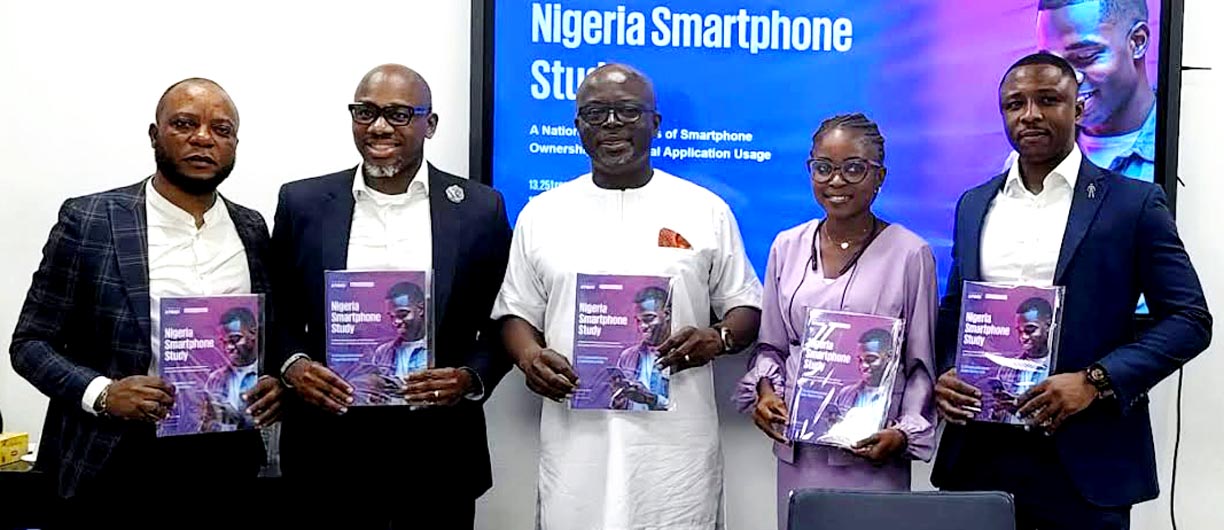
KPMG West Africa, in partnership with Orange Group, has unveiled the 2025 edition of the Nigeria Smartphone Study, a comprehensive report offering insights into smartphone ownership and the diverse applications Nigerians rely on across finance, communication, commerce, and entertainment.
The findings were presented at a launch event held in Lagos on Friday, drawing on responses gathered from 13,251 respondents across 12 major Nigerian cities. The study delves into how Nigerians engage with their mobile devices, examining the types of smartphones they own and the apps they use most frequently in their digital lives. For device makers, mobile operators, and app publishers competing in Africa's most populous country, the report offers a quantitative read on where consumer attention actually on the Nigerian mobile screen.
Smartphone Penetration Climbs to 75%
One of the key discoveries from this year's report is the significant rise in smartphone ownership. Penetration increased to 75% in 2025, a noticeable jump from 64% in 2023 — growth that underscores the increasing reliance on smartphones in daily life. It also leaves roughly a quarter of respondents outside the smartphone cohort, a segment the researchers deliberately captured by including feature phone users in the survey.
When it comes to device brands, Android dominates the market, accounting for 88% of handsets in use among respondents. Tecno leads the pack as the most popular smartphone brand, holding a 30% market share.
OPay Leads Fintech App Rankings
In the fast-growing fintech sector, OPay stands out with the highest presence on Nigerian smartphones, being utilised by 69% of users. PalmPay follows, used by 29% of respondents, while Moniepoint captures 14% of the market. Among banking applications, Access Bank is used on 16% of smartphones, while UBA and GTBank each claim 11%. The contrast between the leading fintech apps and individual banking apps quantifies the contest between mobile-first platforms and incumbent banks for space on the Nigerian home screen.
The findings highlight the increasing role mobile applications now play in everyday financial activity. The high usage of fintech apps points to a broader trend: more people are relying on their smartphones for essential tasks such as making transfers, paying bills, buying airtime, and managing their accounts. Adegboyega Ajayi, Head of Business Intelligence at Orange Group, emphasised how OPay, PalmPay, and Moniepoint have successfully catered to consumers' needs, essentially meeting them where they are.
Messaging, E-Commerce, and Entertainment Rankings
Messaging and social platforms are also a focal point of the study. WhatsApp remains the top choice for communication, with 95% of smartphone users on the platform. Facebook follows at 87%, while TikTok appeals to 70% of respondents, reflecting the diverse ways Nigerians connect and engage online. Among dedicated messaging applications, Facebook Messenger trails with a 32% presence, while Telegram is used by 27% of users.
The report also dives into the e-commerce sector, showcasing Temu's impressive rise. Jumia leads the pack of e-commerce apps with a 15% share of the smartphone market, followed by Jiji with 12%, Konga with 6%, and Temu with 4%.
Turning to productivity, Xender proves a favourite among users, found on 77% of smartphones, illustrating its importance in daily tasks. In entertainment, Audiomack leads the music streaming scene with a 45% market share, closely followed by Boomplay at 40%. In the gaming world, Candy Crush Saga continues to reign supreme, capturing 19% of users.
ChatGPT has made its mark as the most popular artificial intelligence application in the study, showing up on 13% of smartphones, while Google Assistant has a presence on 7% — shares that remain modest next to messaging incumbents, but enough to mark AI applications as an emerging category in the rankings. Taken together, the insights paint a picture of a digital landscape where mobile applications are increasingly integral to the way people live, work, and communicate.
The report covers a wide range of categories, including financial services, messaging, social media, e-commerce, transportation, entertainment, education, productivity, gaming, cryptocurrency, and artificial intelligence — a wide-ranging analysis that offers a vivid snapshot of Nigeria's vibrant digital landscape.
A Research Programme Dating Back to 2019
In the rapidly evolving world of technology, understanding consumer behaviour is crucial. For Orange Group, a company with diverse interests spanning pharmaceuticals, personal care, and food and beverage, the quest for knowledge began back in 2019. Ajayi explained that the initial research aimed to explore how both consumers and merchants interacted with mobile devices.
"Let's get to the heart of how people use their smartphones. We're curious about whether we can innovate and introduce products that truly meet consumers at their point of convenience," Ajayi remarked.
The first phase of the research was conducted in Lagos, but by 2023 it had expanded its reach to encompass 12 major cities across Nigeria. That growth aimed to provide a more comprehensive understanding of mobile usage across different urban areas, and the goal for the 2025 study is to further broaden its scope to ensure the findings reflect a wider demographic.
The latest research utilised face-to-face surveys and direct observations of mobile device usage. Respondents were carefully selected from Lagos, Ibadan, Ilorin, Onitsha, Aba, Port Harcourt, Owerri, Benin City, Abuja, Jos, Kaduna, and Kano, to represent a diverse range of age groups and smartphone habits. Notably, 85% of those surveyed were aged between 18 and 45, and a significant portion of respondents belonged to lower socio-economic classes, with 95% falling within the C2 to DE categories.
Adetola Adesanoye, Research Lead at Orange Group, revealed that the focus was not solely on smartphone users. "We aimed to capture the full picture of mobile usage," she explained, highlighting that the research included individuals who still rely on feature phones. This approach enabled the research team to compare the adoption of smartphones and feature phones, shedding light on shifting trends in mobile usage across different regions of the country.
By exploring these dynamics, Orange Group hopes not only to stay ahead of the curve but also to tailor its offerings to better serve consumers in a digital age that is continuously transforming.
Adoption Extends Across Income Levels
The study sheds light on the evolving landscape of smartphone usage in Africa, emphasising how technology adoption has transcended mere ownership. Lawrence Amadi, Partner and Head of Technology, Media & Telecommunications at KPMG Africa, highlighted that smartphones are now at the forefront of advancements in areas like artificial intelligence (AI) and cloud computing.
"There is no AI without smartphones," Amadi stated, underlining the pivotal role the devices play in daily life as they facilitate a vast amount of digital engagement.
The study also reveals that smartphone adoption is no longer limited to affluent individuals. Instead, a significant number of users from lower-income brackets — specifically those classified as socio-economic class D — have begun embracing the devices. This shift indicates growing accessibility to smartphones among people who previously found them out of reach.
The KPMG and Orange Group researchers attribute this change, in part, to increased affordability. Dayo Adeniji, a Partner in Tax, Regulatory, and People Services at KPMG West Africa, pointed out that financing options for smartphones are making them attainable for consumers who may not have the means to pay for them upfront — an innovation crucial in bridging the technological gap and allowing more individuals to participate in the digital world.
Brand Preferences in Flux
When examining smartphone brands in Nigeria, the study found that Tecno and Infinix remain dominant players. However, there has been a notable rise in popularity for brands like Itel and Xiaomi between the 2023 and 2025 studies. This evolving market landscape signifies a dynamic shift in consumer preferences, reflecting the increasing variety and accessibility of smartphones in the region.
First Edition Produced with KPMG
The KPMG and Orange Group report is the first edition of the Nigeria Smartphone Study produced with KPMG's involvement. Orange Group began the research in 2019 and has expanded it from a Lagos-focused survey into a broader study covering 12 Nigerian cities.
In summary, the study reveals a transformative shift in smartphone use across different socio-economic classes, underscoring the importance of these devices in fostering technological progress and digital inclusion. For KPMG and Orange Group, the objective is to continue tracking how Nigerians' relationship with smartphones changes as devices become more affordable and mobile applications become more central to financial services, communication, commerce, and entertainment. With the partners aiming to extend the study's demographic reach beyond the 12 cities covered this year, future editions are expected to offer an even wider read on whether these adoption trends hold across the country.

