South Korea's KOSPI Shows Signs of Stabilization After Historic Selloff Wipes Out $2 Trillion in Market Value
Key Takeaways
- •The KOSPI index fell roughly 40% from its June peak, with its most severe single-day decline of 10.84% occurring on July 28 and erasing more than $2 trillion in market value.
- •Single-stock leveraged ETFs tied to AI semiconductor leaders Samsung and SK Hynix, launched in May, intensified both the market's rally and subsequent crash through cascading margin calls.
- •South Korean regulators intervened in mid-to-late July by raising barriers to leveraged ETF trading, suspending new product listings, and tightening margin requirements to curb speculative activity.
- •Retail investors, who account for a dominant share of Korean daily trading volume, absorbed the majority of losses, with many young traders and pensioners left deeply in debt after borrowing to invest.
- •Despite an 18% single-session rebound in early August, the KOSPI faces a steep recovery path since reversing a 40% decline requires an approximately 67% gain.
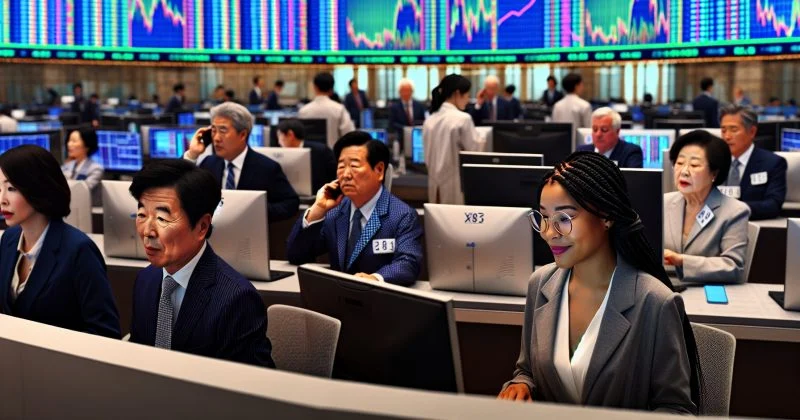
South Korea's stock market may be showing early signs of stabilization after enduring its worst selloff in decades, though the path to recovery remains steep.
The KOSPI index fell approximately 40% from its June peak near 9,385 points during a severe July selloff triggered by the rapid unwinding of leveraged retail positions in AI-related chip stocks. The sell-off reached its most intense point on July 28, when the index plunged 10.84% in a single day — the largest one-day decline in months — erasing more than $2 trillion in market value and triggering multiple circuit-breaker halts.
Leveraged ETFs Fuel the Selloff
South Korean retail investors had heavily bought into single-stock leveraged ETFs tied to semiconductor companies benefiting from the AI boom. These products, introduced in May, attracted individual investors seeking rapid returns against a backdrop of rising housing costs and limited investment alternatives. Retail participation in the Korean market had been climbing for years, with individual investors accounting for a dominant share of daily trading volume — a structural feature that amplifies both rallies and selloffs relative to markets driven more by institutional capital.
When market sentiment shifted, those leveraged positions magnified losses just as powerfully as they had amplified gains during the run-up. Margin calls cascaded through the market, forcing investors who had no intention of selling to liquidate positions at distressed prices.
Retail investors absorbed the majority of the losses. Reports indicated that young traders and even pensioners who had relied on borrowed funds found themselves deeply underwater. The KOSPI was on pace for its worst monthly performance since either the 2008 global financial crisis or the 1997 Asian financial crisis, depending on the final figures.
Regulators Intervene
In mid-to-late July, South Korean regulators raised barriers to trading single-stock leveraged ETFs and temporarily suspended new listings of those products. Margin trading requirements were also tightened in an effort to reduce the speculative activity that had accelerated the crash.
By early August, the KOSPI surged 18% in a single session — a sharp rebound that highlighted the compressed and extreme nature of the volatility. However, recovering from a 40% loss requires a roughly 67% gain just to return to break-even.
AI Chip Stocks at the Center
Samsung and SK Hynix, both central to the global memory chip supply chain powering AI infrastructure worldwide, were at the heart of the trade. Together, the two companies supply a large share of the world's DRAM and NAND flash memory — components essential to AI data centers, smartphones, and consumer electronics — making the KOSPI particularly sensitive to shifts in global semiconductor sentiment. Korean retail investors had wagered heavily that surging demand for AI hardware would continue driving these stocks higher, using leverage to magnify their exposure.
When global uncertainties around semiconductor demand emerged — including intensifying competitive pressures from Chinese manufacturers — those leveraged positions became a significant liability. The episode underscores how concentrated exposure to a single sector, combined with leverage, can transform a cyclical downturn in chip demand expectations into a systemic market event.
Outlook
The regulatory changes carry trade-offs. Tighter controls on leveraged ETFs and margin trading are expected to reduce the risk of another cascading selloff, but they also remove a substantial source of buying power that had helped drive the market's earlier gains.
The magnitude of losses suffered by ordinary investors in July could have a lasting cooling effect on retail participation, which has been a defining characteristic of the Korean market for years. For investors who borrowed money and lost it, the psychological impact is likely to endure beyond the financial damage. The episode also places South Korea alongside other markets — including the US and parts of Europe — that have grappled with how to regulate leveraged and complex exchange-traded products aimed at retail investors, a debate that intensified globally after similar products amplified losses during past market dislocations.

