Korean shipbuilders outline U.S. yard revival plans through design, automation and training
Key Takeaways
- •Hanwha Ocean, HD Hyundai and Samsung Heavy Industries announced 15 cooperation projects in the United States together with the opening of the Korea-U.S. Shipbuilding Cooperation Center in Washington, D.C.
- •The U.S. Commerce Secretary said cooperation will be judged by the number of ships built in the United States.
- •Hanwha Ocean is advancing a joint design project for a global strategic transport ship with Leidos Gibbs & Cox and is also involved in U.S. Navy logistics support ship design work.
- •HD Hyundai is focusing on modernizing existing U.S. shipyards, developing a digital yard model with Siemens, and seeking local shipyard opportunities.
- •Samsung Heavy Industries is targeting automation for new U.S. shipyards, LNG bunkering ship technology, and training programs for welding and painting workers.
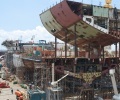
Korean shipbuilders outline U.S. yard revival plans through design, automation and training
in Shipbuilding News 28/07/2026
U.S. shipyards are set to begin deploying, in earnest, the ship design, automation, and production operations technologies that Korean shipbuilders have accumulated for more than half a century. On the 23rd local time, Hanwha Ocean, HD Hyundai, and Samsung Heavy Industries unveiled 15 shipbuilding cooperation projects in the United States to coincide with the opening of the Korea-U.S. Shipbuilding Cooperation Center in Washington, D.C. As the scope of cooperation has become more concrete — from ship and naval vessel design to modernization of existing shipyards and the construction of new yards — the outline of local business activity in the United States has also become clearer.
The United States has made clear that it will judge the outcome of cooperation by the number of ships actually built locally. Howard Lutnick, the U.S. Minister of Commerce, said, “It does no good if we only talk,” adding, “Ultimately, we will evaluate this center by the simple figure of the ‘number of ships built in the United States’ that Korea and the United States produce together through cooperation.”
By that standard, Hanwha Ocean and HD Hyundai appear to have relatively specific paths that could lead to construction in the United States. Based on Hanwha Philly Shipyard Inc., Hanwha Ocean can target not only U.S. commercial ships but also auxiliary naval ships and naval vessel modules. Hanwha is also taking part as a subcontractor in the conceptual design project for the U.S. Navy’s next-generation logistics support ship.
HD Hyundai, which is seeking a local shipyard, is jointly building container ships with Edison Chouest Offshore (ECO), a U.S. group specializing in offshore support vessels, and is pursuing cooperation on next-generation logistics support ships with Huntington Ingalls, the largest U.S. defense shipbuilder. In contrast, Samsung Heavy Industries, which does not have its own U.S. shipyard and remains at the design and cooperation stage for U.S. Navy projects, is working to expand its local business base by leveraging automation for new yards and technology for LNG (liquefied natural gas) bunkering ships and autonomous vessels.
Hanwha accelerates strategic transport ship design; HD Hyundai targets U.S. yard modernization
Hanwha Ocean is using the cooperation as a springboard to enter the U.S. naval vessel newbuild market. It will jointly design a global strategic transport ship with Leidos Gibbs & Cox, a vessel intended to serve as a commercial logistics ship in peacetime and carry troops and materiel in contingencies. After signing a comprehensive memorandum of understanding (MOU) in April, the companies signed a professional services contract on the day, moving into actual design work. The plan is to combine Hanwha Ocean’s warship construction technology with Hanwha Philly Shipyard Inc.’s production base to pursue orders from the United States and its allies.
HD Hyundai, meanwhile, is focusing on modernizing existing U.S. shipyards and converting production systems to digital. HD Korea Shipbuilding & Offshore Engineering, the shipbuilding intermediate holding company, will assess the facilities and processes of Fraser Industries, which builds and repairs ships along the Great Lakes, and propose automation and modernization measures. Together with Siemens, it will jointly develop a digital yard model for use at U.S. shipyards. The model connects design, production, parts procurement, and quality-control data on a three-dimensional platform and verifies processes in a virtual shipyard in advance to reduce delays and rework. The company plans to expand and commercialize this digital yard model for shipyards in the United States and beyond.
HD Hyundai Samho has also widened cooperation into port infrastructure by supplying four advanced port cranes to the operator of the Port of Tacoma. An HD Hyundai official said, “Ultimately, to build ships directly in the United States, we are continuing to look for local shipyards.”
Samsung Heavy focuses on robotic automation and LNG ship technology
Samsung Heavy Industries has chosen a strategy centered less on immediately securing a local construction base and more on building production systems for new U.S. shipyards and designing LNG-specialized ships. At “Port Alpha,” a next-generation shipyard that U.S. autonomous vessel company Saronic Technologies is building in Brownsville, Texas, with an investment of more than $3 billion, Samsung Heavy Industries’ automation and production operations technologies are expected to be applied. The companies will jointly research autonomous navigation and artificial intelligence (AI) technologies and build a robot-based production infrastructure together.
In the commercial ship sector, the work was divided with a local shipyard. Samsung Heavy Industries provided design and LNG technology, while Conrad Shipyard handled construction to jointly develop a 12,000-cubic-meter LNG bunkering vessel. The ship received basic design approval from the American Bureau of Shipping (ABS), completing design verification for local orders.
For Korea-U.S. “MASGA (Make American Shipbuilding Great Again)” cooperation to lead to actual ship construction, a skilled workforce and an equipment supply chain must be developed as well. Samsung Heavy Industries will establish a center with Vigor Marine Group to train welding and painting personnel and introduce Virtual Reality (VR) and Augmented Reality (AR) training.
Hanwha Ocean also plans to build a workforce training system with local educational institutions centered on Hanwha Philly Shipyard Inc. and expand the participation of U.S. manufacturing companies in the shipbuilding equipment supply chain. The role of Korean companies is therefore widening beyond technology provision to include design, production, and the broader development of workforce and supply chains.
Institutional support seen as key to turning cooperation into orders
Industry officials say MASGA is entering a full execution phase beyond a broad declaration of cooperation. Many projects remain at the MOU or joint development stage, but the targets have been narrowed to specific shipyards, ships, and production technologies. That makes the next step less about announcing cooperation and more about aligning industrial capacity, permitting, and shipyard readiness so the projects can move from design and planning into actual delivery.
The key issue going forward is the institutional foundation needed to connect Korean companies’ technology and investment to actual orders. For U.S. naval vessels, construction at U.S. shipyards is the principle, and foreign companies must maintain separate security systems to participate in classified projects. The “SHIPS for America Act,” which includes financial and tax support for commercial ship orders and streamlined permitting, is still pending in the U.S. Congress.
An industry official said, “There are limits to what can be achieved with Korean companies’ technology provision alone,” adding, “The U.S. government’s support for stable order volumes, investment incentives, and swift permitting — and how quickly U.S. shipyards applying Korean technology can deliver their first ship — will determine MASGA’s success or failure.”
Source: ChosunBiz

