Key Terms in Korean Shamanism: A Glossary
Key Takeaways
- •Korean shamanism, called musok or mugyo, has survived suppression from the Joseon Dynasty, Japanese colonial rule, and 20th-century modernization and remains a living practice.
- •Gangsinmu become shamans through spirit possession after experiencing sinbyeong (spirit sickness), while seseupmu inherit their positions through family lineages concentrated in southern Korea.
- •Gut rituals combine music, singing, chanting, and dance, ranging from private client rites to large community ceremonies, and have influenced Korean performing arts such as pansori and folk theater.
- •The naerim gut initiation ritual can last days, months, or years and involves seeking the gods' permission, choosing auspicious dates, visiting shamanic sites, and the final ordination ceremony.
- •Ritual knowledge is passed through mentor-apprentice bonds known as sineomeoni (spirit mother) and sinttal (spirit daughter), since the tradition lacks standardized texts.
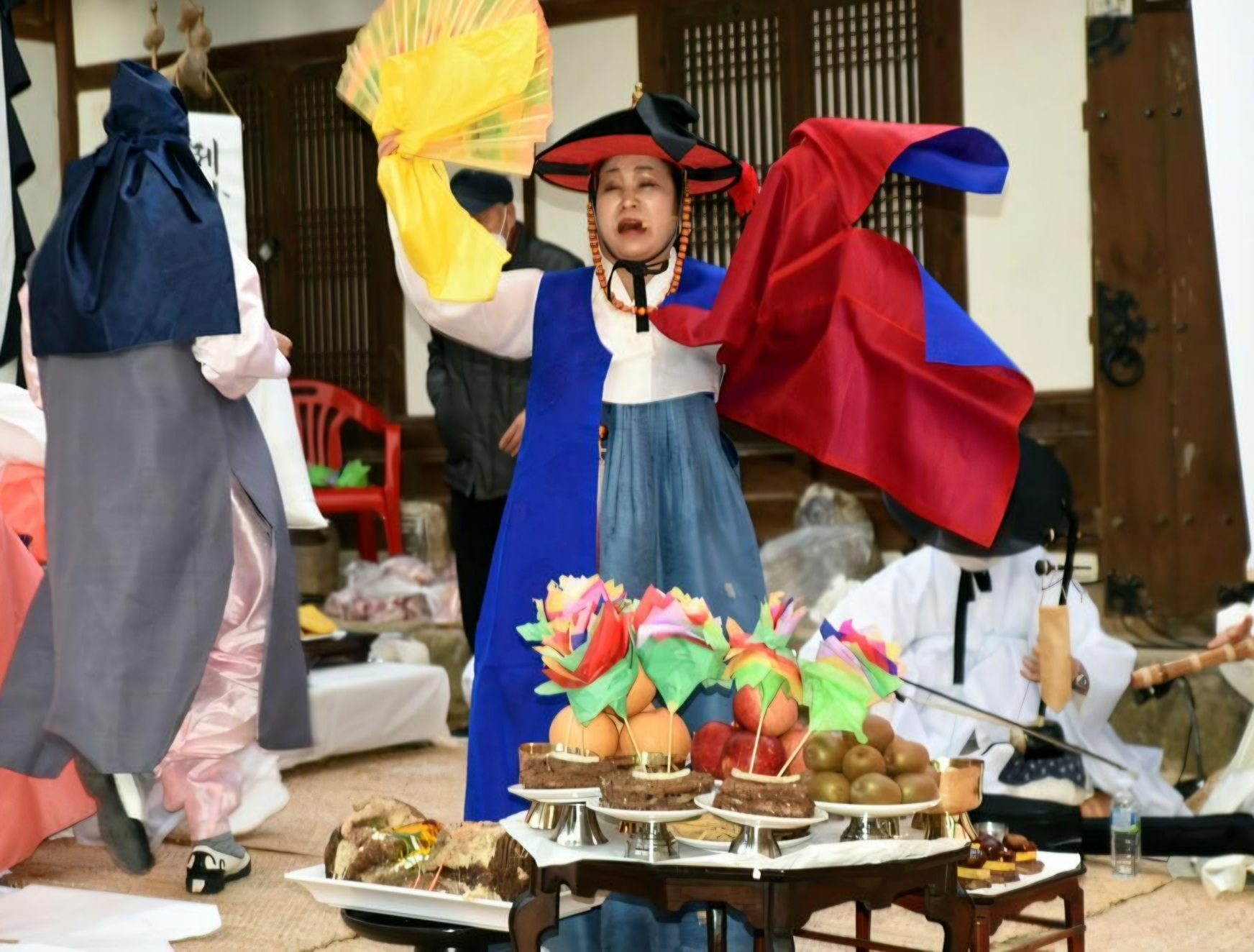
Korean shamanism is known by two common names: musok and mugyo. Musok is the older of the two, associated with shamanism as a folk tradition, while mugyo is a newer term more often found in scholarly contexts. Despite centuries of suppression — during the Joseon Dynasty's Confucian reforms, the Japanese colonial period, and the modernization drives of the 20th century — the tradition has persisted and remains a living practice, with shamans still consulted for guidance on health, business and family matters.
Mudang is the gender-neutral term for shamans. A less common word, "baksu," refers exclusively to male practitioners. Mansin, meaning "10,000 spirits," is a respectful term of address for shamans.
Spirit sickness and paths to becoming a shaman
Sinbyeong, or "spirit sickness," is an illness experienced by someone who is called by spirits. It typically manifests as a period of poor health involving both physical and psychological symptoms, and improves once the person is initiated as a shaman. Comparable call-and-illness narratives appear in shamanic traditions elsewhere in Northeast Asia, but in Korea the concept is closely tied to the initiation process itself.
There are two principal types of shamans. Gangsinmu become shamans as a result of spirit possession, entering the practice after experiencing sinbyeong. Seseupmu, by contrast, inherit their positions, which are transmitted through families, and they do not usually experience sinbyeong. These hereditary lineages have historically been concentrated in southern Korea, while possession-based shamans are more associated with the northern half of the peninsula and the Seoul area.
Rituals
Gut are the rituals used in shamanic practice. They incorporate music, singing, chanting and dance as performative elements, with their contents transmitted orally and through practice between shamans and their apprentices. Gut vary widely in scale and purpose, from small private rites performed for individual clients to large community ceremonies, and elements of shamanic performance have influenced Korean performing arts such as pansori and folk theater.
Naerim Gut is the initiation ritual. The full process of initiation can last for days, months or even years. It involves asking the gods for permission, seeking an auspicious date, traveling to important shamanic sites, and finally the ritual itself, through which the initiate becomes a fully ordained shaman.
Relationships and titles
Aaedong-jaeja, loosely translated as "lovely baby for the god," is the term used for a shaman initiate until they become fully ordained.
Sineomeoni and sinttal, meaning spirit mother and spirit daughter, describe a ritual mother-daughter relationship between shamans. A sineomeoni is an established shaman who takes another shaman as her protege, or sinttal. This mentor-apprentice bond is central to how ritual knowledge is passed on in a tradition without standardized texts.
A shaman holding a hand fan sings at an altar loaded with offerings of food during a ceremony at Geumseongdang Shrine in Seoul's Eunpyeong District, Oct. 22, 2021. Korea Times photo by Jon Dunbar. Source: The Korea Times
