In Era of Efficiency, Networks Matter More Than Ever in Private Markets: Brown Advisory
Key Takeaways
- •South Korea's leading limited partners are repositioning portfolios built during the low-interest-rate era into a defensive stance, citing expectations of prolonged high rates and inflation.
- •KIC CEO Park Il Young said private credit is poised to keep growing as a mainstream asset class and can serve as a structural financing source for small and mid-sized enterprises as bank lending channels narrow.
- •The global private credit market has expanded since the 2008 financial crisis, when stricter bank capital requirements reduced lenders' capacity and appetite for mid-sized and higher-risk corporate borrowers.
- •Korean asset managers, including Hanwha Asset Management, the investment arm of Hanwha Group, are scaling up private credit operations amid rising worldwide demand for nonbank lending.
- •Brown Advisory, which oversees $190.8 billion in assets, said direct negotiation between lenders and borrowers makes relationships and information networks a core element of middle-market lending and specialty finance.
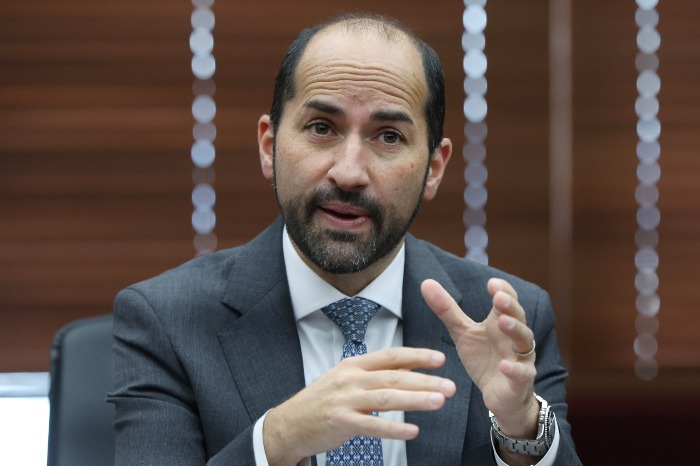
Brown Advisory, a US-based investment firm with $190.8 billion in assets under management, said that in an era of efficiency, networks matter more than ever in private markets. The firm's private markets platform focuses on middle-market corporate lending and specialty finance — segments where deals are negotiated directly between lenders and borrowers rather than traded on public exchanges, making relationships and information channels a core part of the business.
Korean LPs shift to defensive mode, favoring private credit: CIOs
South Korea's leading institutional investors are reshuffling portfolios built during the low-interest-rate era and moving into a defensive stance, according to chief investment officers who spoke at a CIO panel discussion at ASK 2026 on Oct. 28, 2026. The limited partners — the institutions that commit capital to investment funds — are bracing for prolonged high interest rates and inflationary pressures, and their repositioning includes a growing preference for private credit.
Private credit to emerge as structural solution beyond mid-risk, mid-return assets: KIC
Park Il Young, chief executive of the Korea Investment Corporation (KIC), South Korea's sovereign wealth fund, said private credit is expected to continue growing as a mainstream asset class, providing a structural financing solution for small and medium-sized enterprises facing shrinking bank lending channels. Park delivered an on-screen keynote address at ASK 2025 on Oct. 29.
Private credit refers to loans extended to companies by nonbank lenders. The asset class has expanded globally in the years since the 2008 financial crisis, when tighter capital requirements curtailed banks' capacity and appetite for lending to mid-sized and higher-risk corporate borrowers. That backdrop frames the shifts described by Korean institutions: limited partners seeking credit exposure on the demand side, and asset managers building out lending operations on the supply side.
South Korean asset managers step up push into private debt market
South Korean asset managers are ramping up private credit operations as global demand for nonbank lending grows in the wake of tighter bank regulations, according to the investment banking industry. Among them is Hanwha Asset Management Co., the investment arm of South Korean conglomerate Hanwha Group, based at the Hanwha Financial Center in Yoido, Seoul's financial district.
For readers following the trend, the indicators to watch are how Korean limited partners translate their stated preference for private credit into actual allocations, and how far asset managers such as Hanwha extend their private debt platforms.
Source: KED Global

