Korean Automakers Pivot to Second-Half Sales Push as Wage Talks Conclude
Key Takeaways
- •Hyundai Motor is holding a union vote Monday on a tentative wage agreement featuring a 100,000 won monthly base pay raise and a bonus of 400 percent of monthly salary plus 12.7 million won.
- •Hyundai's strikes this year disrupted production of an estimated 55,200 vehicles and caused sales losses exceeding 2.3 trillion won.
- •Kia has completed six consecutive years of strike-free labor negotiations and will formally sign its agreement Monday at the AutoLand Gwangmyeong plant.
- •Renault Korea approved a deal with a 51,000 won base pay raise and 2.5 million won in one-time payments, while GM Korea and KG Mobility finalized their deals in July.
- •Hyundai, whose first-half operating profit fell 25.8 percent on-year, plans to launch new models including the Tucson hybrid and the first Genesis hybrid, the GV80 hybrid.
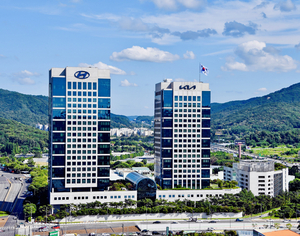
South Korea's five major automakers are set to finalize their annual wage talks as early as Monday, clearing the way for a concentrated push on second-half sales at a time when the industry faces mounting pressure from US tariffs, intensifying competition with Chinese rivals and slowing global demand.
The timing matters for an industry where the United States is the single largest export market, meaning production disruptions at home carry direct consequences for overseas shipments at a moment when tariff costs are already squeezing margins.
Hyundai Motor Co., the last of the five automakers to complete negotiations, is holding a union vote Monday on a tentative agreement reached last week. Approval would effectively bring this year's wage and collective bargaining talks across the domestic auto industry to a close.
Under the tentative agreement, Hyundai Motor and its union agreed to a 100,000 won ($73) raise in monthly base pay, along with a performance bonus equivalent to 400 percent of monthly salary plus an additional payment of 12.7 million won.
The deal followed months of contentious negotiations marked by repeated breakdowns and a series of strikes that disrupted production. The union staged its first full eight-hour strike in a decade, accumulating a combined 60 strike hours this year and resulting in roughly 120 hours of production halts across two shifts. According to industry estimates, the walkouts disrupted production of an estimated 55,200 vehicles, causing sales losses exceeding 2.3 trillion won. A ratified deal would remove the risk of further stoppages just as the company heads into its most important launch period of the year.
Hyundai's smaller sibling Kia, by contrast, reached a deal without resorting to strike action. Kia and its union are scheduled to formally sign their labor agreement Monday at the AutoLand Gwangmyeong plant in Gyeonggi Province. Kia union members approved their tentative deal Friday, which includes a 100,000 won increase in monthly base pay and a performance and incentive package of 400 percent of monthly salary plus 12.7 million won. The agreement marks the sixth consecutive year since 2021 that Kia has completed labor negotiations without a strike — a track record of labor stability that has helped the automaker avoid the kind of output losses its larger sibling absorbed this year.
Renault Korea approved its own tentative labor agreement at a general employee meeting Wednesday, including a 51,000 won increase in monthly base pay and 2.5 million won in one-time payments. GM Korea and KG Mobility wrapped up their wage deals in July.
With labor talks largely settled, Korean automakers are now turning their attention to launching new models, diversifying powertrain lineups and tailoring regional strategies to lift profits and sales through the end of the year. The strategy reflects a broader shift across the global auto industry, where manufacturers are rebalancing toward hybrids as electric vehicle adoption slows and regionalizing production to hedge against trade barriers.
Hyundai Motor, whose operating profit fell 25.8 percent on-year in the first half, plans to launch several key models, including an all-new Tucson and Tucson hybrid as well as a GV80 hybrid — the first hybrid offering under its Genesis luxury brand. The company is placing a major bet on hybrids, which have become an important source of profitability as demand for battery electric vehicles grows more slowly than anticipated.
Kia, coming off record first-half vehicle sales, plans to sustain its momentum by tailoring its powertrain lineup to individual market demand. In the United States, Kia intends to ramp up production capacity for the Telluride SUV. In Europe, it plans local production of the EV2 and EV4 electric vehicles while expanding its hybrid lineup with models including the Seltos hybrid and K4 hybrid.
GM Korea, Renault Korea and KG Mobility are likewise expected to focus on increasing sales volumes and improving profitability in the second half.
The sales push comes as the global auto industry faces a challenging outlook, and how these new models perform in the US and European markets will be a key indicator of whether Korean automakers can offset tariff pressure through product momentum.
"While demand is expected to grow in emerging markets including India and Russia, the auto industry is expected to see stagnant global demand overall amid slowing sales in the US and China, and higher tariff costs are rising oil prices," said Choi Dong-won, an associate research fellow at the Korea Institute for Industrial Economics and Trade, in its second-half industry outlook report. "Growth in the global eco-friendly vehicle market is expected to see slower growth due to reduced policy support in major countries."
Choi projected that South Korea's domestic auto market will shrink 1.5 percent in the second half on-year, citing the expiration of a temporary consumption tax reduction and sluggish economic conditions. For the full year, however, domestic auto sales are expected to rise 1 percent on stronger electric vehicle demand.
