Korea Zinc posts record quarterly profit as earnings gap with Young Poong widens in control battle
Key Takeaways
- •Korea Zinc's second-quarter operating profit surged 126.8 percent on-year to a record 587 billion won, with revenue rising 66.6 percent to 6.37 trillion won.
- •Young Poong's second-quarter operating profit fell 96.5 percent from the previous quarter to 1.5 billion won, while revenue was nearly unchanged at 853.2 billion won.
- •The control contest began in September 2024, when Young Poong partnered with MBK Partners on a tender offer aimed at loosening the founding Choi family's grip on Korea Zinc's management.
- •Korea Zinc's Onsan smelter ran at full capacity in the first half, whereas Young Poong's Seokpo smelter utilization slipped to 51.7 percent in the second quarter from 57.23 percent in the first.
- •Young Poong faces regulatory and environmental pressure, including a roughly 20.4 billion won fine over cleanup-cost accounting, a warning from the environment minister about possible operational suspension, and a reopened police probe into adviser Chang Hyung-jin.
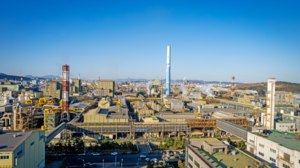
Korea Zinc more than doubled its second-quarter operating profit to a record high, while Young Poong's profit nearly evaporated from the previous quarter, widening the earnings divide between the two rivals locked in a battle for corporate control.
The contest dates to September 2024, when Young Poong, working with private equity firm MBK Partners, launched a tender offer for Korea Zinc shares in a bid to loosen the founding Choi family's hold on management. Young Poong is Korea Zinc's largest shareholder, a legacy of the two companies' common founding families, and the dispute has since extended to shareholder meetings and board elections. With the standoff unresolved, the quarterly results arrive as both camps continue to court investor support.
According to regulatory filings, Korea Zinc reported consolidated revenue of 6.37 trillion won ($4.56 billion) for the April-June period, up 66.6 percent from 3.82 trillion won a year earlier. Operating profit surged 126.8 percent on-year to 587 billion won, from 259 billion won. Over the first half, revenue climbed 62.5 percent to 12.44 trillion won, while operating profit jumped 151.5 percent to 1.33 trillion won.
Young Poong's results moved in the opposite direction. The company posted second-quarter revenue of 853.2 billion won, little changed from 851.1 billion won in the first quarter, while its operating profit plunged 96.5 percent quarter-on-quarter to 1.5 billion won from 43.3 billion won.
A direct comparison is limited by the companies' substantial differences in scale, product portfolios and business structures. Still, industry officials said those differences help explain why their profitability has moved in opposite directions.
"Although both operate nonferrous metal smelters, Korea Zinc has a more diversified product mix, and that difference is contributing to their diverging profitability," an industry official said.
Alongside base metals such as zinc and lead, Korea Zinc — the world's largest zinc smelter — produces gold, silver and critical minerals, including indium, antimony and bismuth. It also supplies semiconductor-grade sulfuric acid. The company is building on those operations through Project Crucible, a planned partnership with the US government aimed at strengthening American critical mineral supply chains.
Young Poong's smelting business is centered primarily on zinc, with sulfuric acid produced as a byproduct. According to industry officials, that narrower portfolio leaves the company with fewer sources of earnings when market conditions shift.
Smelter utilization rates also diverged. Young Poong's Seokpo smelter recorded a utilization rate of 51.7 percent in the second quarter, down from 57.23 percent in the first. The rate remained above its 2025 annual average of 45.95 percent, but the quarterly decline indicates that output has yet to recover steadily despite no shutdown this year. Korea Zinc's Onsan smelter, by contrast, operated at full capacity throughout the first half.
Young Poong also continues to face environmental and regulatory uncertainty surrounding the Seokpo smelter. Financial authorities imposed a fine of about 20.4 billion won over the company's accounting treatment of soil and groundwater cleanup costs. The smelter's future location has also come under public discussion.
"If keeping the Seokpo smelter in its current location poses a threat to the Nakdong River's drinking water supply, the strongest measure the government can take would be to suspend its operations," Environment Minister Kim Sung-hwan said during a parliamentary committee meeting on Aug. 11.
Separately, the Seoul Metropolitan Police Agency recently decided to reopen an investigation into allegations that Young Poong adviser Chang Hyung-jin violated environmental protection laws.

