The Korea Times Hosts Online Seminar Guiding International Students Through Korean Housing Contracts
Key Takeaways
- •The Korea Times hosted an online seminar to guide international students through Korean housing contracts, addressing language barriers, deposit risks, and visa complications that many encounter.
- •Korea's jeonse system requires tenants to pay a large lump-sum deposit instead of monthly rent, an arrangement unique to the country that can be unfamiliar to foreign renters.
- •An Alien Registration Card is generally required to access legal protections under Korea's Housing Lease Protection Act, and students are advised to obtain one before committing to a deposit-based lease.
- •Renters should review a property's certified register on the day of signing to confirm landlord ownership and check for any liens or seizures attached to the property.
- •Park Song-I cautioned that extra care is warranted when the combined total of the deposit and existing property loans exceeds 70 to 80 percent of the property's market value.
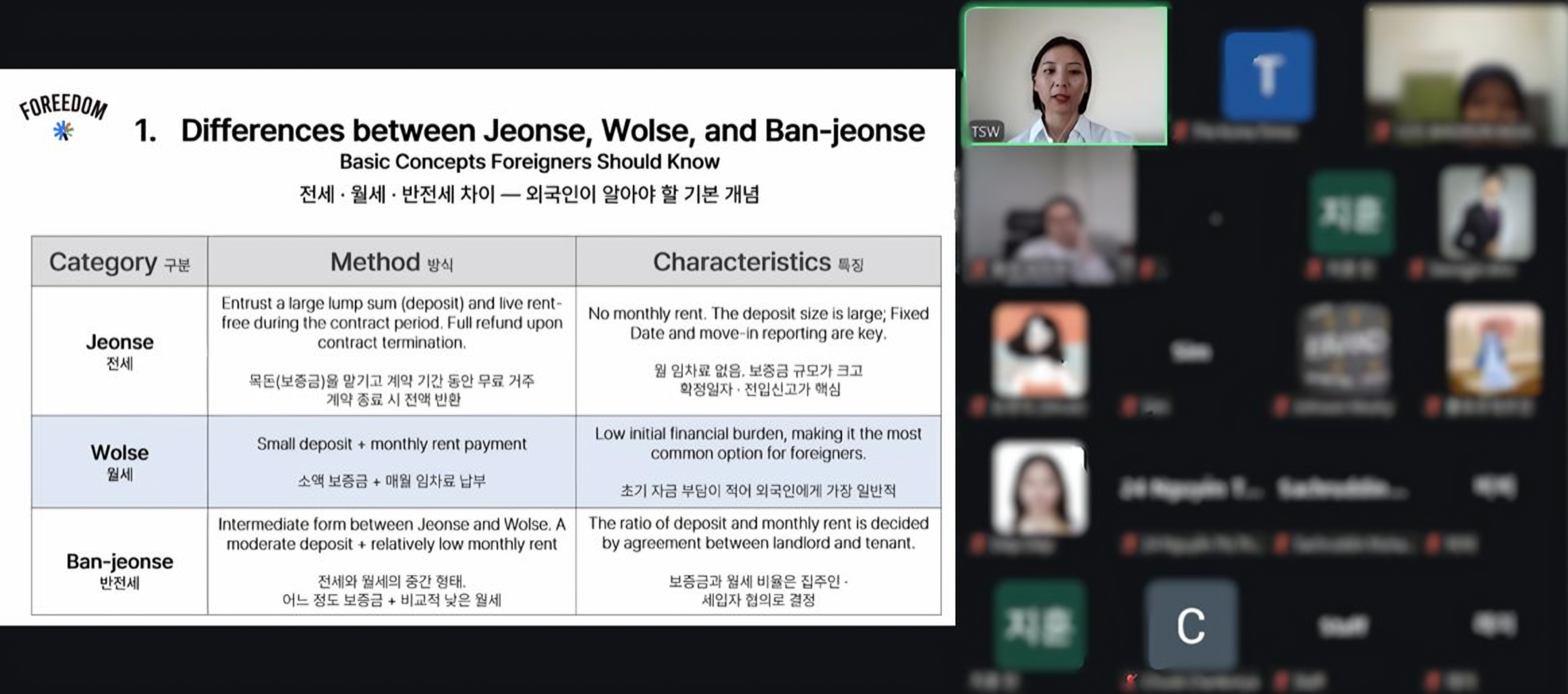
The Korea Times hosted an online seminar on Thursday to equip international students in Korea with a step-by-step guide to navigating local housing contracts, an effort designed to help reduce the language barriers, deposit risks, and visa complications that many encounter when renting a home. The session comes as Korea continues to expand its international student population under government-backed education initiatives, drawing growing numbers of newcomers who must quickly adapt to a rental market that operates differently from those in most other countries.
The Zoom session, titled the "3-Step K-Housing Survival Guide," was presented by Park Song-I, team leader at Foreedom, a company that assists foreign residents with housing-related issues. Park outlined a three-step framework — secure contract, deposit protection, and visa safety — to help students steer clear of common pitfalls.
Park began by walking participants through the differences between Korea's primary rental arrangements. She explained "jeonse," a system in which tenants pay a lump-sum deposit in lieu of monthly rent, and "wolse," the standard monthly rent model. Jeonse is unique to South Korea and can be especially unfamiliar to foreign tenants, as it involves tying up a substantial sum of money — often ranging from tens to hundreds of millions of won — for the duration of the lease. While foreign nationals are permitted to sign both types of leases, she noted that legal protections under Korea's Housing Lease Protection Act typically require an Alien Registration Card. This card enables tenants to report a change of residence and obtain a fixed date stamp on their lease agreement.
Renters who lack a registration card may find themselves with limited legal recourse, Park cautioned. She advised students to wait until they have received their card before committing to a deposit-based lease.
On the matter of deposit protection, Park stressed the importance of reviewing a property's certified register — an official document that confirms a landlord's ownership and discloses any liens or seizures attached to the property — prior to signing any contract. Deposit recovery has been a recurring concern in Korea's rental market, particularly in cases where landlords carry heavy debt on their properties. She recommended obtaining an up-to-date copy of the register on the day of signing and urged caution when the combined total of the deposit and any existing loans on the property surpasses 70 to 80 percent of its market value.
Turning to visa safety, Park guided attendees through the entire process from house hunting to move-in day. She emphasized that registering a change of residence and securing a fixed date stamp are critical not only for safeguarding a rental deposit but also for maintaining valid immigration status. Failure to update one's registered address can create complications with immigration authorities, as the Alien Registration address must match the student's actual residence.
Park also shared a set of move-in day precautions to help guard against fraud. These included photographing and filming the condition of the unit upon arrival, carefully reviewing maintenance fee terms laid out in the contract, avoiding transfers to third-party accounts, and conducting all transactions through licensed real estate agents.
This article was published with the assistance of generative AI and edited by The Korea Times.
