What to know about Korea's life-threatening heat wave and how to stay safe
Key Takeaways
- •Seoul recorded three consecutive tropical nights as the heat wave intensified after the monsoon season ended.
- •The Korea Meteorological Administration issues heat advisories, heat warnings and severe heat warnings based on forecast feels-like temperatures.
- •People aged 65 and older accounted for 29.5 percent of heat-related illness cases, making them the most vulnerable group.
- •The Korea Disease Control and Prevention Agency said more than 1,399 people were treated for heat-related illnesses between May 1 and July 26, and eight died.
- •Several recent deaths occurred in fields and greenhouses, underscoring the risk for rural and outdoor workers during extreme heat.
South Korea
Others
What to know about Korea's life-threatening heat wave and how to stay safe
Published Jul 30, 2026 12:05 am KST
Older adults, children advised to avoid outdoor activity during hot weather
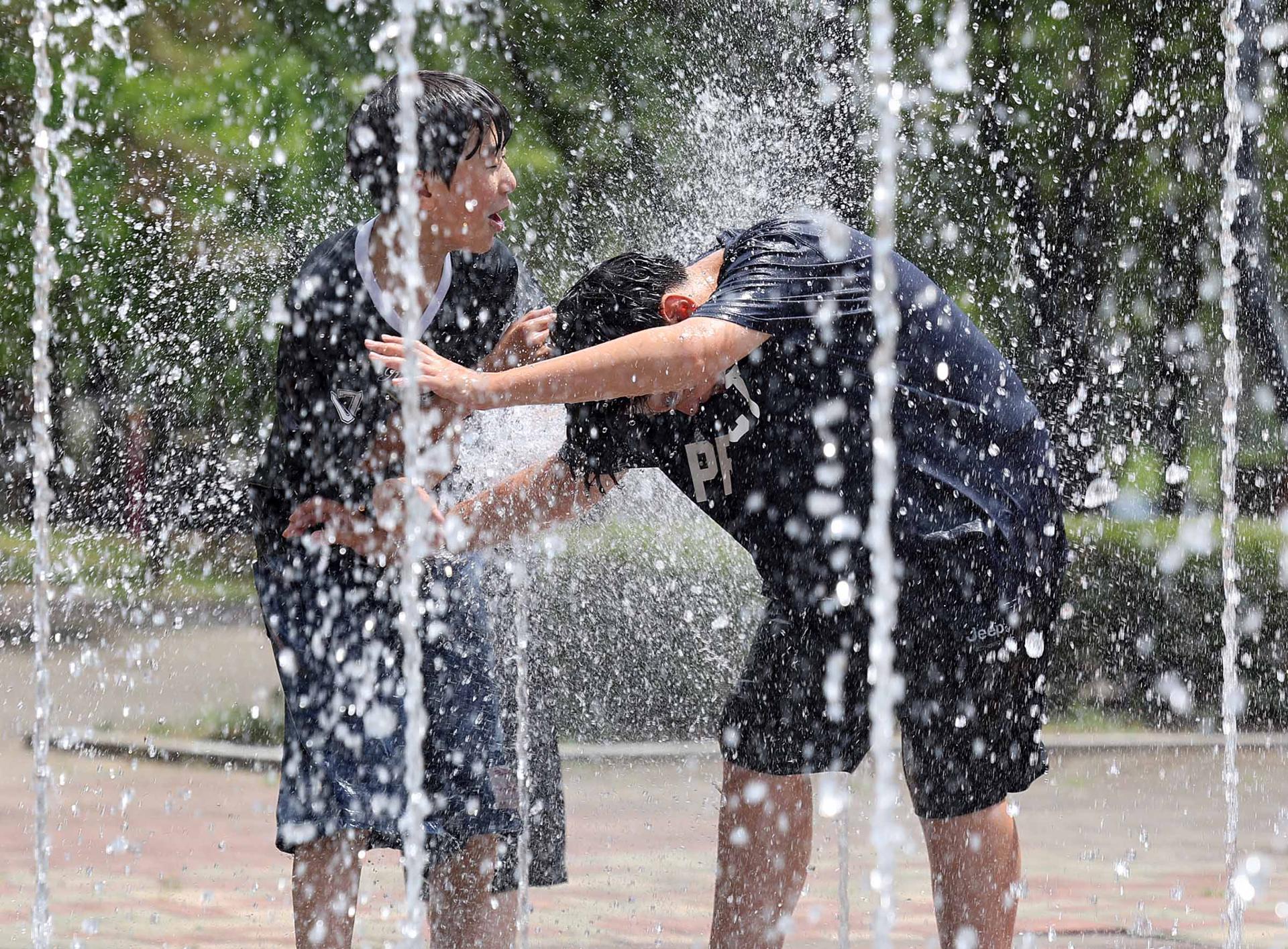
Visitors cool off at a splash pad in a park in Dong District, Daegu, Monday, as heat alerts remain in effect across the city. Yonhap
Click here for more articles by Kormedi.com.
The end of the monsoon season this week marked the start of a severe heat wave across Korea, with temperatures reaching life-threatening levels.
As of Monday, Seoul had experienced three consecutive tropical nights, a condition in which temperatures remain above 25 degrees Celsius from 6 p.m. to 9 a.m. the following day. Feels-like temperatures have hovered around 38 to 39 degrees Celsius for days, putting children, older adults and outdoor workers at heightened risk of heat-related illness and death. In that kind of weather, the difference between mild discomfort and a medical emergency can narrow quickly, especially for people who spend long periods outside or are unable to cool down at home or at work.
Weather patterns over the past decade suggest that, as the climate changes, extreme heat waves and large outbreaks of heat-related illness are becoming the new normal for Korean summers. For people living in Korea, the following guidance can help protect personal health and the safety of those around them.
Proper care for heat illness patients
Heat-related illness should not be taken lightly or managed alone. The U.S. Occupational Safety and Health Administration, a Labor Department agency that oversees workplace safety, advises that anyone showing symptoms of heat-related illness be cooled immediately with ice and taken to an emergency room, and, most importantly, never left alone. Quick action matters because symptoms can worsen while the body is still overheating, particularly if the person is in transit, working outdoors or far from immediate medical help.
Heat-related illness generally falls into two categories: life-threatening heatstroke and heat exhaustion, which is usually treatable. Either condition requires immediate hospitalization and professional medical care rather than self-diagnosis by the patient.
Distinguishing between heatstroke and heat exhaustion
The causes, symptoms and required responses for heatstroke and heat exhaustion differ, making it important to distinguish between them.
Heatstroke occurs when the body’s temperature-regulation system fails and the body temperature rises above 40 degrees Celsius. Patients often struggle to remain conscious, or may fall into a coma or experience seizures. Heatstroke is a life-threatening medical emergency, making immediate transport to an emergency room essential to lower the patient’s body temperature. Other symptoms include unstable breathing, a rapid pulse, vomiting or no sweating at all.
Heat exhaustion, meanwhile, occurs when the body loses too much water and sodium through excessive sweating. Symptoms include dizziness, headache and nausea. Unlike heatstroke, it does not generally cause a high body temperature, confusion, loss of consciousness or seizures. Patients can recover by resting in a cool place and replenishing fluids and electrolytes, but it is still important to seek medical attention to ensure their safety.
Korea’s heat warning system
The Korea Meteorological Administration (KMA) issues three levels of heat alerts based on forecast temperatures. A heat advisory is issued when the daily maximum feels-like temperature is expected to reach 33 degrees Celsius or higher for at least two consecutive days. A heat warning is issued when it is expected to reach 35 degrees or higher for the same period.
The highest-level alert, a severe heat warning, is issued when the daily maximum feels-like temperature is forecast to reach 38 degrees or higher, or the daily high is expected to reach 39 degrees or higher, for at least one day.
The KMA advises people to avoid prolonged outdoor activity between noon and 6 p.m. and to drink plenty of fluids when a heat advisory is issued. When a heat warning is in effect, both outdoor work and nonessential outings should be kept to a minimum. Assuming that you will be fine simply because you are healthy or have endured similar heat before can put you at serious risk.
When a severe heat warning is issued, all outdoor activity should be suspended. People should move to a safe, air-conditioned place, such as their home or a designated cooling center, where they can protect themselves from the heat and avoid heat-related illness. That guidance is especially important in cities where tropical nights limit overnight recovery, since sustained warmth can leave the body with little chance to cool down before the next day begins.
Older adults, children and others particularly vulnerable to heat should avoid outdoor activity whenever possible during hot weather, even when no official heat alert is in effect. Drinking plenty of fluids and using air conditioners and fans as needed at home or at work can be vital to protecting their health and lives.
People visit Banpo Hangang Park in Seoul on Wednesday, as heat warnings are in effect across the city’s southeastern, northeastern and southwestern areas. Yonhap
Older adults and rural residents most vulnerable to heat-related illness
Statistics from the Korea Disease Control and Prevention Agency (KDCA) show that people aged 65 and older are the group most vulnerable to heat waves. While they account for 21 percent of the total population, they made up 29.5 percent of all patients with heat-related illnesses, or 384 cases. Those with underlying conditions such as high blood pressure or diabetes, or a history of cardiovascular disease such as heart attacks or angina, should take particular care by avoiding outings whenever possible and staying in air-conditioned places.
By location, workplaces recorded the highest number of cases at 346, accounting for 26.6 percent of all patients. They were followed by rice paddies and fields, with 203 patients, or 15.6 percent, and roadsides, which accounted for 13 percent. The breakdown suggests that many people develop heat-related illnesses while working, particularly at outdoor worksites in both urban and rural areas.
Considering that agricultural workers account for around 5 percent of the total population, the fact that 15.6 percent of patients were reported in rice paddies and fields is particularly significant. One possible explanation is that rural areas lack shade structures that offer protection from the sun, as well as working conditions that allow workers to adjust whether, when and how intensively they work according to the temperature. The fact that a majority of workers in the sector, 51.3 percent to be precise, are aged 65 or older is also a contributing factor.
Multiple heat-related deaths reported in fields amid extreme heat
According to the KDCA, more than 1,399 people visited emergency rooms with heat-related illnesses between May 1 and July 26. Eight of them died, with rural areas accounting for more than half of the deaths.
A closer look at some of the fatal cases documented in official data and reports shows the risks posed by the extreme heat.
On July 22, a 97-year-old woman collapsed while working inside a greenhouse in Goseong County, South Gyeongsang Province. She was taken to an emergency room, but later died. A heat advisory was in effect in the area that day, with the maximum feels-like temperature reaching 32.7 degrees Celsius.
On July 23, a 93-year-old man who had left his home in Sacheon, South Gyeongsang Province, was found unconscious in a nearby field and died two days later. A heat advisory was in effect on the day he was found, when the temperature peaked at 33.9 degrees and the maximum feels-like temperature reached 34 degrees. His cause of death was recorded as heat-related illness and multiple organ failure.
A Thai agricultural worker in his 30s also died after collapsing while returning to his accommodation from a field in Haenam County, South Jeolla Province, on Saturday. He had reportedly complained of dizziness before losing consciousness. A heat warning was in effect in Haenam that day, with the daytime high reaching 33.7 degrees Celsius.
On Sunday, a 100-year-old woman died from a heat-related illness while working in a field in Wanju County, North Jeolla Province, as the daytime high reached 34.7 degrees. Her body temperature was 42.2 degrees when she was found.
This article from Kormedi.com, Korea’s top health care and medical portal, is translated by a generative AI system and edited by The Korea Times.

