Korea's Births Rise 6.7% to 254,300 in 2025 as Fertility Rate Climbs to 0.8
Key Takeaways
- •Births in Korea increased by 16,000 from a year earlier, reaching 254,300 in 2025.
- •The total fertility rate rose by 0.05 point to 0.8, the highest annual birth total since 2021.
- •Fertility declined among women aged 25–29 and 30–34, but increased among women aged 35–39.
- •The average age of women giving birth reached 33.8, and mothers aged 35 or older accounted for 37.3% of all births.
- •South Jeolla Province had the highest fertility rate at 1.09, while Seoul had the lowest at 0.63.
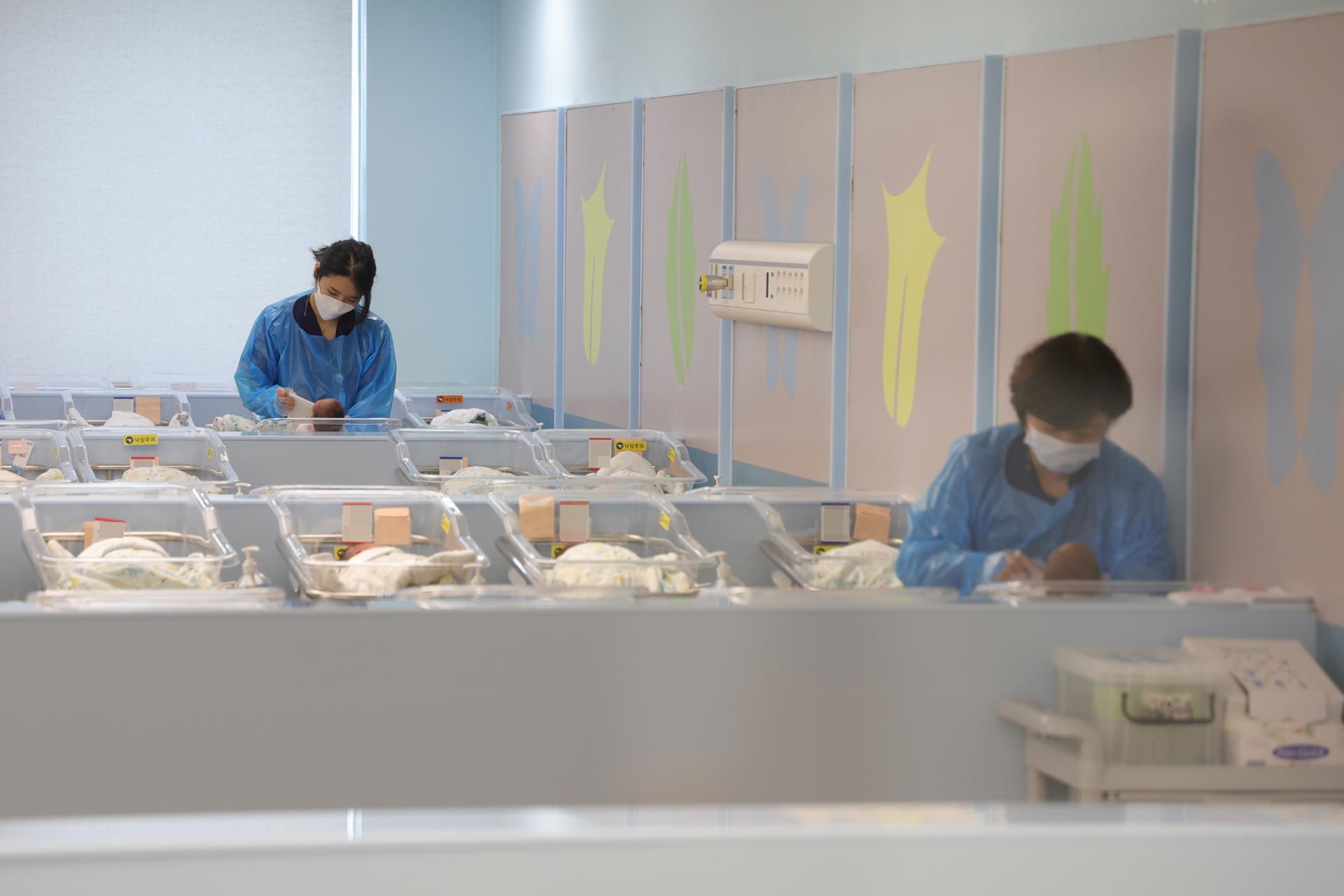
Nurses take care of newborns at CHA Ilsan Medical Center in Goyang, north of Seoul, July 29. (Yonhap)
The number of babies born in Korea rose 6.7 percent year-on-year to 254,300 in 2025, data showed Wednesday, while the country's total fertility rate edged up to 0.8. The increase adds to signs of a modest rebound after years of demographic decline in Asia's No. 4 economy, where births have remained far below levels seen earlier this decade.
According to an annual report by the Ministry of Data and Statistics, births increased by 16,000 from a year earlier. The 2025 total was the highest since the 260,600 births posted in 2021.
The total fertility rate, the average number of children a woman is expected to have over her lifetime, rose by 0.05 to 0.8 over the period.
The report showed a clear divergence across age groups. The age-specific fertility rate for women aged 30–34 stood at 73.1 births per 1,000 women, down from 78.9 in 2020. The rate for women aged 35–39 rose from 42.3 in 2020 to 52.1 in 2025. In contrast, the corresponding figure for women aged 25–29 fell from 30.6 to 21.2 over the same period.
The average age of women giving birth stood at 33.8 in 2025, up 0.2 from a year earlier. Women gave birth to their first child at an average age of 33.2, compared with 34.7 for their second child and 35.8 for their third child. Mothers aged 35 and older accounted for 37.3 percent of all births, up 1.4 percentage points from a year earlier.
Regional disparities remained wide. The total fertility rate was highest in South Jeolla Province at 1.09, followed by the central administrative city of Sejong at 1.06 and North Chungcheong Province at 0.96. The southeastern port city of Busan posted a rate of 0.74, while Seoul recorded the lowest rate in the country at 0.63.
Source: The Korea Times

