Korea's Big Three Battery Makers Gird for 1 Trillion-Won ESS Tender as SK On's LFP Strategy Reshapes the Field
Key Takeaways
- •The third ESS central contract market tender is expected to involve roughly 1 trillion won and may open this month.
- •Projects awarded in the third round are scheduled to be fully installed by 2028.
- •The government aims to secure more than 2.2 gigawatts of long-duration energy storage capacity by 2029.
- •SK On won 50.3% of the second-round capacity by bidding with lower-cost LFP batteries.
- •Samsung SDI leads cumulative awards across the first two rounds with 55.8%, followed by SK On at 25.1% and LG Energy Solution at 19%.
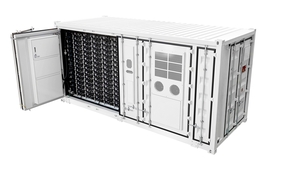
South Korea's three largest battery manufacturers are gearing up to compete for roughly 1 trillion won ($706.8 million) in the government's third energy storage system (ESS) tender, which could open as early as this month.
Samsung SDI currently leads in cumulative orders across the first two rounds, but SK On's decisive win in the second tender has reset the competitive landscape, intensifying pressure on LG Energy Solution and its domestic rivals to drive down costs.
The Korea Power Exchange (KPX) completed industry consultations for the third round of the ESS central contract market tender late last month and is finalizing the tender notice, according to industry sources cited on Tuesday. All projects awarded in this round are scheduled to be fully installed by 2028.
The procurement forms part of the government's broader plan to secure more than 2.2 gigawatts (GW) of long-duration energy storage capacity by 2029 to help stabilize the national power grid. KPX awarded contracts totaling approximately 1.13 GW across the first two rounds.
Evaluation Framework and Price Competition
The evaluation framework for the third round is expected to remain broadly consistent with the second round, with price and non-price criteria each carrying a 50 percent weighting. Non-price factors include fire safety performance and contributions to Korea's domestic battery supply chain.
Despite the equal weighting, industry officials anticipate that price will remain the decisive factor. Bid prices fell from the 30-won-per-kilowatt-hour range in the first round to the 20-won range in the second round. Notably, competition drove prices lower even after the price weighting was reduced from 60 percent to 50 percent.
SK On's LFP-Driven Breakthrough
That price shift was instrumental in SK On's capture of 50.3 percent of the capacity awarded in the second round. SK On based its winning bid on lower-cost lithium iron phosphate (LFP) batteries and underscored plans to convert part of its second plant in Seosan, South Chungcheong Province, to produce LFP cells for energy storage systems.
LFP chemistry has become the dominant choice for stationary storage worldwide because it relies on cheaper, more widely available materials—iron and phosphate rather than nickel and cobalt—and offers strong fire-safety and cycle-life characteristics. Chinese manufacturers such as CATL and BYD have led global LFP production for years, while Korean battery makers have historically concentrated on premium high-nickel NCM and NCA chemistries aimed at the EV market. SK On's pivot to LFP for ESS therefore marks a notable strategic departure for the Korean industry, narrowing a chemistry gap that has given Chinese rivals a cost advantage in grid-scale storage.
The converted line is scheduled to begin mass production next year with an annual capacity of 3 gigawatt-hours (GWh). SK On has also committed to sourcing key materials domestically, including cathode materials, electrolytes, and separators.
SK On's victory represented a sharp reversal from the first round, in which Samsung SDI secured 75.8 percent of awarded capacity. Samsung SDI had competed using its premium nickel-cobalt-aluminum (NCA) batteries, leveraging price reductions, fire-safety features, and domestic production. The company maintained that premium-oriented strategy in the second round but ceded ground to SK On's more affordable LFP products.
Across the first two rounds combined, Samsung SDI retains the largest cumulative share at 55.8 percent, followed by SK On at 25.1 percent and LG Energy Solution at 19 percent.
Samsung SDI Eyes LFP Expansion
Samsung SDI may add lower-cost LFP batteries to its offering in the third round, according to industry sources. The company announced last month that it plans to invest approximately 16 trillion won in Ulsan through 2040 to build a production base for next-generation batteries, including LFP cells designed for energy storage systems.
The upcoming tender carries heightened significance for all three manufacturers, as weakening electric vehicle (EV) demand has prompted battery makers to seek alternative avenues for improving factory utilization rates. The ESS market has taken on growing importance globally as countries expand renewable energy capacity, which requires grid-scale storage to balance intermittent generation from solar and wind.
"ESS is one of the few large-scale markets that can help raise plant utilization amid slowing EV demand," an industry source said. "Securing domestic orders also provides an important track record for winning global contracts."
Battery makers have requested that KPX revise the price-scoring system, according to the same source. However, unless the evaluation framework changes substantially, cost competitiveness is widely expected to remain the central battleground in the third round.

