Korea's Forest Service Minister Calls for Asia-Pacific Forest Cooperation at APEC Ministerial Meeting in Shenzhen
Key Takeaways
- •The 6th APEC Ministerial Meeting on Forestry assembled 21 member economies in Shenzhen to coordinate sustainable forest management policies across a region representing roughly 60 percent of global GDP.
- •A Joint Statement adopted at the meeting committed participants to strengthening science-based forest management, combating illegal logging, and promoting trade in legally harvested forest products.
- •Korea has deployed a digital forest management system using satellite data and artificial intelligence to improve efficiency and strengthen capacity for responding to transboundary forest disasters.
- •Mangrove forests can sequester up to four times more carbon than tropical rainforests, making their conservation and restoration a central priority for Asia-Pacific regional cooperation.
- •Korea is developing 40 garden cities nationwide and expanding urban green infrastructure including climate-responsive forests, wind corridors, and green safe zones for children.
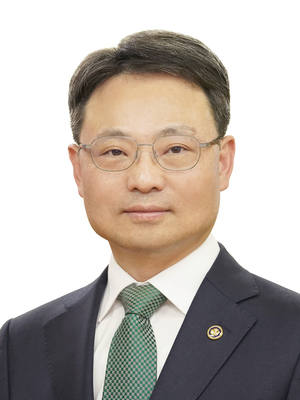
By Park Eun-sik
Forest fires have evolved into a year-round menace. Climate change is fundamentally reshaping the world's forests and upending daily life across the globe. The international community now confronts an unprecedented compound crisis driven by extreme heat, prolonged droughts, large-scale wildfires, and irreversible biodiversity loss. No single nation can insulate itself from these threats. The degradation of forests is a crisis shared by all of humanity — one that demands coordinated international action and solidarity.
It was against this urgent backdrop that the 6th APEC Ministerial Meeting on Forestry (MMRF6) convened in Shenzhen, Guangdong Province, China, from July 27 to 28. The gathering provided a platform for member economies to explore how forests can be conserved and sustainably managed amid the shared challenges of climate change, biodiversity decline, and forest-related disasters — and how those efforts can help forge a more sustainable future. Delegations from 21 APEC member economies, including the Republic of Korea, assembled under the theme "Toward a Green Asia-Pacific and Ecological Well-being for All" to chart policy directions and deepen cooperation toward global forestry objectives. The platform carries significant weight: APEC economies together account for roughly 60 percent of global GDP and about half of world trade, meaning that policy commitments forged here can shape forestry and trade practices across a vast share of the world economy. I attended the meeting as a representative of the Korean government, where I shared Korea's forest policy achievements and experience with the international community.
Forests rank among nature's most effective carbon sinks, underpinning life on Earth by safeguarding biodiversity and water resources. They are also economic assets that sustain local livelihoods. Protecting forests, therefore, is not merely an environmental imperative — it is a direct investment in the prosperity of generations to come.
The Joint Statement adopted at the meeting underscores a collective commitment to strengthening science-based sustainable forest management, combating illegal logging, promoting trade in legally harvested forest products, and maximizing the ecosystem services and values that forests deliver. In step with these international efforts, Korea is carrying out its revised 6th National Forest Plan, which aligns with both the Global Forest Goals — established under the United Nations Strategic Plan for Forests 2030 — and Korea's Nationally Determined Contribution under the Paris Agreement. Korea has also built a digital forest management system powered by satellite data and artificial intelligence, boosting management efficiency while strengthening the country's capacity to respond to transboundary forest disasters.
Korea's own trajectory — from a war-torn aid recipient to a nation that now shares its hard-won expertise with the global community — stands as one of the most widely cited examples of successful large-scale forest restoration. Beginning in the 1960s and 1970s, Korea undertook a nationwide reforestation campaign that transformed severely denuded landscapes into forested terrain, an achievement frequently cited by the international community as a benchmark for national-scale restoration. Drawing on that legacy, Korea is deepening cooperation with developing and climate-vulnerable countries by supporting reforestation and bolstering forest disaster response capabilities.
A central topic at the meeting was the conservation and restoration of mangrove ecosystems, recognized as a core component of nature-based solutions. Mangrove forests can sequester up to four times more carbon than tropical rainforests and function as natural breakwaters, shielding coastlines from typhoons and storm surges. The Asia-Pacific region is home to a substantial share of the world's remaining mangrove cover, giving regional cooperation on this ecosystem particular significance. In Vietnam, Korea restored 330 hectares of degraded mangrove forests, advancing both ecosystem recovery and higher incomes for local communities. The OECD recognized the project as a public sector innovation case, demonstrating that forest restoration can advance environmental recovery alongside sustainable community development.
Urban forestry and the restoration of waterfront ecosystems in the rapidly urbanizing Asia-Pacific region also featured prominently in discussions. During my visit to Futian Mangrove Ecological Park and the Dasha River Ecological Corridor in Shenzhen, I witnessed firsthand how ecological corridors and waterfront spaces can be seamlessly woven into urban environments, enabling nature and people to coexist even within a highly developed city. The experience served as a powerful reminder that the future of climate-resilient cities begins not with more concrete, but with more forests and green spaces.
Korea is likewise expanding green infrastructure in urban areas, deploying climate-responsive urban forests, urban wind corridors, and green safe zones for children. In addition, the country is developing 40 garden cities nationwide, transforming urban spaces into interconnected sustainable ecological networks. At the meeting, we shared these policies and experiences with fellow member economies, presenting a vision in which cities and forests grow in tandem.
Forests are a shared human asset that transcends national borders — a legacy we are duty-bound to preserve for future generations. Just as forests quietly prepare for spring beneath frozen winter ground, we must continue planting and nurturing seeds of green solidarity as the climate crisis deepens. Forest fire smoke and climate change do not halt at national borders; neither, however, does the power of cooperation to effect meaningful change.
The climate crisis is not a challenge any single country can resolve alone. By stewarding forests collectively and pooling our experience and expertise, we can build a greener future together. It is my hope that stronger forest cooperation across the Asia-Pacific region will take firm root and pave the way toward shared prosperity that endures beyond the climate crisis.
Park Eun-sik is the Minister of the Korea Forest Service. The views expressed in this article are the writer's own. — Ed.

