Korea's '10 SNUs' Plan Draws Backlash Over Funding Gap and Selection Transparency
Key Takeaways
- •The Ministry of Education selected Pusan, Chonnam and Chungnam national universities to each receive 70 billion won ($51 million) under the '10 Seoul National Universities' initiative.
- •The six non-selected regional flagship national universities will receive only about 40 billion won each in additional support, compared with roughly 100 billion won more for the chosen three.
- •Excluded universities and the Korean National University Professors Union warn the funding gap could entrench a new hierarchy across the national university system and demand disclosure of selection criteria.
- •Opposition People Power Party lawmakers criticized the exclusion of Daegu and North Gyeongsang Province, noting all three selected schools are in regions led by ruling-party governors.
- •The education ministry stated that geography played no role in the selection process, but has not yet detailed criteria or timelines for future funding rounds.
Schools left out demand transparency, warn selective funding could deepen disparities
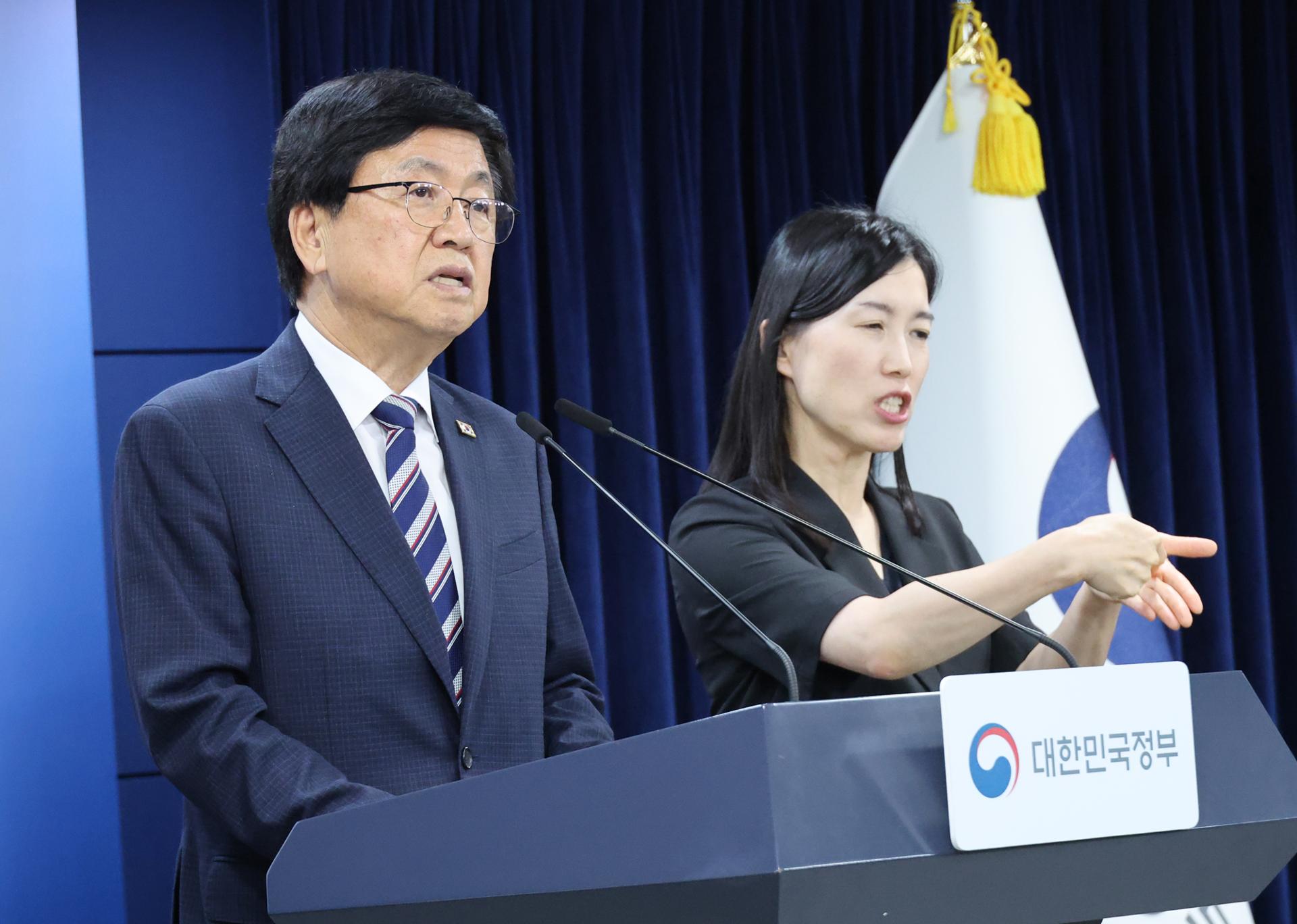
Education Minister Choi Kyo-jin on Tuesday announced the universities selected for the government's support package for regional flagship national universities at Government Complex Seoul. (Yonhap)
The government's initiative to create "10 Seoul National Universities" is facing growing backlash following the selection of three universities for concentrated funding, prompting questions over the transparency of the selection process and concerns that the initiative could create a new hierarchy among regional national universities. The program is the latest in a series of Seoul-led efforts to strengthen universities outside the capital, where enrollment pressure from South Korea's shrinking youth population has hit regional schools especially hard.
On Tuesday, the Ministry of Education selected Pusan National University, Chonnam National University and Chungnam National University as the first beneficiaries of the initiative. Each will receive 70 billion won ($51 million) in government funding to advance education in artificial intelligence and industries tied to regional strategic priorities.
While the three selected universities will each receive roughly 100 billion won more in government funding than last year, the six other regional flagship national universities will receive only about 40 billion won each in additional support for undergraduate education reform and shared university programs. Read more: Pusan, Chonnam, Chungnam national universities selected for '10 SNUs' initiative
Universities left out of the initiative warn that, by the end of the five-year program, the funding gap could lead to significant disparities in educational conditions, learning environments and research capacity between the three selected universities and other national universities.
Kangwon National University criticized the current approach of pitting nine regional flagship national universities against one another and prioritizing funding for only three, saying the broader goal of creating Seoul National University-level educational ecosystems across the regions risks being reduced to simply developing three departments at three universities.
The ministry has also yet to specify which universities could receive additional funding in the future or how much would be available, raising concerns that those left out will be forced into another round of competition for support.
The Korean National University Professors Union warned that selecting just three universities could create and entrench a new hierarchy across the national university system. It urged the government to lay out a concrete plan for the broader development of all national universities.
The evaluation criteria have also come under scrutiny. Kyungpook National University held an executive meeting Thursday to discuss its response to the decision. A day earlier, the university's faculty council issued a statement calling on the education ministry to disclose the selection process and evaluation results. It said the ministry should provide an explanation that both the university community and local residents can accept, including how the universities were assessed on criteria such as education and research capabilities and ties to regional industries.
Meanwhile, the controversy has taken on a political dimension, as all three selected universities are located in regions led by governors affiliated with the ruling Democratic Party of Korea.
Lawmakers from the main opposition People Power Party representing Daegu and North Gyeongsang Province held a press conference Thursday, criticizing the region's exclusion from the initiative. The 17 lawmakers described the decision as another form of regional discrimination carried out in the name of balanced national development.
Some lawmakers also questioned the results, noting that Kyungpook National University received a B grade in the government's Glocal University project evaluation, while Chonnam National University and Chungnam National University, both selected for the latest initiative, received C and D grades, respectively. The Glocal University project, a separate earlier program, also channeled large government grants to regional universities in need of revitalization, and the mixed grades have fueled calls for the ministry to clarify how the new selections were weighed.
Responding to the controversy over regional considerations, the education ministry said geography played no role in the selection process. How the ministry addresses the demands for disclosure — and whether it details the timeline and criteria for future funding rounds — is likely to shape the next phase of the debate among the excluded universities and opposition lawmakers.
Source: The Korea Times

