Kinetics Internet Portfolio Discloses 1,875 Ripple Shares in SEC Filing
Key Takeaways
- •Kinetics Internet Portfolio reported holding 1,875 Ripple shares in a Form N-PORT quarterly filing submitted to the U.S. Securities and Exchange Commission.
- •Ripple is privately held and its shares trade on no public exchange, making fund filings one of the few official records of who holds its equity.
- •N-PORT reports are filed by registered investment companies generally within 60 days of a quarter's end and reflect holdings as of the reporting date rather than real-time activity.
- •The SEC's 2020 lawsuit against Ripple ended in 2025 when both parties withdrew appeals, after a 2023 ruling found programmatic exchange sales of XRP were not securities transactions while institutional sales were.
- •Future N-PORT filings on the quarterly cycle will show whether the Ripple position grows, shrinks, or disappears.
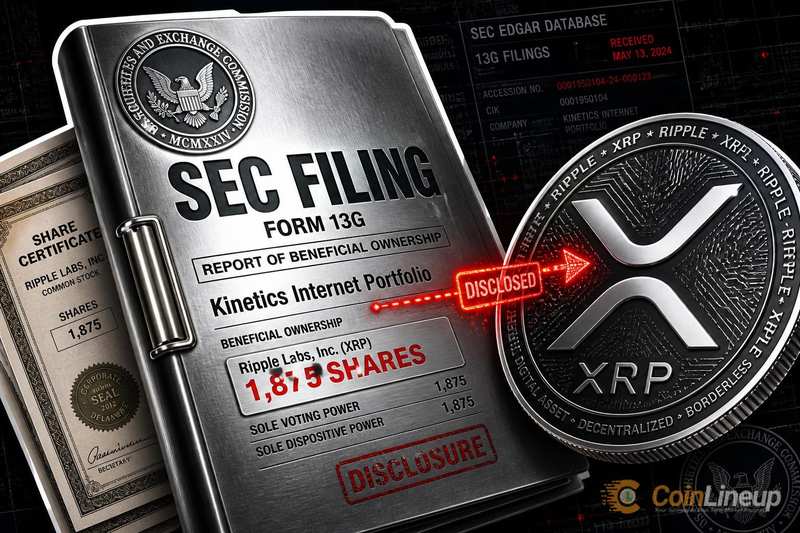
Kinetics Internet Portfolio disclosed a position of 1,875 Ripple shares in a recent SEC filing, a data point drawn directly from the fund’s regulatory paperwork and one that adds Ripple to the list of holdings investors are tracking through portfolio disclosures.
What the SEC filing says about Kinetics Internet Portfolio’s Ripple position
The disclosure appears in a filing submitted to the U.S. Securities and Exchange Commission under the fund’s registrant record. The document is a Form N-PORT, the quarterly holdings report that registered investment companies file with the SEC, generally within 60 days of a quarter’s end. N-PORT line items also carry a reported dollar value, which for a private holding reflects the fund’s fair-value mark as of the reporting date. The document lists 1,875 Ripple shares among the portfolio’s reported positions. For related coverage, see Stablecoin Yield in 2026: Treasury Rates, DeFi Savings, and Basis Spreads.
Fund portfolio filings of this type are periodic snapshots. They itemize the securities a fund held as of a specific reporting date, giving the public a structured view of a fund’s positioning rather than a real-time account of trading activity. For related coverage, see Bitcoin and the US Dollar: How DXY, Liquidity and Fed Policy Affect BTC.
Beyond the disclosed share count, the filing itself is the primary basis for this report. The position also appears in third-party filing trackers that mirror the fund’s SEC submissions, which catalog Kinetics Portfolios Trust records. For related coverage, see Bitcoin Fed Minutes Show Bigger Hawkish Split.
How the Ripple disclosure fits into the broader crypto investment picture
Ripple-related exposure tends to draw attention because it can be read as one signal of institutional interest in the company behind the XRP ecosystem. A single fund line item is a modest data point, not a market-moving event on its own. Ripple is also privately held, so its equity trades on no public exchange, which makes fund filings one of the few official windows into who holds the company’s shares.
The 1,875-share figure should be framed as a disclosure detail rather than evidence of a large strategic bet. Portfolio filings show what was held, not the reasoning behind it, and the position’s weight within the overall fund is not something the headline number alone establishes.
Regulatory clarity remains a recurring theme for how traditional funds approach digital-asset exposure, an issue at the center of debates like the push for the CLARITY Act in Washington. That backdrop has a concrete history here: the SEC sued Ripple in 2020 over XRP-related sales, a 2023 federal court ruling found that Ripple’s programmatic sales of XRP on exchanges were not securities transactions while its institutional sales were, and the litigation concluded in 2025 with both parties withdrawing their appeals. Disclosures that name Ripple-linked holdings are notable partly because that rulemaking backdrop is still unsettled.
Why investors are watching portfolio filings for crypto-related signals
SEC filings matter because they are official, standardized records that fund managers are required to submit. That makes them a more reliable reference point than secondhand summaries when tracking how funds position around digital-asset themes.
The limits are equally important. A portfolio disclosure reflects holdings as of a past reporting date, so it can lag current positioning, and it does not explain intent or subsequent changes. The filing is also mirrored on filing-aggregation services such as CapEdge, though the SEC document remains the authoritative record.
For readers monitoring this theme, the practical takeaway is to watch subsequent filings from the same fund and its peers, much as market participants track registration and compliance moves across the sector for signs of shifting institutional appetite. Because N-PORT follows a quarterly cycle, that update arrives on a predictable schedule: the next reporting period, not this single line item, will show whether the position grows, shrinks, or disappears.
Disclaimer: This article is for informational purposes only and does not constitute financial or investment advice. Cryptocurrency and digital asset markets carry significant risk. Always do your own research before making decisions.

