Kim Jong Un Receives Ambassadors From 10 Nations a Week After Snubbing Trump
Key Takeaways
- •Kim Jong Un personally received credentials from ambassadors of 10 countries, including Russia, Sweden and Vietnam, in a ritual no North Korean leader had performed in decades.
- •A constitutional change in March returned the credential ceremony to Kim, after the task had been handled by the head of the country's legislature since 1994.
- •The event came one week after Trump visited Asia hoping to meet Kim, who did not appear for the proposed encounter.
- •Kim said North Korea would strengthen cooperation only with countries that respect its sovereignty and are friendly toward it, and Pyongyang has made clear the United States is not among them.
- •The ceremony highlighted North Korea's selective reopening after pandemic border closures, with Sweden becoming the first Western country to return diplomats in September 2024.
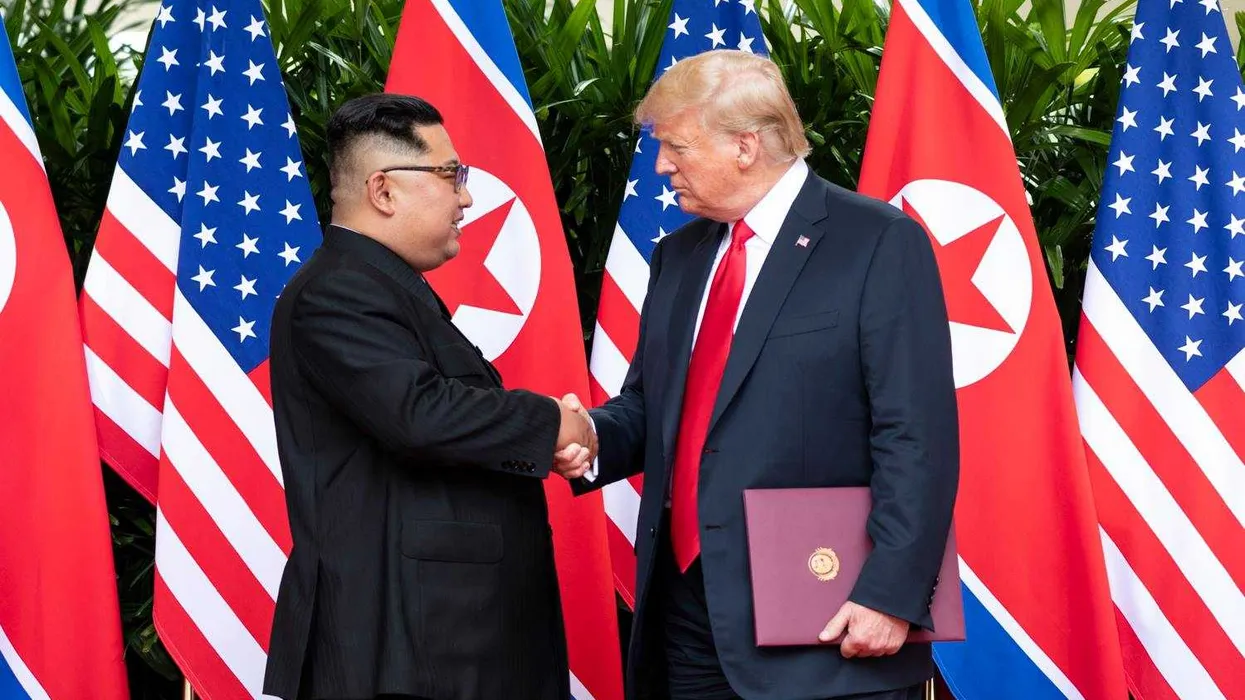
North Korean leader Kim Jong Un staged a show of global statesmanship on Sunday, personally receiving credentials from ambassadors of 10 nations — just days after snubbing President Donald Trump.
Kim accepted the envoys' credentials in person, The Wall Street Journal reported, citing state media. Ambassadors from Russia, Sweden, Vietnam and other countries sat in bright red armchairs in a red-carpeted hall while the North Korean leader delivered a speech.
The ceremony came one week after Trump visited Asia hoping to meet the 42-year-old dictator. Kim never showed up.
In his address, Kim warned of "political and economic chaos" around the world and said North Korea would expand diplomatic relations when doing so suited its security interests.
North Korea is "ready to strengthen the ties of friendship and cooperation with all other countries that respect the sovereignty of our state and are friendly toward us," Kim said, according to state media. Pyongyang has made clear the United States is not on that list.
On a visit to Russia last week, Kim's top aide, Jo Yong Won, accused Washington of an "inveterate hostile policy" that is pushing his country's security situation toward "unpredictable danger."
Talks with Washington over North Korea's nuclear program fell apart in 2019, when a second summit between Trump and Kim in Hanoi — hosted by Vietnam, one of Sunday's credential recipients — ended without agreement. Since then, Pyongyang has expanded its military and nuclear arsenal and said it will not return to negotiations unless it is recognized as a nuclear power. Kim has meanwhile cozied up to China and Russia, standing alongside Chinese leader Xi Jinping and Russian President Vladimir Putin at a military parade in Beijing last year.
"There is little incentive for Kim to rush into a meeting with Trump when he has China and Russia's backing," former South Korean nuclear envoy Lee Do-hoon told the Journal.
Sunday's event revived a ritual that no North Korean leader had performed in decades. The presentation of credentials is the formal step by which a newly arrived ambassador is accredited to the country where they serve, and it is traditionally performed before the head of state. Receiving credentials was routine for Kim's grandfather, state founder Kim Il Sung, but after his death in 1994 the task was relegated to the head of the country's legislature. A constitutional change in March gave Kim Jong Un the power to resume it.
The ceremony also signaled North Korea's selective reopening after it shut its borders early in the COVID-19 pandemic, prompting most Western embassies to close and international organizations to leave. Sweden, long a conduit for Western engagement with North Korea and a NATO member since 2024, was the first Western country to return diplomats, in September 2024. Even so, few permanent United Nations staff remain in the country, and whether more embassies follow Sweden's lead will be a visible measure of how far Pyongyang's reopening extends.
Kim met Trump three times during Trump's first term. On Sunday, however, the North Korean leader railed against attempts to restrict the rights of sovereign states — an accusation Pyongyang has often leveled at Washington — without mentioning the U.S.

