Kevin O’Leary Says Regulatory Uncertainty Is Holding Back Institutional Crypto Adoption
Key Takeaways
- •Kevin O'Leary argues that ambiguous U.S. regulations are deterring financial institutions and businesses from committing additional capital to blockchain technology.
- •His company already uses Circle's USDC stablecoin for treasury management and cross-border settlements, while other firms cannot determine which compliance requirements would apply to similar transactions.
- •He acknowledged progress under the GENIUS Act, which establishes a federal framework for payment stablecoins, but urged Congress to advance the broader CLARITY Act for wider digital asset guidance.
- •In remarks on October 28, O'Leary identified regulatory uncertainty and quantum computing as two distinct challenges to Bitcoin's long-term institutional adoption, operating on different time horizons.
- •O'Leary maintains that institutions stand ready to commit capital to the digital asset industry once a predictable compliance environment is established.
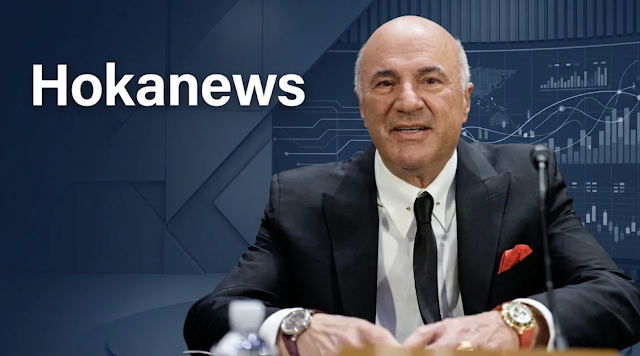
Investor Kevin O’Leary has identified regulatory uncertainty in the United States as a major obstacle to cryptocurrency adoption, arguing that unclear rules are preventing financial institutions and businesses from committing more capital to blockchain technology. His comments come amid a broader cryptocurrency market downturn, which he believes reflects challenges extending beyond Bitcoin’s price performance.
In recent remarks published on X, O’Leary said businesses recognize the potential of digital assets, particularly stablecoins, for payments, treasury management, and cross-border settlements. However, companies remain cautious because they lack clear regulatory guidance on the compliance requirements surrounding these activities.
The investor believes that establishing comprehensive cryptocurrency legislation could help remove the barriers preventing traditional financial institutions from expanding their involvement in the digital asset industry, arguing that institutions stand ready to commit capital once a predictable compliance environment is in place.
Kevin O’Leary Highlights Regulatory Barriers to Stablecoin Adoption
O’Leary explained that many businesses are interested in incorporating blockchain technology and stablecoins into their financial operations but have yet to make significant commitments because of regulatory uncertainty.
He also disclosed that his own company already uses Circle’s USDC stablecoin for treasury management and cross-border settlements, an arrangement that illustrates how stablecoins can be integrated into existing corporate financial activities.
However, O’Leary noted that other businesses remain reluctant to follow similar approaches. Their compliance departments cannot confidently determine which regulatory requirements would apply to comparable transactions, creating uncertainty around potential implementation.
The difference highlights a core challenge facing institutional adoption: while some companies have already incorporated stablecoins into their operations, others are waiting for clearer rules before allocating resources to digital asset services. Until those rules are defined, the same stablecoin use case can be routine at one company and unworkable at another, which is why legislative timelines in Washington carry direct operational consequences for corporate finance teams.
O’Leary Urges Lawmakers to Advance the CLARITY Act
O’Leary identified two legislative developments that could shape the regulatory environment for cryptocurrencies in the United States: the GENIUS Act and the proposed CLARITY Act. The pairing reflects how stablecoin policy and broader digital asset oversight have moved on separate legislative tracks, with the stablecoin framework advancing while wider regulatory questions remain pending before Congress.
He acknowledged progress under the GENIUS Act, which establishes a federal regulatory framework for payment stablecoins, while emphasizing the importance of advancing the CLARITY Act to address broader regulatory questions surrounding digital assets.
Whereas the GENIUS Act focuses narrowly on payment stablecoins, the CLARITY Act is viewed by O’Leary as an important step toward providing businesses with greater regulatory guidance across the wider cryptocurrency industry. In his view, clearer compliance requirements could give financial institutions and corporations greater confidence when evaluating blockchain integration, stablecoin payments, and other digital asset-related services. For companies weighing stablecoin treasury programs similar to the one O’Leary described, the progress of the CLARITY Act through Congress is therefore the development to watch.
Bitcoin Warnings Also Include Quantum Computing Risks
O’Leary’s latest comments follow warnings he made on October 28, when he identified regulatory uncertainty and quantum computing as two significant challenges facing Bitcoin’s long-term institutional adoption.
Quantum computing has raised concerns about the future security of existing cryptographic systems as computing capabilities advance. These concerns relate to the potential resilience of the cryptographic technologies used across digital asset networks.
Regulatory uncertainty, meanwhile, represents a more immediate consideration for businesses deciding whether to integrate blockchain technology or conduct digital asset transactions. The two risks operate on different horizons: regulatory clarity hinges on legislative action that can be tracked in real time, while cryptographic resilience depends on longer-term technical developments.
O’Leary’s remarks distinguish between companies already using stablecoins in their financial operations and institutions that remain on the sidelines while awaiting additional regulatory clarity. He maintains that progress on the CLARITY Act could help address these concerns and support broader institutional participation in the U.S. cryptocurrency market.
Writer: Marcus Renfield, Crypto Market Analyst & Onchain Writer. Renfield covers cryptocurrency markets with a focus on onchain data, Bitcoin price action, and emerging market narratives. Source: Hokanews.

