Kevin O'Leary Says Bitcoin Will Hit $1 Million—But There's a Quantum Catch
Key Takeaways
- •Kevin O'Leary said Bitcoin can reach $1 million only after the industry resolves the quantum computing threat nicknamed Q-Day, a risk he says keeps institutional Bitcoin exposure capped around 3% of portfolios.
- •O'Leary reversed his earlier thesis that Bitcoin and Ethereum capture most of crypto's upside, now predicting entire industries will standardize on whichever blockchain the first major exchange adopts for tokenization.
- •He argued that crypto or digitization will become the 12th S&P sector because it services all 11 existing sectors, pointing to the SEC's new Innovation Exemption allowing approved platforms to trade tokenized stocks.
- •Rather than backing individual AI models, O'Leary is investing in the power grid behind AI, including Nasdaq-listed BitZero, private power projects in Alberta and Utah, and his first-ever uranium position tied to small modular reactors.
- •O'Leary does not expect the Clarity Act to advance before the midterm elections, leaving the Innovation Exemption as the operative U.S. regulatory pathway for tokenized stock trading.
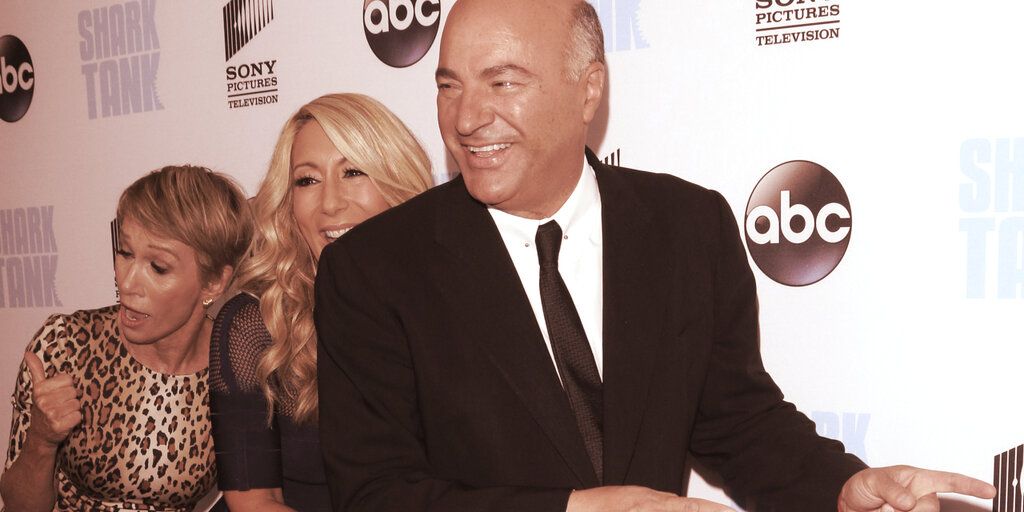
Kevin O'Leary says Bitcoin could reach $1 million, but only after the industry resolves the quantum computing threat known as "Q-Day." Until then, he argues, institutions will continue treating the asset more like a novelty than a core holding—and he laid out exactly what has to happen first.
Speaking with The Rollup podcast at Avalanche Summit in New York, the "Shark Tank" star and investor also retired his old thesis that Bitcoin and Ethereum alone capture most of crypto's upside. His new bet is that entire industries will standardize on whichever blockchain their exchanges pick first. And rather than betting on individual AI models, he said he is investing in the power grid behind them, including a first-ever position in uranium to back next-generation nuclear reactors.
O'Leary arrived at the summit wearing an $11 million baseball card around his neck—not a figure of speech. The investor and media personality was draped in a one-of-one Shohei Ohtani collectible, sealed inside a Tiffany-made holder set with 110 carats of diamonds and 2.2 pounds of white gold. His collecting group bought the card for a record sum this year, and it doubled as the perfect prop for the argument he spent the next few minutes making to the podcast.
"This asset class should be on-chain," O'Leary said, holding the piece up to the camera. "And it is on a chain right now. But it should be on blockchain."
The Rollup posted the interview on X, touching on his card, tokenization, his Ethereum reversal, and his uranium purchase:
THE KEVIN O'LEARY INTERVIEW. @kevinolearytv @robbieklages @andyyy
Timestamps: 00:00 Intro 00:41 Kevin Wears $11M Ohtani Card 02:27 Tokenization Becomes The 12th S&P Sector 03:09 Kevin Was Wrong About ETH 05:30 One Exchange Will Win 07:18 Kevin Buys Uranium In His Portfolio… pic.twitter.com/xU0MhCvE68
— The Rollup (@therollupco) September 17, 2026
He wasn't just talking about cardboard. The same week, the U.S. Securities and Exchange Commission issued its "Innovation Exemption," a new rule letting approved platforms trade tokenized stocks—digital tokens that represent shares of public companies and trade on a blockchain instead of a traditional stock exchange. To O'Leary, the regulatory shift and the necklace are the same story.
"This sector, if you want to call crypto or digitization a sector, will become the 12th sector of the S&P," he said, "because it services all 11 other sectors."
The label would carry real weight: S&P sector classifications are the buckets index providers and analysts use to organize the U.S. equity market, so a 12th sector would formally fold digital- infrastructure into mainstream benchmarks rather than leaving it a side bet.
O'Leary said he keeps no more than 5% of his portfolio in any single stock and no more than 20% in any one sector. Crypto, he noted, has run as high as 23% of his book over the past seven years.
A Changed Thesis on Ethereum
Eighteen months ago, O'Leary's thesis was simple: buy Bitcoin and Ethereum, and you captured 97% of the industry's volatility, because everyone would eventually standardize on Ethereum. That didn't happen. Activity has instead spread across rival smart-contract platforms, and which chain wins each vertical has become one of the industry's central debates.
"People aren't happy," he said. "Who's next? What other chain is going to get adopted?"
His revised view is that whole industries, not individual investors, will each pick their own blockchain—the way sports memorabilia might settle on Avalanche while stock exchanges land somewhere else entirely.
"I don't think it's going to be Ethereum anymore," he said. "I don't think it's fast enough. I don't think it's secure enough. That's an opinion, my own opinion."
Under his logic, whichever blockchain the first major exchange adopts for tokenization will see that token's value "go through the roof," because it becomes the plumbing every subsequent trade runs through. Everyone else loses out.
Betting on the Grid, Not the Models
O'Leary's other big theme is AI, and he says he is avoiding the mistake he made with Ethereum by not guessing the winner. Instead of backing individual models, he is investing in the power grid underneath them.
"You can't do AI without power," he said.
The bet tracks a real constraint: AI data centers have become one of the fastest-growing sources of electricity demand in the U.S., with grid access increasingly cited as the limiting factor for new facilities.
His holdings include BitZero, a former Bitcoin miner turned Nasdaq-listed power company with land, fiber, and permits in Norway and Finland, plus private power projects in Alberta and Utah. For the first time in his investing career, he is also long uranium—the actual commodity.
The "Shark Tank" star explained that small modular reactors—compact nuclear plants that can be built faster and smaller than a traditional power station—are headed for U.S. data centers, and none of them run without uranium fuel.
"You might as well buy the picks and shovels of that strategy," he said.
He also seems to be an e/acc himself, and showed no patience for forecasts of an AI slowdown. "There's no way there's going to be an AI slowdown," he said. "You let the Chinese beat everybody? Are you kidding? It's never going to happen." Asked to pick a side between AI doom and AI utopia, he didn't hesitate: "I'm in the cure cancer camp."
Bitcoin's Quantum Catch
Then came the trillion-dollar question: will Bitcoin ever hit $1 million? O'Leary said it will—with a condition.
"It will," he said, "if it can resolve the doubt creeping in around quantum computing, you know, breaking the algorithms and the chain and the encryption."
That refers to the theoretical risk that a sufficiently powerful quantum computer could one day forge the digital signatures that secure every Bitcoin wallet—a moment the industry has nicknamed "Q-Day."
"Some people are putting on a counter bet by investing in some of these nascent companies that are developing quantum computing software," O'Leary said. "It's a security play and that's also on the chain."
No quantum computer capable of that attack exists today, and estimates for when one might range from the early 2030s to never. The fear is already shaping how institutions invest, however: O'Leary has said elsewhere that it's why big funds cap Bitcoin exposure around 3% of a portfolio, treating it more like a sliver of gold than a core holding. A Google research paper published earlier this year argued that such a timeline could arrive sooner than the industry expects.
Any remedy would also be slow by design. Bitcoin's cryptography can only be swapped through the network's decentralized governance—developers, miners, and node operators all have to sign off on a protocol change—and the toolkit is only now maturing, with NIST finalizing its first post-quantum cryptography standards in 2024. The development to watch is whether quantum-resistant upgrades reach Bitcoin before the machines capable of forcing the question.
On regulation, O'Leary does not expect the Clarity Act—the bill meant to settle which U.S. agency actually oversees crypto trading—to move before the midterm elections. He believes Congress won't hand the current administration a partisan win on the issue now, but that a bipartisan version gets revisited once the midterms are behind them. Until then, the Innovation Exemption stands as the operative U.S. pathway for tokenized stock trading, making the SEC's approval decisions the nearest regulatory milestone to track.

