Wysemarket CEO Outlines Key Factors That Will Shape the Future of Prediction Markets in Africa
Key Takeaways
- •Kenya's Gambling Regulatory Authority announced in October 2026 plans to create a dedicated licensing category for prediction markets as part of its 2026/2027 licensing cycle, though the framework has yet to be finalised.
- •Femi Laniyan, CEO and Co-Founder of Nigerian prediction market platform Wysemarket, said regulation will play a major role in determining how prediction markets develop across Africa by clarifying platform operations, outcome verification, and user protection.
- •Prediction markets let participants trade contracts tied to future event outcomes, with prices reflecting collectively assigned probabilities that can shift as new information emerges, unlike opinion polls that capture sentiment at a single moment.
- •The industry's growth depends on addressing challenges including consumer education, market manipulation, limited participation, and the reliability of prediction outcomes, while regulatory rules differ across African countries.
- •Laniyan argued that African prediction markets must reflect local interests and realities rather than adopting models built for other regions, with Wysemarket offering predictions across entertainment, politics, sports, culture, and other areas of public interest.
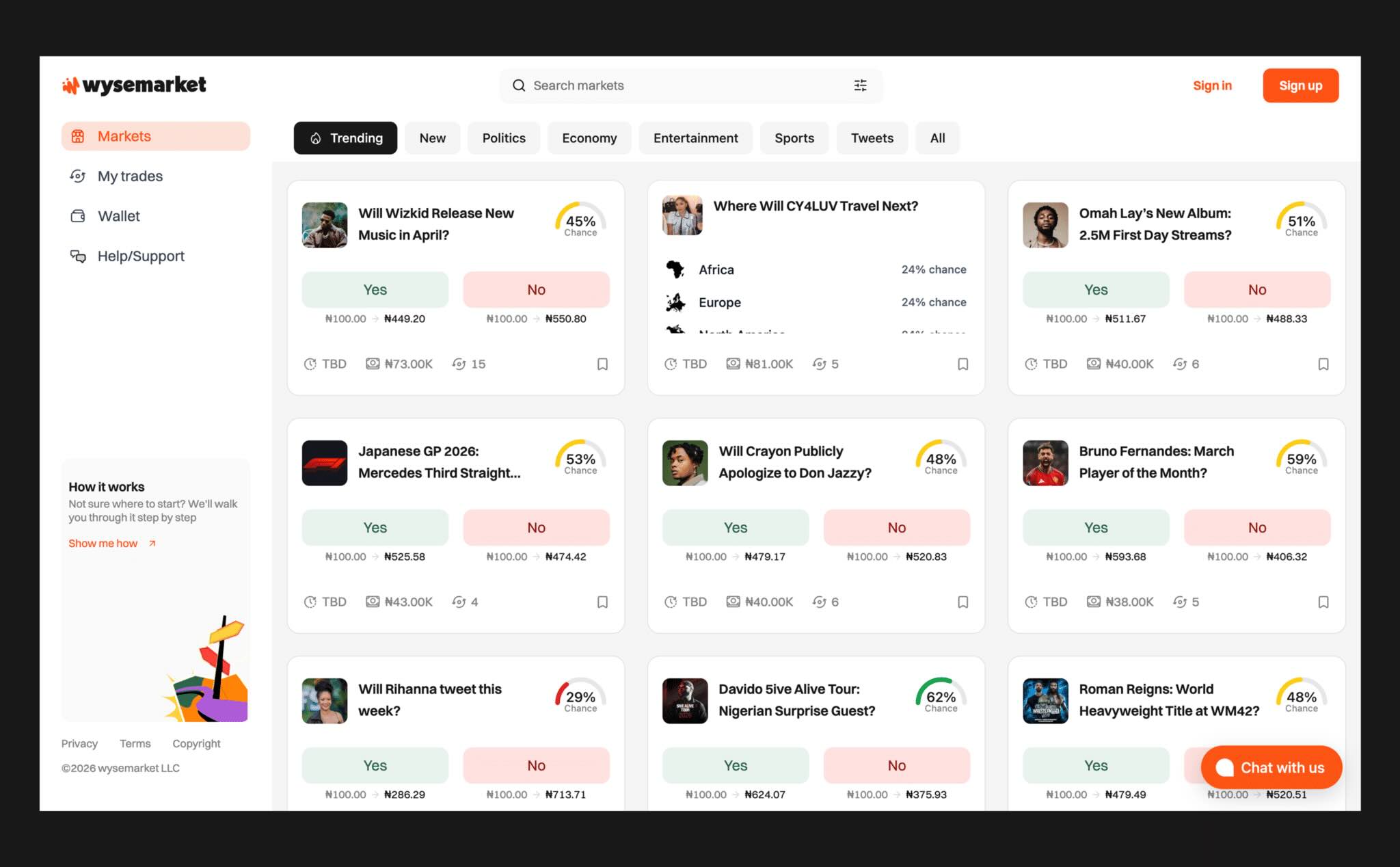
Africa’s prediction market industry is entering a new phase as regulators begin examining how the sector should operate, raising questions around consumer protection, market credibility, and the opportunities available to platforms built for African audiences.
In October 2026, Kenya’s Gambling Regulatory Authority disclosed plans to introduce a dedicated licensing category for prediction markets as part of its 2026/2027 licensing cycle. Although the framework has yet to be finalised, the move reflects growing regulatory attention toward an industry that allows people to forecast the outcomes of future events. The eventual licensing terms will define how prediction market services can legally operate in Kenya, making the framework’s finalisation one of the sector’s key milestones to watch.
For Femi Laniyan, CEO and Co-Founder of Nigerian prediction market platform Wysemarket, the development signals an important shift in how African markets are beginning to approach the industry.
"Regulation will play a major role in determining how prediction markets develop across Africa. As more people begin to participate, there has to be clarity around how these platforms operate, how outcomes are verified and how users are protected. The industry needs that level of structure to build long-term confidence," Laniyan said.
Prediction markets allow participants to trade contracts linked to the outcomes of future events, with prices reflecting the probabilities that participants collectively assign to those outcomes. Unlike traditional opinion polls, which capture public sentiment at a particular moment, prediction markets allow expectations to shift as new information becomes available.
Beyond regulation, the industry’s next phase will depend on whether these platforms can become useful sources of information for businesses, researchers, and policymakers. Across Africa, where consumer behaviour, economic conditions, and public expectations continue to evolve, prediction markets could offer additional insight into how people anticipate future developments, from economic policy decisions to entertainment trends and sporting competitions.
According to Laniyan, this potential could create opportunities beyond the act of making predictions.
"One of the opportunities I see for prediction markets in Africa is their ability to help us understand what people expect to happen, not just what they think today. Businesses make decisions based on expectations about the economy, consumer behaviour and market trends. If prediction markets are properly developed, the information they generate could become another useful input for those decisions," he explained.
Achieving that potential, however, will require addressing challenges around consumer education, market manipulation, limited participation, and the reliability of prediction outcomes.
The regulatory picture also differs across African countries. While some markets are beginning to develop specific frameworks, others have yet to establish clear rules for the industry. Questions around payments, licensing, cross-border participation, and the types of events that can be traded remain important considerations.
Local relevance is another factor Laniyan believes will shape the industry’s future. He argues that African prediction markets must reflect the interests and realities of their audiences rather than simply adopting models developed for other regions.
"Africa has its own conversations, economic realities and cultural interests. People are already making predictions about elections, entertainment, sports and economic developments every day. The opportunity is to build platforms that organise these expectations in a way that is accessible, credible and relevant to the people participating," he said.
Wysemarket is positioning itself within this emerging industry by offering users opportunities to make predictions across entertainment, politics, sports, culture, and other areas of public interest.
As the sector develops, its long-term success will also depend on whether operators can demonstrate that the information generated through these markets is reliable and useful beyond the platforms themselves.
"The next phase will not be determined by how many prediction platforms emerge, but by the value they create. We have to build trust, encourage informed participation and show that collective expectations can produce meaningful insights. That is what will make prediction markets relevant to Africa’s digital economy in the long run," Laniyan added.
With regulatory attention increasing and new opportunities emerging, Africa’s prediction market industry faces a defining period in which consumer confidence, local relevance, and the practical value of market information could determine its future. The markers to watch include how Kenya’s licensing category is finalised, whether countries still operating without clear rules establish frameworks of their own, and how the industry addresses consumer education, market manipulation, limited participation and the reliability of prediction outcomes.

