Historian examines Trump’s challenge to Kennedy’s legacy and the rollback of his signature programs
Key Takeaways
- •USAID and the Peace Corps' partnership with PEPFAR are credited with saving 91 million and 25 million lives, respectively.
- •Under President Trump, the Peace Corps has experienced massive staffing cuts and USAID has been reduced practically to nonexistence, leaving thousands of public servants unemployed.
- •Kennedy established the Peace Corps by executive order in March 1961, driven by Cold War strategy to compete with the Soviet Union for influence in developing countries and by an idealistic aim of encouraging young Americans to enter public service.
- •Kennedy and Eleanor Roosevelt championed equal pay for equal work, culminating in the Equal Pay Act signed in 1963, while Perry asserts Trump has no record of supporting women's rights and denounces related efforts as 'DEI' and 'woke.'
- •The Lilly Ledbetter Fair Pay Act, the first law Barack Obama signed in 2009, changed the law after the Supreme Court ruled against Ledbetter, who had missed the deadline to report pay discrimination because she was unaware of it.
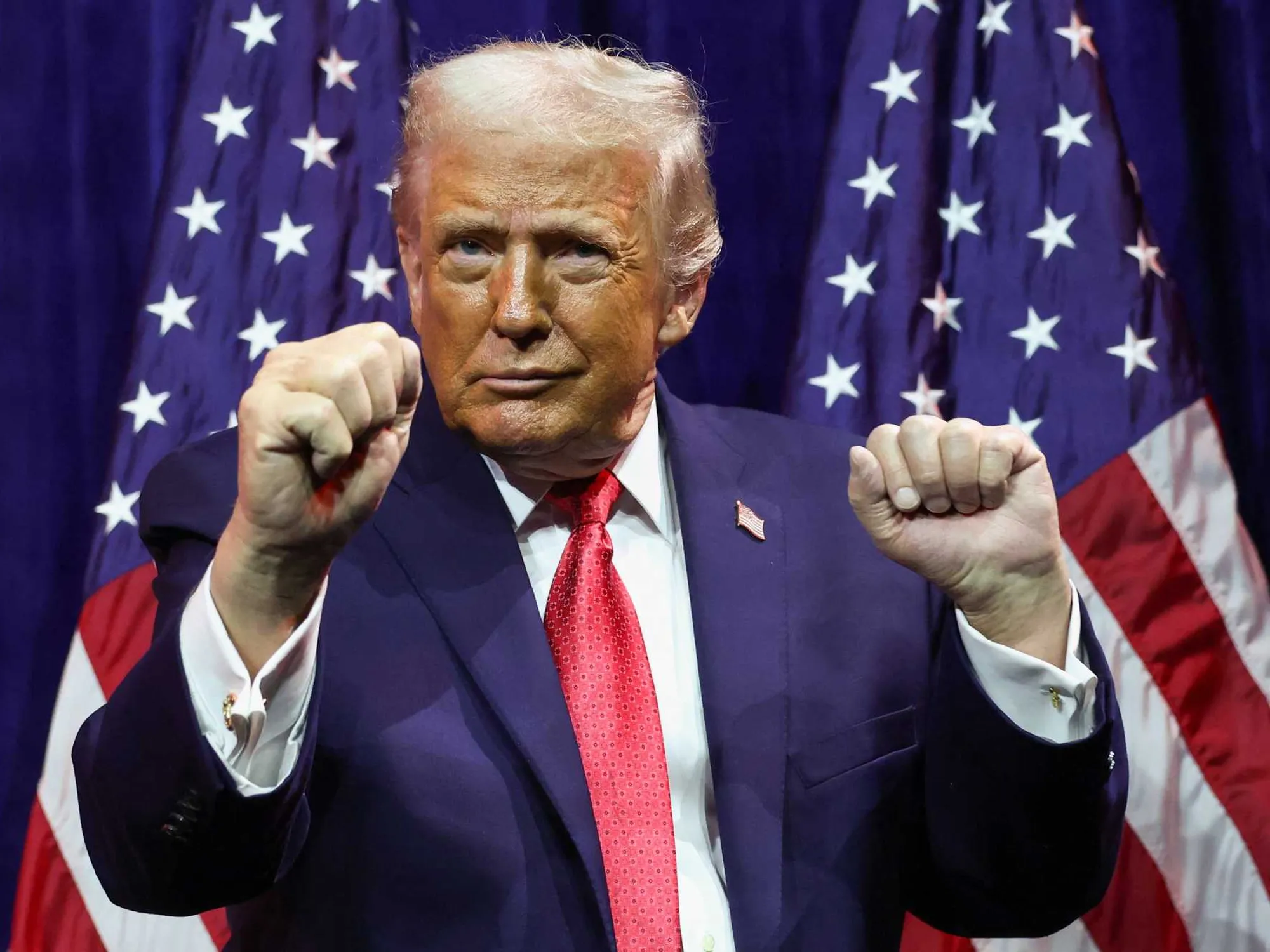
President John F. Kennedy established two major foreign-policy initiatives—the Peace Corps and the United States Agency for International Development (USAID)—with twin goals: helping the world’s least fortunate and improving the image of the United States.
The Peace Corps sends volunteers to developing countries to work in healthcare, education, infrastructure, women’s rights and entrepreneurship. USAID provided assistance in healthcare, education, environmental protection and the construction of democratic institutions.
Under President Donald Trump, the Peace Corps has experienced massive staffing cuts, while USAID has been reduced practically to nonexistence. Thousands of laid-off public servants remain unemployed after losing careers at agencies credited with saving 91 million lives through USAID and 25 million lives through the Peace Corps’ partnership with PEPFAR, an initiative created by President George W. Bush to distribute AIDS vaccines.
This has occurred as Trump has focused on renaming the living memorial to the assassinated Kennedy after himself. To discuss Kennedy’s legacy and his commitment to those programs, I spoke with historian Dr. Barbara A. Perry about her forthcoming book, Reconcilable Differences. Perry describes Kennedy as deeply proud of both initiatives, believing they could make the world better while strengthening the United States’ position in geopolitical negotiations.
Kennedy’s foreign-policy views were strongly influenced by former first lady Eleanor Roosevelt, who regarded the Peace Corps as a way to give young people valuable and stimulating life experiences. Perry recounts that history in her book and examines other ways Roosevelt helped shape the young Kennedy.
The interview also compares Kennedy and Roosevelt’s views on women’s rights with those of Trump and his supporters. Kennedy and Roosevelt recognized that women should receive equal pay for equal work, while Trump has denounced efforts to monitor such issues as “DEI” and “woke.” The following interview has been lightly edited for clarity, context and length.
Women’s rights: Eleanor Roosevelt, John F. Kennedy and Donald Trump
Rozsa: Given that Kennedy and Roosevelt worked to guarantee equal pay for equal work for women, how do President Donald Trump and his supporters reflect on their legacy by denying that this problem exists and supporting business deregulation?
Perry: Those, including Trump and his supporters, who believe the problem has been solved—that women earn as much as men and receive equal wages for equal work—are wrong about the current situation. They also appear not to understand the history and long arc of the problem.
During the Kennedy and Eleanor Roosevelt era, the president established the Commission on the Status of Women to pursue equality for women, particularly in employment. Eleanor Roosevelt had been fighting for that objective since the 1920s. At the time, there was not much of a public record for politicians to rely on because, although an Equal Rights Amendment had been introduced in Congress in the 1920s, there had been few votes on which politicians could take a position.
It is therefore an important part of both Kennedy’s and Eleanor Roosevelt’s legacies that they supported equal pay for equal work, especially because women then earned only about 60 cents for every dollar earned by men in the same kind of job. Pay has still not reached full parity. The last figures I read showed that it had improved significantly since the 1960s, perhaps reaching the high-80-cent or low-90-cent range. That is progress, but equal pay should mean dollar-for-dollar equality, or even somewhat more for women if their work warrants it.
Those who believe the problem has been resolved do not understand its history. The first Equal Pay Act for women, developed through the Kennedy commission, passed Congress and was signed into law by Kennedy in 1963. That was not long before his assassination and, sadly, after Mrs. Roosevelt’s death in November 1962. Even with that law, the country has not gone as far as it needs to.
A well-known case involving a woman named Lilly Ledbetter reached the Supreme Court in the early 2000s. The first law Barack Obama signed at the White House, within days of his inauguration in 2009, was the Lilly Ledbetter Fair Pay Act.
While working for Goodyear Tire and Rubber Company, Ledbetter did not realize that she was being paid less than male colleagues in comparable jobs. She learned about the disparity only after she and those colleagues had retired, when they discussed—or she learned about—their retirement benefits. Her benefits were far greater because she had been paid at substantially lower levels.
Under the 1964 Civil Rights Act, which prohibited gender discrimination in the workplace, employees had a short period in which to report that they were being underpaid relative to male colleagues. Ledbetter had missed that period because she did not know the discrimination was taking place.
The court ruled, with Alito writing the opinion, that the law set the deadline and that there was nothing it could do for Ledbetter. From the bench, Ruth Bader Ginsburg said Congress could change the law. Congress, led by Hillary Clinton, changed that aspect of the law, which is why it is named for Lilly Ledbetter.
Rozsa: You have discussed Presidents John Kennedy, Bill Clinton and Barack Obama, but not Trump’s record on equal pay for equal work—a cause I doubt he has ever supported during his career.
Perry: It is safe to say that gender equality and equal rights between the sexes are not issues that concern Trump, nor have they been issues he has been concerned with. His treatment of women and the way he speaks about them make clear that he is not interested in those questions as social problems to be addressed through government action.
You also mentioned the long-standing Republican effort to move away from government regulation. Ronald Reagan stated that position famously in his first inaugural address, when the country was emerging from the recession at the end of the Jimmy Carter years. Conditions were extremely difficult. Mortgage interest rates were in the 16-to-17-percent range. Today, people consider 7 percent bad, but rates were genuinely onerous then. Unemployment and inflation were also high.
In his 1981 inaugural address, referring to the country’s economic condition, Reagan said, “In the current situation”—meaning the very poor state of the economy—“government isn’t the solution to our problems. Government is the problem.” He represented the Reagan conservative tradition that went back to Barry Goldwater’s politics in the 1960s and promoted lower taxes and less government regulation.
I grew up in the 1960s and 1970s and heard my parents’ stories about the Great Depression. My father’s family lost their home because they could not pay the mortgage. They had to live with relatives and receive food from the local government. My grandfather lost his job, and the family could not make ends meet.
My parents spoke to me about Franklin Delano Roosevelt and how he saved the country during the Depression. My father was a World War II veteran, and my parents greatly admired Roosevelt’s leadership during the war. I therefore grew up believing that government could do good things and help people in trouble.
Over the years, I have known many people who opposed government and said, “Get the government off our backs.” I always respond that they say that until a tornado destroys their house, a wildfire reaches their property or a hurricane knocks down their business.
One example is James Baker, the former secretary of the Treasury and a close friend of the Bush family, especially George H.W. Bush. Baker experienced a terrible family tragedy when his very young granddaughter drowned after being pulled into a defective pool drain. I remember seeing Baker and his daughter, the child’s mother, on a talk show—I believe it was Larry King—saying they had come to Washington to speak with members of Congress about pool-drain regulations so that defective drains would not cause similar tragedies for other families.
Because they were Reagan-Bush Republicans, Baker and his family might at another point have said, “Get the government off our backs. We don’t like government regulation.” But personal experience showed them why regulations were needed.
The same is true of lawn darts. In the 1960s, they were a popular game somewhat like horseshoes, except that the objects had spikes instead of horseshoes. Players threw a roughly six-inch metal prong with plastic feathers and tried to land it inside a circle so that it would stick into the ground. Children were injured and may even have been killed after being impaled by lawn darts. As I say, it is all fun and games until someone is impaled by a lawn dart. The products were eventually banned from public sale.
The history of the Food and Drug Administration offers another example. In the 1920s, people became ill because of the way food was processed, and some drugs that should not have been sold reached the market. Regulations exist because someone identified a need for them.
The anti-government position associated with Trump is directed at regulations conservatives oppose. At the same time, conservatives support government involvement in pregnancy and women’s reproductive health, where they want the government to tell people what they can or cannot do.
Trump, again, has not shown concern for women’s rights, equal rights or the elimination of racism in the workplace, including through measures such as DEI. He has no record of doing so. His family has a record of racism, and he personally has a record of misogyny.
Foreign policy: Eleanor Roosevelt, John F. Kennedy and Donald Trump
Rozsa: I want to compare Trump and Kennedy in another respect. Why did Kennedy and Roosevelt consider the Peace Corps so important, and what does the Trump movement’s gutting of similar Kennedy-era programs such as USAID say about its priorities?
Perry: One reason—perhaps the sole reason—Kennedy supported the Peace Corps was strategic. He did not develop the concept himself. Other members of Congress had developed it before he became president. To his credit, he believed it was a good idea.
During his 1960 presidential campaign, Kennedy arrived very late at a rally for students at the University of Michigan. The students had waited a long time to see him and were extremely excited, hanging from trees and telephone poles. Kennedy said they were considering creating a Peace Corps that would send young experts like them—recent college graduates with various skills—into what were then called third-world countries, a term now replaced by developing countries.
He asked how many students studying medicine, for example, would volunteer. The crowd responded with a loud roar. In March 1961, a few months after becoming president, Kennedy signed an executive order creating the Peace Corps. Congress ultimately developed the program, but Kennedy established it and placed his brother-in-law, Sargent Shriver, in charge as director.
The timing matters because this was the height of the Cold War. The United States was competing against communism, led particularly by the Soviet Union and what was then called Red China or Communist China. The communist revolution there had succeeded in the late 1940s and early 1950s. The United States was trying to prevent the spread of communism, which it viewed as opposed to the country and its democratic system.
Kennedy knew that the Soviets were sending engineers, doctors, teachers and agricultural specialists to developing countries. The United States was competing for the allegiance of every country it could persuade to join its side. Countries that were not aligned with either the communists or the United States—countries that were neutral—were targets of both American and Soviet efforts.
That was probably the principal reason Kennedy moved ahead with the Peace Corps. There was also a more idealistic explanation. Kennedy was young—43 when elected president and still the youngest person ever elected to the office. Theodore Roosevelt was 42 when he became president, but he assumed the presidency through the vice presidency after William McKinley was assassinated. Kennedy therefore retains the record for youngest person elected president.
Kennedy looked youthful, particularly compared with Eisenhower, whom he replaced in the White House. Eisenhower was 70 and, at the time, the oldest president. He had been ill during his presidency and looked older, while Kennedy, despite private illnesses and fairly public back problems, appeared healthy and youthful.
Kennedy wanted to appeal to young people and believed in them. He had volunteered for military service before the United States entered World War II. He and his older brother joined the Navy and requested combat duty. Kennedy’s brother was killed in Europe, and Jack Kennedy nearly lost his life in the South Pacific.
He therefore strongly supported public service. The Peace Corps could encourage young people to enter public service while also meeting the strategic needs of the Cold War.
I have a cousin who is 13 years older than I am. She graduated from Saint Louis University in 1964 and was the first person in our family to earn a college degree. She was a very intelligent woman. The first thing she did after graduating was join the Peace Corps.
She had studied English and volunteered to teach the subject in the Ethiopian outback, in a small remote village. Along with teaching, she distributed vaccines and helped provide medical care. The program worked in her case, and Kennedy recruited her and many others into the Peace Corps.
Eleanor Roosevelt also understood the importance of international experience. As a young woman, she had developed intellectually and personally through study abroad in London. After becoming first lady, she traveled around the world and continued to do so almost until her death.
She understood the value of seeing the world, learning another language when possible and carrying the message of American democracy abroad. Those were things she had done exceptionally well.

