ProPublica and Texas Tribune Review Finds Ken Paxton's Senate Financial Disclosures Apparent Violations of Federal Ethics Law
Key Takeaways
- •Paxton reported seven homes as producing no income, but rental listings and residents' accounts indicate most were being rented, which ethics experts say violates federal disclosure law if income was received and undisclosed.
- •Paxton did not disclose three mortgages totaling $1.3 million on condos at Utah's Black Desert Resort, liabilities federal law requires reporting unless the properties are personal residences.
- •Paxton's reported net worth range rose from negative $1.9 million to $11.1 million to between $1 million and $27 million, driven largely by sharply higher valuations of the Oklahoma lodge and a Texas land plot rather than new acquisitions.
- •A business partner said Paxton's 20% stake in a Johnson County, Texas land plot has been worth roughly $1 million for years, though Paxton valued it at up to $50,000 in his prior filing.
- •Willfully falsifying financial disclosures can carry fines up to $50,000 or felony prosecution, but the Senate Ethics Committee has not formally sanctioned a member in 19 years, and no further disclosures are required before November.
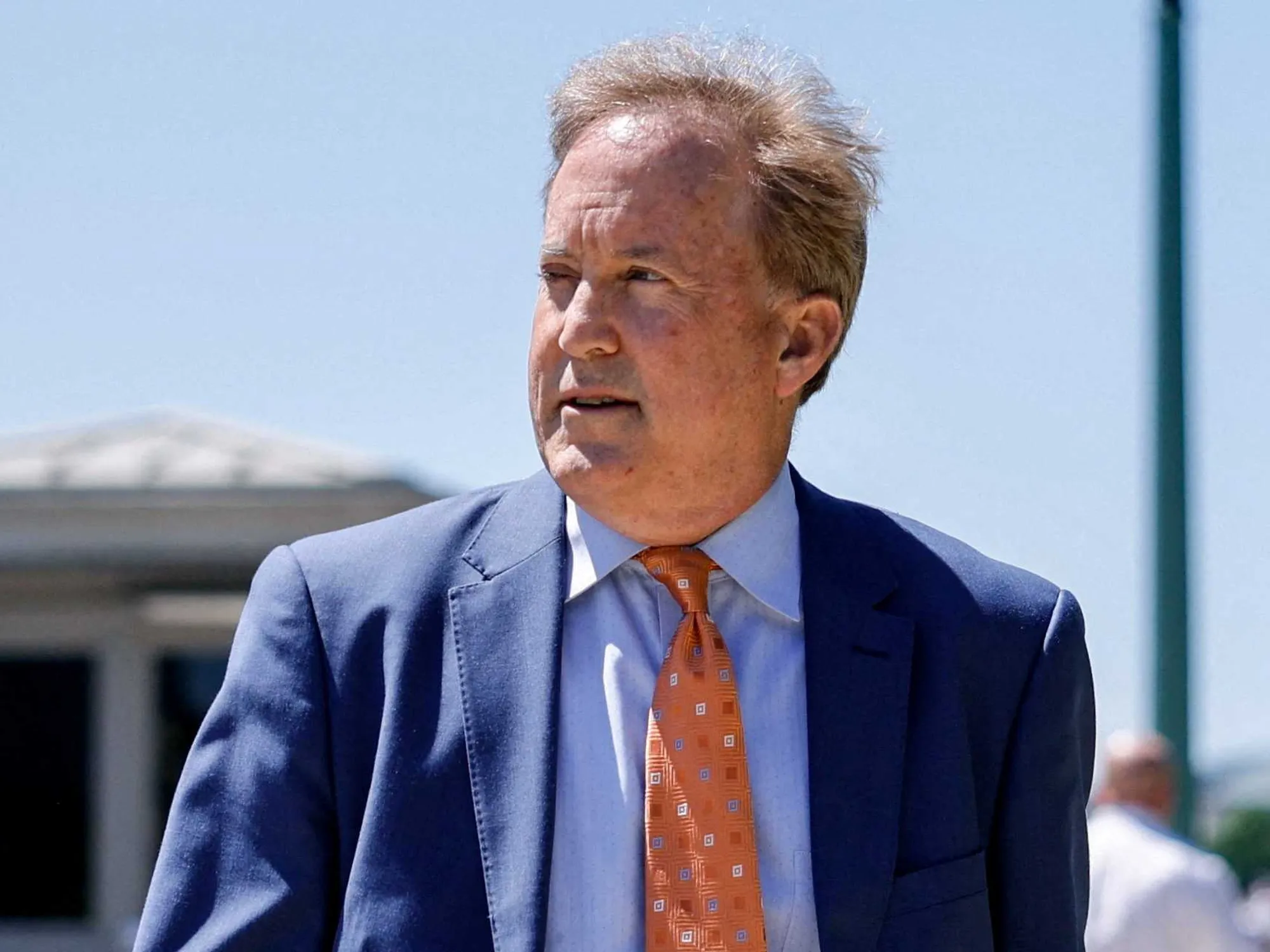
Texas Attorney General Ken Paxton, the Republican nominee for U.S. Senate, appears to have violated federal ethics law in significant ways in his recent disclosures of assets and liabilities, creating confusion about his net worth and holdings, a review by ProPublica and The Texas Tribune found.
The disclosures at issue are required under the Ethics in Government Act of 1978, the post-Watergate law that obliges federal candidates and officeholders to publicly report their assets, income and liabilities so voters and watchdogs can identify potential conflicts of interest.
Among the apparent violations: Paxton reported owning seven homes but said he earned no income from any of them. Yet all but one was listed for rent during the reporting periods, and current residents and neighbors at several of the addresses confirmed that the properties were being rented, the news organizations found. Receiving income and not reporting it violates federal disclosure law, three ethics experts said.
In addition, Paxton did not disclose mortgages on three condos at a Utah golf resort that federal law requires him to list as liabilities unless they are personal residences.
He also valued his stake in a vacant plot of Texas land at up to $50,000 on last year's filing, but his business partner told the newsrooms that Paxton's share has been worth roughly $1 million for years. Federal financial disclosure law requires property to be listed at fair market value.
The apparent errors and omissions obscure the full extent of Paxton's income streams, assets and debt, making it harder for voters to assess his finances as they consider whether to support him in November's election, the ethics experts said.
"It reflects either pure sloppiness on Paxton's part or a deliberate effort to conceal some of his investments and property holdings," said Craig Holman, a government affairs lobbyist for the nonpartisan good-government group Public Citizen.
If Paxton wins, an incomplete picture of his finances could prevent watchdogs from evaluating his conflicts of interest as a senator, Holman and others said.
A pattern of withholding
The apparent omissions fit a broader pattern. Over three terms as attorney general, Paxton has withheld financial information that could explain how he became a multimillionaire and amassed the resources to purchase more than a dozen properties across five states. He began listing many of these holdings on his state disclosures only after the Texas Ethics Commission closed a loophole in 2024 that Paxton had cited to leave them off. Most of the properties were acquired while he earned a government salary of $153,750.
In the new federal disclosure, filed in August after he received a three-month extension, Paxton reported a net worth between $1 million and $27 million — a significantly higher range than the negative $1.9 million to $11.1 million net worth he reported a year ago, before securing the Republican nomination but after declaring his candidacy for federal office.
The spike was driven not by new acquisitions but by sharp increases in the reported value of several of his properties.
Paxton's report omitted seven properties worth an estimated $5.2 million collectively as assets, including the Utah condos for which he did not disclose mortgages. Property records show he co-owns all of his known real estate holdings with his estranged wife, state Sen. Angela Paxton. The eight properties he did report are held by their blind trust, which is managed by a family friend.
Federal rules do not require candidates to report personal homes or properties from which they earn no money as assets, even if those properties are worth millions. That exemption is why the classification of the rentals — as income-producing or not — carries such weight in what the public gets to see.
At a time when voters feel anxious about their own finances and are wary of politicians growing rich in office, it would be wise for Paxton to be more transparent about his wealth, said Texas ethics and campaign finance lawyer Andrew Cates.
"If it were me trying to get people's vote, I would err on the side of transparency rather than not," Cates said.
Paxton declined to be interviewed and did not answer detailed questions about how he filled out the disclosure forms. Madison Cercy, a spokesperson for his campaign, said Paxton "has had a long and successful career outside of public service, including running his own small business as a lawyer. Stirring up partisan allegations is nothing more than a bad attempt to manufacture controversy where none exists."
From modest assets to a multimillion-dollar portfolio
Before being elected to the state Legislature in 2002, Paxton worked at a Dallas-area law firm and was a corporate attorney for JCPenney. His state financial disclosure for 2001 listed assets totaling no more than $170,000, a ProPublica and Tribune analysis found.
By 2015, his household net worth had grown to $5.4 million, according to financial records lawmakers subpoenaed in 2023 after impeaching Paxton on charges that he took bribes in exchange for helping an Austin real estate investor.
Those records — few of which were admitted into evidence during the 10-day Senate trial that ended in his acquittal — document how Paxton built a diverse portfolio including investments in a cellphone tower, an HVAC company, a cement supplier and a police body camera manufacturer. He netted $2.2 million when Motorola acquired the body camera firm in 2019, according to his income tax return from that year.
Soon after, he went on a real estate buying spree, snapping up six properties in Oklahoma, Florida, Utah and Hawaii. His impeachment defense team said Paxton made a prudent shift toward real estate at a time of rock-bottom interest rates.
Integrity questions in the Senate race
Questions about Paxton's integrity have dogged his U.S. Senate campaign. His opponent, Democratic state Rep. James Talarico, entered September with a narrow polling lead — uncharted territory in a state where Republicans have not lost a statewide race in 32 years. The seat is open because incumbent Republican Sen. John Cornyn is not seeking reelection.
A University of Texas/Texas Politics Project poll released last week found that just a third of respondents viewed Paxton as "honest and trustworthy." The same day the poll was published, a super PAC supporting Talarico aired an ad labeling the attorney general "the most corrupt politician in Texas." The commercial referenced Paxton's recently disclosed net worth.
Talarico's net worth, according to his most recent personal financial disclosure, was between $67,000 and $305,000 — little changed from the previous year. Like Paxton, Talarico did not include his single personal residence among his reported assets.
James Henson, director of the Texas Politics Project, said the questions surrounding Paxton's latest financial disclosures reinforce a longstanding narrative that the attorney general is secretive about his finances and may have leveraged his public position for personal gain.
"It's his choice how much he explains or doesn't explain," Henson said. "But I think that comes with a potential cost, and we're seeing that in public opinion."
Rental properties reported as income-free
Paxton's pivot to real estate appears designed to supplement his salary as attorney general. The newsrooms found recent rental listings for six of the properties he disclosed but said produced no income: two homes in Ocala, Florida; a home and a condo in Austin; a home in College Station, Texas; and a vacation lodge in Broken Bow, Oklahoma.
A tenant confirmed to the newsrooms that she is living in one of the Florida houses. At the Austin condo complex, a next-door neighbor said Paxton's unit has a renter. And his five-bedroom, three-story Oklahoma lodge is listed online as a short-term rental for up to $1,200 a night, with fall bookings filling up fast.
On his disclosure forms, which require real estate income to be reported, Paxton selected the option "None (or less than $201)" for each property.
Undisclosed mortgages at Black Desert Resort
Federal law requires candidates who are not currently in Congress to report all loans exceeding $10,000, except those on personal residences. Paxton did not report three mortgages totaling $1.3 million for condos at the Black Desert Resort in southwest Utah, which is known for its world-class golf course. He purchased the properties in February; the reporting period for his most recent disclosure ran through mid-May.
Reporters found the mortgage documents in local land records. Each contains an addendum used for rental properties, said New Jersey real estate lawyer Daniel M. Shlufman. The addendum removes the requirement that the unit be owner-occupied and allows the lender to collect rent directly from tenants if Paxton were to default on the loan.
Paxton purchased another condo at the resort in 2025, which he did disclose on his most recent report as both an asset and a liability. Land records show he obtained a $640,000 mortgage for it. The resort advertises a program in which it leases units purchased by investors, but it declined to say whether Paxton's properties were enrolled.
"It's kind of mind-boggling to think about having four homes at one resort property and imagining those are for personal use," said Cynthia Brown, a senior lawyer at the government watchdog Citizens for Responsibility and Ethics in Washington.
Revalued properties, unexplained
The most significant changes between Paxton's 2025 and 2026 reports involved the valuations of the Oklahoma lodge and a plot of land outside Fort Worth, whose values he said had increased by millions of dollars.
He appears to have switched from reporting the properties' assessed values, set by the local county, to the higher estimates of what they would fetch on the open market. His initial use of the lower values appears to defy federal rules aimed at aligning candidates' disclosed property values with what they are actually worth. While the Senate Ethics Committee instructs filers that they may use a recent tax assessment to value certain property, they must adjust it to market value if the assessment is below that. In such cases, valuations must be disclosed as a specific dollar figure rather than a range.
On both of his annual reports as a Senate candidate, Paxton listed ranges for each disclosed property's value.
Last year, Paxton reported the Oklahoma lodge, just north of the Texas border, as worth between $100,001 and $250,000. The local county assesses the property at $176,000, while its estimated market value is more than $1.5 million, according to real estate websites. This year, his disclosure valued the property at between $1 million and $5 million.
Likewise, Paxton valued a 42-acre plot of undeveloped land in Johnson County, south of Fort Worth, at between $15,001 and $50,000 last year. The county assesses the property as farmland worth $20,008 but estimates its market value at $2.9 million. This year, his disclosure listed the property as worth between $1 million and $5 million.
Paxton bought the land in 2006 with a group of investors including Rob Orr, with whom he served in the Texas House of Representatives. Orr, who manages the investment, said in an interview that Paxton's 20% stake is worth about $1 million.
"It would have been around a million for quite a while, probably the last four or five years," Orr said. "It has increased in value because of zoning and because of time."
Orr said the group bought the plot intending to hold it until growth spreading from the Dallas-Fort Worth area made it attractive for redevelopment, and that the group is now negotiating a sale to a developer. Last year, Orr persuaded the City Council in Burleson to rezone the land, which had been restricted to agriculture, to permit retail and housing.
Paxton's decision to significantly revalue his assets without explanation is "very strange," said Margaret Dylus-Yukins, senior counsel for ethics at the nonpartisan Campaign Legal Center, which advocates for strong disclosure rules. Dylus-Yukins, who spent six years analyzing executive branch officials' financial disclosures for the U.S. Office of Government Ethics, said that agency would ask filers to explain major changes in writing.
"When you have public officials that appear to be fudging the numbers on their disclosure forms, and the Senate Ethics Committee is letting that slide, then you're not only eroding trust in the committee but the candidate himself," Dylus-Yukins said, referring to the significant differences between the filings.
The ethics committee did not respond to requests for comment. Candidates or senators who willingly falsify financial disclosures can be fined up to $50,000 or prosecuted for making a false statement to the government, a felony. The committee rarely investigates senators and has not formally sanctioned a member in 19 years.
Candidates are not required to file any further federal financial disclosures before the November election.
This ProPublica report, co-published with The Texas Tribune, was written and reported by Zach Despart, Kayla Guo and Alexandra Glorioso.
