Georgia Churches and Lawmakers Press Kemp on Why National Guard Troops Remain in Washington, D.C.
Key Takeaways
- •A coalition of Georgia churches and state legislators, including New Birth Missionary Baptist Church, Big Bethel AME Church, Common Defense, Sen. RaShaun Kemp, Reps. Karen Lupton, and Ruwa Romman, sent Gov. Brian Kemp a letter demanding answers about how long Georgia Guard troops will remain in Washington, what training they received, and whether they can still respond to emergencies in Georgia.
- •Georgia currently has 556 National Guard members stationed in Washington, D.C., the largest contingent of any state within a total deployment of 3,073 troops.
- •President Trump converted the deployment from a temporary anti-crime mission into an open-ended operation running through January 20, 2029, spanning both the 2026 midterm elections and the 2028 presidential race.
- •The National Guard Bureau awarded a $292 million contract to Placemakr to provide up to 2,000 apartment-style housing units, the largest interagency lodging acquisition in National Guard history.
- •The deployment costs more than $50 million per month, with estimates placing the total expense through 2029 at roughly $1.4 billion and spending to date at approximately $800 million to $900 million.
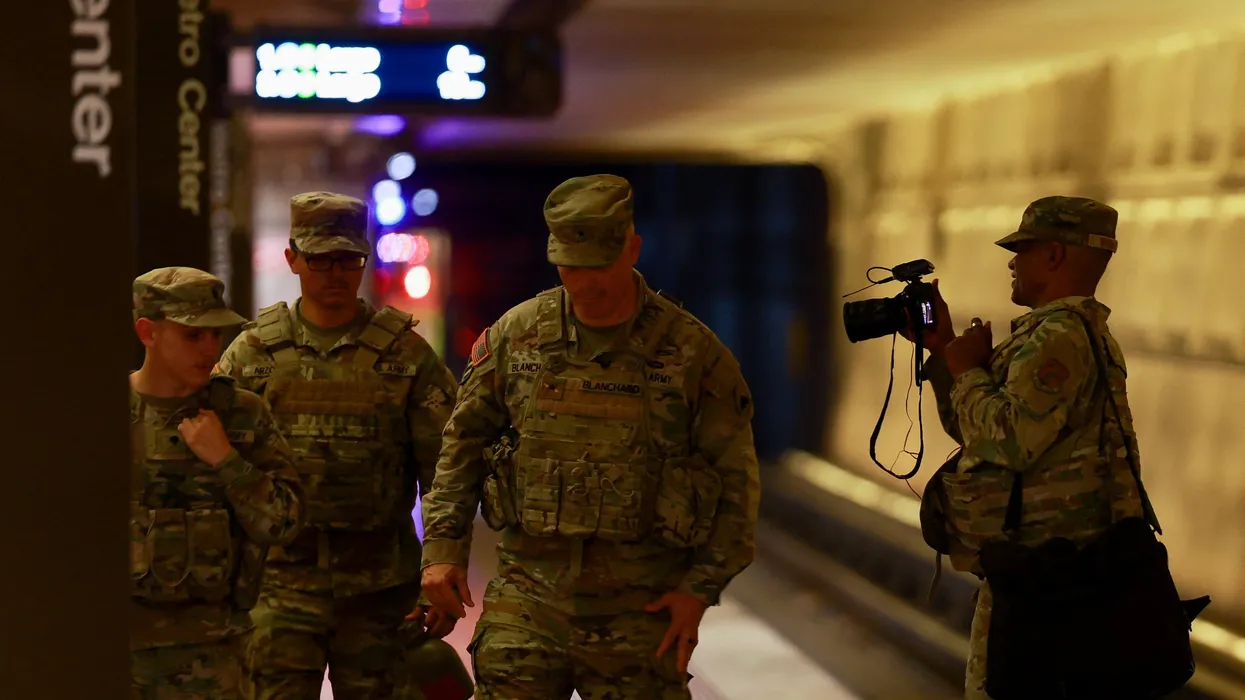
Georgia churches and state lawmakers are pressing Gov. Brian Kemp (R) to explain why hundreds of Georgia National Guard troops are still stationed in Washington, D.C., even though the events that originally justified their deployment have all ended.
President Donald Trump initially brought National Guard troops to the capital, citing a "crime emergency" and a role in the nation's 250th birthday celebrations. He later declared the city safe, but said the troops were still needed to help beautify it and address homelessness. Additional assignments followed for security at the State Fair, the July 4 celebration, and a Grand Prix event in Washington. In practice, Guard soldiers have largely been seen standing around, walking through the city, or picking up trash, and many told National Public Radio they do not understand why they are still there.
The Department of Defense said in November 2025 that the troops had completed their "beautification efforts." Nearly one year later, the reason for their continued presence remains unclear. Trump converted what began as a temporary anti-crime deployment into an open-ended mission set to run through January 20, 2029, when he is scheduled to leave office. That timeline would place the deployment across both the 2026 midterm elections and the 2028 presidential race.
According to The Atlanta Journal-Constitution, a Georgia coalition sent Kemp a letter demanding answers about how long the soldiers intend to remain in Washington, what training they received, and whether they would be able to help when Georgia inevitably has an emergency of its own. The appeal to Kemp highlights the Guard's dual structure: governors command their state's units for domestic emergencies unless those units are called into federal service, and Guard members are part-time citizen-soldiers who typically hold civilian jobs alongside their military duty.
The report noted that 556 Georgia Guard members are currently stationed in Washington, part of a total of 3,073 soldiers deployed to the U.S. capital — "the largest contingent of any state, according to the most recent figures," the AJC reported.
"Georgia's National Guard exists first and foremost to serve the people of Georgia," the letter states. "Keeping hundreds of Georgia citizen-soldiers on an extended domestic policing mission hundreds of miles from home reduces resources available to our communities, commits taxpayer dollars to an expensive federal operation, and involves our state in establishing troubling precedents military involvement in civilian policing and elections."
Signatories include New Birth Missionary Baptist Church, Big Bethel AME Church, and Common Defense, along with state Sen. RaShaun Kemp and state Reps. Karen Lupton and Ruwa Romman, according to the coalition's announcement.
Recent reporting has also revealed how much the federal government is spending to keep the soldiers housed in the city. The troops initially stayed in hotels, but in July it was reported that they were being moved into long-term housing.
"The National Guard Bureau has awarded a $292 million contract to Placemakr to provide up to 2,000 apartment-style units for troops supporting Joint Task Force–District of Columbia," Federal News Network reported. "The housing contract is the largest interagency lodging acquisition in National Guard history."
In a press release, the National Guard said the new housing would "provide a long-term housing solution to improve troop readiness."
PBS News has reported that the mission is costing more than $50 million each month, with an estimate cited in its reporting putting the cost of the deployment through 2029 at roughly $1.4 billion. The exact official total to date has not been publicly released, but an estimate based on that monthly figure puts the cost so far at roughly $800 million to $900 million — not including the $292 million Placemakr contract.
Source: Alternet

