Kazakhstan Grants Crypto Tax Exemption by Presidential Decree in Push to Become Digital Asset Hub
Key Takeaways
- •Crypto trading income will be exempt from income tax only when transactions take place on licensed and regulated platforms in Kazakhstan.
- •Investors may voluntarily disclose digital assets held on unregulated foreign platforms and transfer them to licensed domestic venues.
- •The decree calls for stablecoin mechanisms to support cross-border payment settlement for import and export businesses, though technical rules have not yet been set.
- •Mining operations may use associated gas and natural gas from oil and gas fields if the state does not require that gas for its own needs.
- •Kazakhstan is also developing a state Digital Asset Fund and a planned crypto reserve fund with a target size of USD 500 million to USD 1 billion.
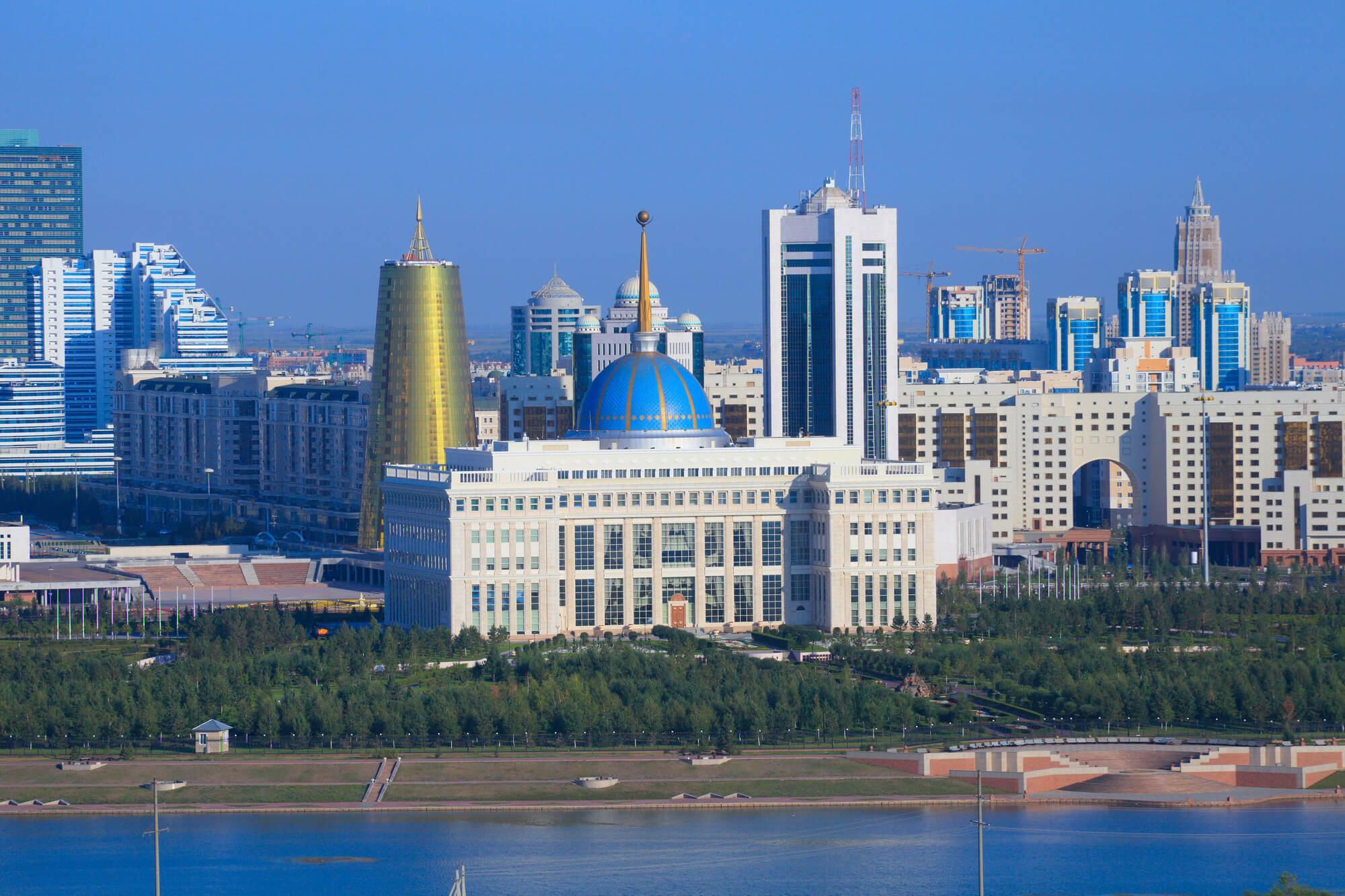
President Kassym-Jomart Tokayev has signed a decree aimed at advancing Kazakhstan's cryptocurrency industry, with a crypto tax exemption at its core that frees trading income on licensed, regulated platforms from income tax.
The decree is not a standalone law but a joint measure developed by three institutions: the Ministry of Artificial Intelligence and Digital Development (MAIDD), the National Bank of Kazakhstan, and the Astana International Financial Centre (AIFC). Tokayev signed the decree on 7 July 2026, with MAIDD announcing it publicly the following day. Legally, the measure builds on the 2023 Law on Digital Assets and the licensing requirement for unbacked crypto exchanges that has been in effect since 1 May 2026. In substance, the decree bundles three policy levers: a trading-income tax exemption, stablecoin mechanisms for cross-border payments, and a new energy rule for mining operations.
Tax Exemption Tied to Licensed Platforms
The decree's central measure prioritizes regulated capital. Income from trading digital assets will remain tax-free going forward, provided the transactions take place on platforms licensed and regulated within Kazakhstan. The government thus ties the tax benefit directly to the use of approved infrastructure. Anyone trading through unregulated channels receives no such benefit. The incentive effectively draws users toward licensed exchanges, which are required to register with the National Bank.
That design makes tax policy part of the supervisory framework. Rather than exempting crypto trading income across the board, Kazakhstan is attaching the benefit to registration, oversight, and domestic platform use. For users and exchanges, the practical dividing line is therefore not simply whether an asset is digital, but whether the trading venue falls inside the licensed system.
In addition, the decree introduces a voluntary disclosure mechanism. Investors can declare digital assets previously held on unregulated foreign platforms and then transfer them to licensed domestic platforms. Holdings that have been parked abroad can thereby flow back into the regulated system. The tax incentive and the disclosure mechanism work in tandem, both steering capital into the same controlled structure.
MAIDD, the National Bank, and the AIFC led the drafting of the decree. Zhaslan Madiyev, Minister of Artificial Intelligence and Digital Development, linked the measure to a clear location-policy objective. Through it, the government aims to channel foreign capital and skilled workers into a transparent, state-controlled system.
"Our goal is to make Kazakhstan a magnet for global capital and expertise while ensuring maximum transparency."
— Zhaslan Madiyev, Minister of Artificial Intelligence and Digital Development
Stablecoins for Cross-Border Payments
Beyond trading, the decree addresses payments infrastructure. Stablecoins — digital tokens whose value tracks a reference currency such as the US dollar — offer greater predictability for payments compared to more volatile cryptocurrencies. The decree provides for developing mechanisms to use such tokens in cross-border payment settlement, with a focus on import and export business.
Kazakhstan positions stablecoins not as a speculative instrument but as infrastructure for foreign trade. For a commodity-exporting country whose trade depends heavily on international payment routes, the approach aims at faster and cheaper settlement. Traditional foreign transfers run through multiple correspondent banks, incurring both time and fees. Stablecoin transfers promise more direct settlement. However, the decree does not yet specify concrete technical requirements.
That leaves the implementation phase decisive. The decree establishes the policy direction, but the operational rules will determine how stablecoin settlement is connected to licensed platforms, bank oversight, and import-export documentation. Until those details are published, the payments component remains a framework rather than a ready-made commercial rail.
Mining Operations Gain Access to Associated-Gas Power
The third policy lever concerns energy supply for mining. The decree permits the use of associated gas and natural gas from oil and gas fields to generate power for mining operations, on the condition that the state does not need the gas for its own purposes. Associated gas is produced during oil extraction and is otherwise often flared — burned off unused by operators.
Kazakhstan has long ranked among the world's leading locations for Bitcoin mining. According to data from the Cambridge Centre for Alternative Finance, the country ranked third in the global hashrate table in 2022, a position originally built on cheap electricity. After a wave of regulation and repeated grid bottlenecks, the sector came under pressure and some miners departed.
By freeing up associated gas, the government opens an additional energy source for the industry. For mining operators, otherwise unused gas lowers electricity costs without placing further strain on the public grid. Simultaneously, the decree links the crypto industry more closely to the country's dominant oil and gas sector, expanding an existing area of strength in a targeted manner.
The condition that state needs come first is important because it limits the measure to surplus or otherwise available gas. In regulatory terms, mining is being offered a controlled energy channel rather than unrestricted access to public power resources.
From the 2023 Law to the Planned State Reserve
The July decree marks the provisional endpoint of a multi-year regulatory effort. The legal foundation is the 2023 Law on Digital Assets, supplemented by the licensing requirement for unbacked crypto exchanges effective since 1 May 2026. These exchanges must register with the National Bank. Previously, Tokayev had set a deadline of 2026 for regulators to produce a comprehensive digital-asset law. The new decree expands the existing framework rather than replacing it.
At the same time, Kazakhstan's leadership is advancing a state reserve project. In his state-of-the-nation address in September 2025, Tokayev announced a state Digital Asset Fund to be managed by the National Bank's investment company. In November 2025, the National Bank outlined plans for a crypto reserve fund with a target volume ranging from USD 500 million to USD 1 billion. The fund is expected to draw on a combination of confiscated assets, repatriated foreign holdings, and mining proceeds. Central bank chief Timur Suleimenov emphasized that the fund would invest primarily in ETFs and shares of digital-finance companies, proceeding cautiously on direct crypto exposure.
Taken together, the tax exemption, disclosure route, stablecoin work, mining-energy rule, and planned reserve point to the same policy preference: bringing crypto activity into channels the state can license, monitor, and connect to existing financial and energy institutions. Overall, a state-orchestrated approach is emerging. Whereas Switzerland's Crypto Valley developed from the bottom up, Kazakhstan is steering its crypto sector deliberately from the top, with regulation serving as a location-policy instrument rather than a defensive mechanism.

