Tanker Market: Can Kazakh Crude Fill the Gaps?
Key Takeaways
- •The CPC pipeline, which transits Russian territory to the Black Sea, handles approximately 80% of Kazakhstan's crude exports and serves as the country's primary export conduit.
- •Drone strikes in July caused three separate suspensions of loading operations at the CPC terminal, with one tanker catching fire during loading.
- •Kazakhstan's July crude exports dropped to approximately 1.3 million barrels per day, a sharp decline from the May peak of roughly 1.9 million barrels per day.
- •Cargo war risk insurance premiums for CPC shipments surged approximately fivefold within three weeks, rising from 0.2% to roughly 1% of cargo value.
- •Kazakhstan's smaller alternative export routes lack the capacity to offset a prolonged CPC shutdown, underscoring the terminal's critical role in global crude supply flows.
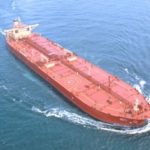
Tanker Market: Can Kazakh Crude Fill the Gaps?
Published in Hellenic Shipping News, 10 August 2026
Kazakhstan's crude export operations faced repeated disruptions in July as drone strikes targeted tankers at the Caspian Pipeline Consortium (CPC) loading terminal near Novorossiysk on Russia's Black Sea coast, raising questions about the reliability of Kazakh crude flows and the broader implications for the global tanker market. The CPC pipeline, which originates in Kazakh oilfields and transits Russian territory to the Black Sea, handles approximately 80% of Kazakhstan's crude exports, making it the primary conduit for one of Central Asia's largest oil producers and a significant non-OPEC contributor to global supply.
According to Gibson Shipbrokers Ltd., loadings were halted three separate times in July. The first suspension occurred on 21 July after a drone struck a tanker on the mooring. Just two days later, additional strikes hit two more tankers, one of which caught fire while loading. With few viable alternative export routes available, Kazakhstan was compelled to briefly reduce production as its primary outlet came under sustained pressure. The attacks form part of a wider pattern of drone activity targeting Black Sea infrastructure in the context of the Russia–Ukraine conflict.
Each outage so far has been resolved within days, and damage to infrastructure has remained limited. Nevertheless, the cumulative effect has been significant. July exports fell to approximately 1.3 million barrels per day (mbd), a figure still above the levels recorded during the winter months but well below the May peak of roughly 1.9 mbd and below the 2025 average of about 1.5 mbd. Loadings have continued to decline into August as periodic outages continue to disrupt the loading programme. Volumes have come under pressure across all major destinations, with declines recorded to the Mediterranean, Northwest Europe, and Asia.
Source: Gibson Shipbrokers Ltd.
The deteriorating security environment has prompted some vessels to go dark while loading. Despite the risks, the number of vessels operating in the region has actually increased, as the rising freight premium has drawn more owners into the trade. Other shipowners, however, are choosing to stay away, deterred by the apparently indiscriminate nature of the attacks. Vessels have been struck even when their owners had no prior involvement in Russian trade, and in some cases even when those owners were domiciled in countries allied to Ukraine. This absence of an obvious targeting pattern has compounded the uncertainty.
Freight rates have responded sharply. The TD6 route index, which tracks Aframax crude shipments from the Black Sea to the Mediterranean, has risen above WS530, equating to roughly $400,000 per day on a round-voyage basis—levels that rival those seen in the Middle East. Meanwhile, West Africa's TD20, the Suezmax benchmark, has eased in recent weeks, widening the Black Sea freight premium to over $300,000 per day. Cargo war risk insurance premiums for CPC shipments have surged approximately fivefold within three weeks, rising from around 0.2% of cargo value to roughly 1%.
Gibson cautioned that while restarts have so far taken only days, and with Kazakh crude having no alternative large-scale export outlet, any infrastructure damage is likely to be repaired as a priority. However, disruptions have recently lasted longer than anticipated, with last winter's interruption running to three months. Should future attacks successfully strike the single-buoy moorings (SBMs), the port, or the pipeline itself, another key relief valve for the global oil market could be lost. Kazakhstan's smaller alternative routes—including pipeline links across the Caspian to Baku and rail shipments—lack the capacity to offset a prolonged CPC shutdown, underscoring the terminal's outsified importance to global crude flows.
Suezmax vessels have benefited from the disruption so far, but any sustained decline in volumes from yet another export outlet could have mixed consequences. A prolonged campaign targeting tankers loading at CPC could ultimately produce a similar effect on the broader market, Gibson concluded.
By Nikos Roussanoglou, Hellenic Shipping News Worldwide

