MS NOW's Katy Tur Highlights Trump's Pattern of Reacting Sharply to Perceptions of Weakness
Key Takeaways
- •Katy Tur identifies Trump's intolerance for appearing weak as the one pressure that consistently provokes his strongest reactions, based on her decade of coverage dating back to the 2016 campaign.
- •Tur reported in 2015 that protesters had forced Trump off a campaign stage early, prompting him to publicly attack her, boycott NBC, and demand an apology she never provided.
- •A recent Washington Post report revealed that Trump secretly left his airplane by hiding in a catering container during a suspected Iranian threat, leaving reporters and staff behind as decoys.
- •Mark Leibovich compared the current situation to Trump's 2020 anger over reports that he was moved to a White House bunker during George Floyd protests, which Trump publicly reframed as an inspection visit.
- •Tur observed that Trump's efforts to project strength through imagery are undermined by constant camera coverage showing signs of aging and fatigue.
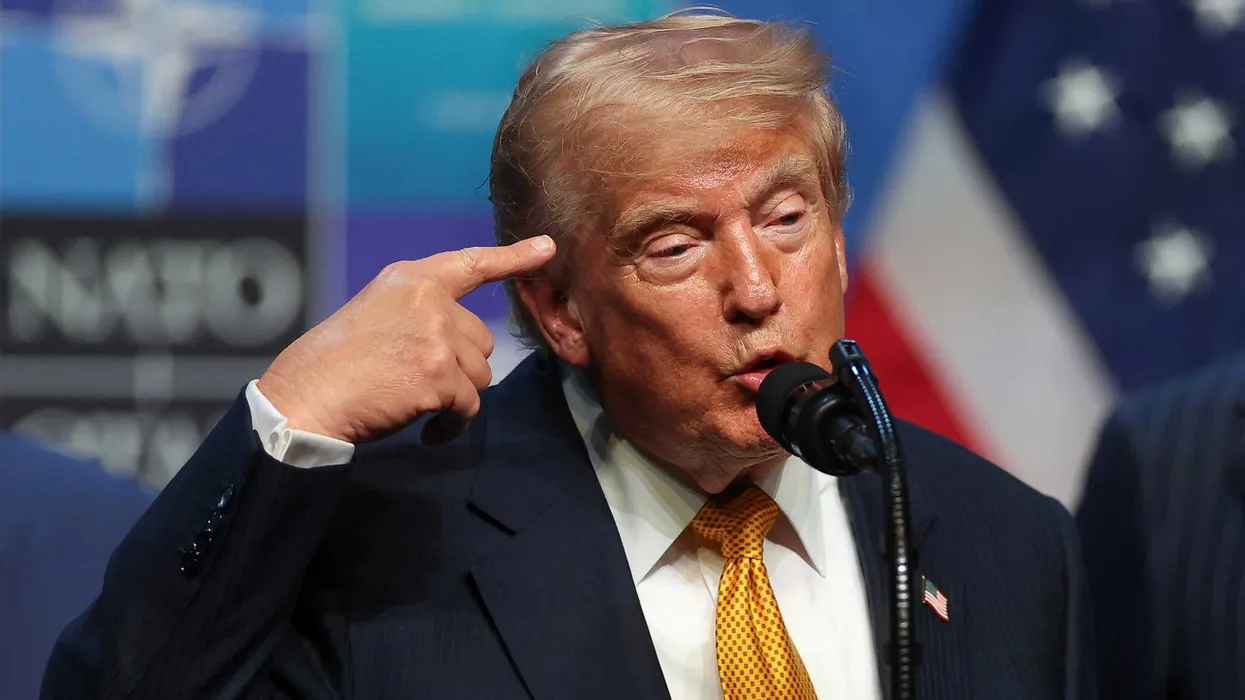
MS NOW anchor Katy Tur argues that among the many pressures facing President Donald Trump — including prolonged conflicts, rising fuel costs, a struggling labor market, and American casualties abroad — only one thing consistently drives him to retreat: the appearance of weakness.
"He can take being called a liar. He can take being mocked. He can take being called out just so long as he is not made to look weak," Tur said, recalling her 2015 coverage of a campaign rally in which hecklers, having timed their interruptions, forced Trump off the stage early. "And that reporting that protesters forced him off the stage early made him look weak." Tur, who covered Trump's 2016 campaign for NBC and later documented her experiences in the book Unbelievable, has repeatedly described this sensitivity to perceived weakness as a throughline in understanding Trump's public behavior.
Tur said the aftermath of that story taught her a defining lesson about Trump's character.
"In the days after that story, Donald Trump went after me with a vitriol I had not yet experienced, firing off rounds of nasty posts on Twitter, calling me a third-rate reporter and a liar in front of a crowd he had just whipped into a frenzy over his proposed Muslim ban in South Carolina, literally pointing me out in the back of the room, urging his supporters to turn around and shout me down," Tur said. "It was a scary moment. He also boycotted NBC until I apologized, which I never did."
"Why did he do all this? Because my reporting made him look weak," she continued. "And that was the lesson. And I think about that a lot. Ten years later, we are watching something much bigger play out with that lesson in mind."
Tur connected that decade-old lesson to a recent Washington Post report describing how Trump secretly exited his own airplane by hiding in a catering container and transferring to a different aircraft, leaving reporters and staff behind as apparent decoys during a suspected Iranian threat.
"That's a remarkable story, one that, now exposed, is likely to infuriate Donald Trump because ten years later, that allergy to appearing weak is still there," she said.
MS NOW analyst Mark Leibovich noted that Trump displayed a comparable reaction during his first term, when reports surfaced that he had been taken to a secure bunker amid widespread demonstrations near the White House.
"There was that incident around the time, I think it was 2000, around a lot of George Floyd marches when there was a report that there were so many demonstrations around the White House that the president was ushered into some bunker at some point," Leibovich said. (Leibovich misspoke; the George Floyd protests took place in 2020.) "I mean, it's happened before, but Trump at that point just went ballistic. The fact that someone would leak a notion that he was cowering in the basement of the White House or he was in some bunker was absolutely infuriating to him and that is what presumable is happening to him here." The June 2020 bunker episode, first reported by The New York Times, prompted Trump to publicly insist he had only been "inspecting" the facility during the daytime, not sheltering at night — a framing that itself underscored the same dynamic Tur described.
Tur added that despite efforts to project strength, the president's public appearances tell a different story.
"Yeah. I mean, he's an 80-year-old man and he can try to project the image of a strong guy and tough guy and have all the AI images of him muscled up or him looking stern over the resolute desk, etc. But the reality is we've got cameras on him all the time, and he does appear to be falling asleep," Tur said. "And you can't hide from a war in a beverage cart."
Source: YouTube
