FBI Director Kash Patel Faces August 17 Deadline to Respond to The Atlantic's Dismissal Motion in Defamation Suit
Key Takeaways
- •Judge Emmet G. Sullivan set an August 17 deadline for FBI Director Kash Patel to respond to The Atlantic's July 27 motion to dismiss his $250 million defamation lawsuit.
- •The Atlantic contends that Patel cannot satisfy the actual malice standard established by the Supreme Court in New York Times Co. v. Sullivan (1964), arguing his complaint fails to allege any fact showing the article is false.
- •The defense motion cites more than two dozen sources, including current and former FBI officials, corroborating claims that Patel's drinking caused rescheduled intelligence briefings and difficulties for his security detail.
- •Patel's prior public conduct, including being filmed drinking beer at a U.S. Olympic hockey team event and two alcohol-related arrests revealed through his Florida Bar application, was highlighted by The Atlantic as evidence the reporting is plausible.
- •None of the five defamation lawsuits Patel has filed has succeeded, with a federal judge in Texas recently dismissing his suit against MS NOW analyst Frank Figliuzzi as rhetorical hyperbole.
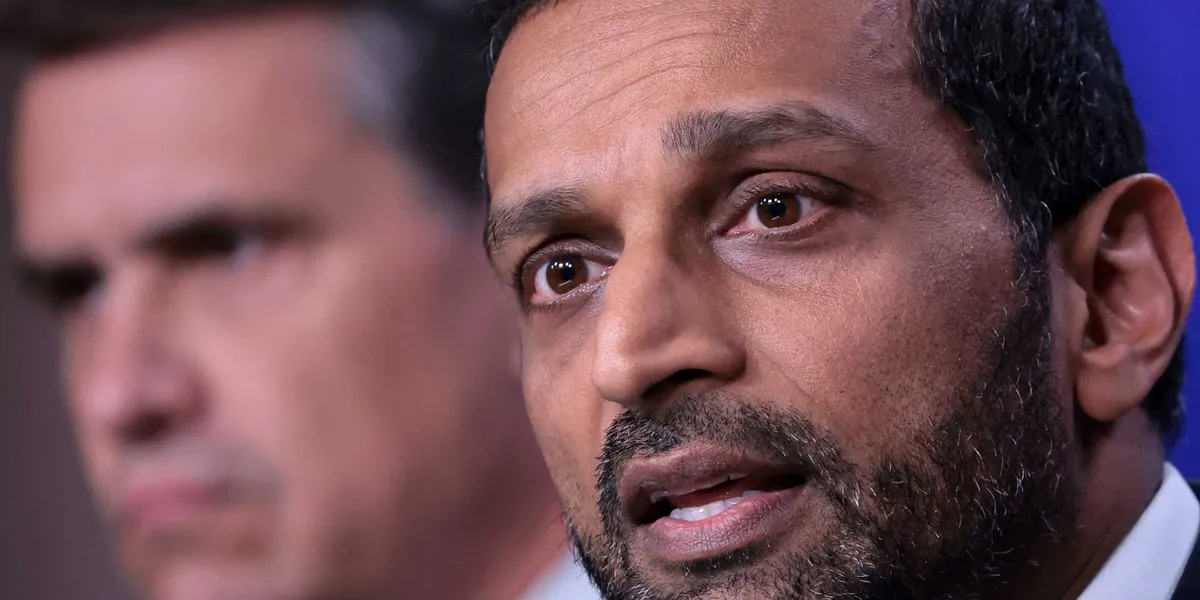
FBI Director Kash Patel has five days to respond to a dismissal motion in which The Atlantic argues that his own public conduct makes the magazine's reporting on his drinking "inherently plausible." Judge Emmet G. Sullivan, a senior judge on the U.S. District Court for the District of Columbia known for overseeing high-profile matters, set an August 17 deadline after approving a joint extension request, according to the court docket. The Atlantic filed its motion to dismiss on July 27.
The lawsuit stems from The Atlantic's April investigative report, "The FBI Director is MIA," which alleged that Patel drank to excess, missed work, and created a national-security risk. Patel denied the claims and sued the publication for $250 million in damages.
"Print it, all false, I'll see you in court—bring your checkbook," Patel told the magazine through his spokesman prior to publication.
The Atlantic's legal team contends that Patel cannot satisfy the actual malice standard required of public officials in defamation cases. That constitutional benchmark, established by the Supreme Court in New York Times Co. v. Sullivan (1964), demands proof that a publisher either knew a story was false or harbored serious doubts about its accuracy, according to the filing.
"The Complaint does not come close to satisfying this demanding constitutional standard," the filing states. "It does not allege a single fact showing that any statement in the Article is false, much less that Defendants had 'serious doubts' or 'actual knowledge of falsity' for any of these statements."
The defense motion goes further, asserting that Patel's own publicly documented behavior undermines his claims. "The Article itself shows that the Allegedly Defamatory Statements are not implausible," the filing argues, "but rather inherently plausible."
According to the motion, The Atlantic's reporter Sarah Fitzpatrick interviewed more than two dozen sources, including current and former FBI officials, members of Congress, and hospitality industry workers. Six sources confirmed that intelligence briefings had to be rescheduled as a result of Patel's alcohol-fueled nights. Nine sources corroborated an incident in which Patel panicked after a computer malfunction led him to believe he had been terminated from his position.
The filing also describes officials telling Fitzpatrick that Patel's security detail experienced difficulty waking him on multiple occasions. On at least one instance, a request was made for specialized breaching equipment — tools typically deployed by SWAT teams — because Patel was unreachable behind locked doors.
The motion highlights that Patel's drinking had already entered the public record before The Atlantic's story was published. In February, Patel was filmed chugging beer inside the U.S. men's Olympic hockey team's locker room in Milan. At the same time, CNN reported, FBI headquarters was actively managing a cartel violence situation in Mexico.
Days after The Atlantic published its investigation, The Intercept obtained a 2005 letter from Patel's Florida Bar application revealing two prior alcohol-related arrests: one for public intoxication in 2001 and another for public urination after leaving a bar in 2005.
The story's repercussions extended to Capitol Hill the following month. At a May budget hearing, Patel agreed to undergo an alcohol use disorders screening test after Senator Chris Van Hollen (D-MD) demanded it. Patel dismissed the allegations as "a total farce."
The case against The Atlantic is the most recent in a series of defamation lawsuits filed by Patel. A federal judge in Texas dismissed Patel's defamation suit against MS NOW analyst Frank Figliuzzi one day after Patel filed the action against The Atlantic. The judge characterized Figliuzzi's comment regarding Patel's nightclub visibility as "rhetorical hyperbole." According to the filing, none of the five defamation suits Patel has filed has succeeded.
Patel's response to the dismissal motion is due August 17. The Atlantic's reply is scheduled for August 31.
