Karoline Leavitt’s media claims draw criticism from journalists and commentators
Key Takeaways
- •Karoline Leavitt made her first public comments since leaving the White House last month, telling Sean Hannity's podcast that the press briefing room is largely performative, a dynamic she said comes from both sides.
- •She claimed reporters are controlled by their editors and executives, citing alleged instances where journalists apologized for asking questions their bosses demanded.
- •Leavitt asserted that most media networks are run by far-left liberals based in New York or Washington, D.C., who dictate what is asked and written, while maintaining she seeks only fairness, truth, and accuracy.
- •Multiple journalists and commentators, including Rick Wilson of The Lincoln Project, Brian Karem, and Politico columnist Jonathan Martin, publicly dismissed her account on social media, some Trump supporters defended her claims.
- •The exchange underscores the enduring tension between political communicators and journalists over editorial independence, newsroom hierarchies, and credibility, with such disputes now unfolding publicly on social platforms.
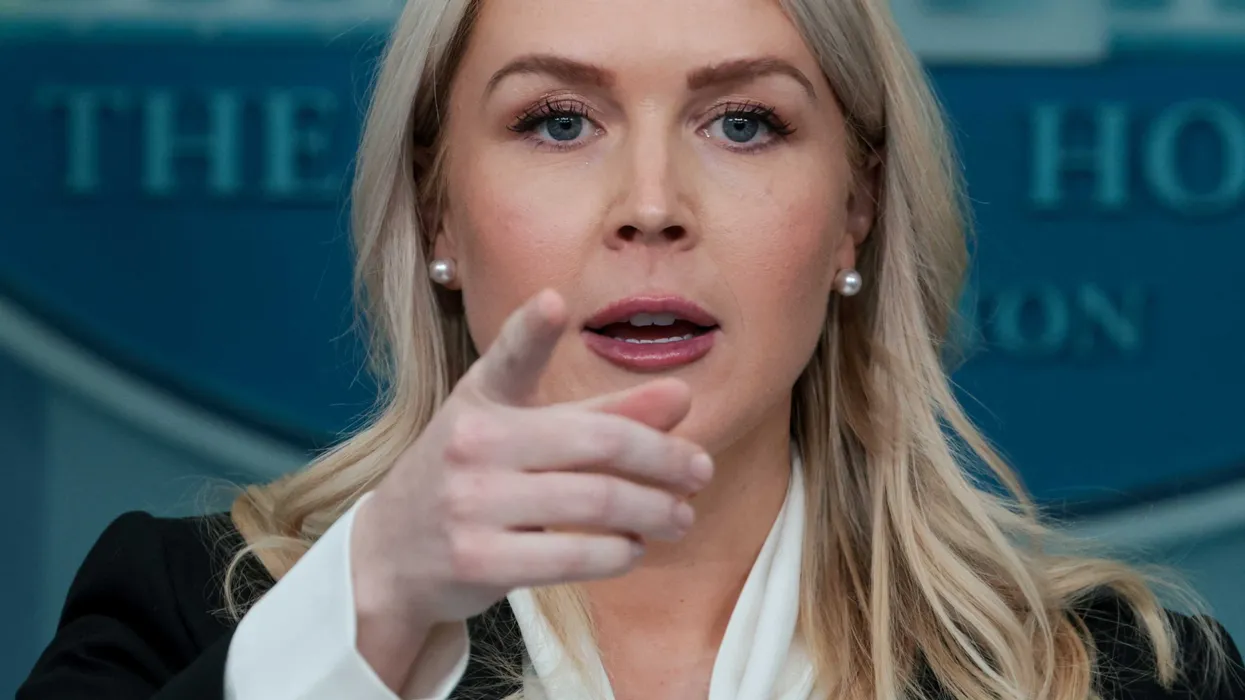
Former White House press secretary Karoline Leavitt spoke publicly for the first time since leaving the White House last month to spend more time with her family, but her account of the news media drew sharp criticism from journalists and political commentators.
Appearing on the "Hang Out with Sean Hannity" podcast, Leavitt said the White House press briefing room is largely "performative," while acknowledging that she believed the dynamic came from both sides. She said reporters were often focused on securing a soundbite "on the evening news."
"There's been times reporters have even said to me, ‘I'm sorry I had to ask that today. My bosses really wanted me to ask that, they know it's an unfair question,’" Leavitt said.
She told Sean Hannity that reporters were controlled by their employers rather than acting independently. "The reporters are controlled by their bosses … They're not in control of their own livelihood," she said. "They are dictated by the editors and the execs at some of these companies."
Leavitt further claimed that people on the far left who run media networks control reporters’ work.
"We're seeing some changes at some networks, but most of them are controlled by far-left liberals who live in New York or D.C., and they dictate what's asked and what's written," she said. "We are not asking for like positive puff pieces every day, just fairness, truth, accuracy, just telling a story or writing about factual information."
Her characterizations touch on questions that have long run through debates over the briefing room: much independence individual reporters exercise day to day, and how much influence editors and executives have over what gets asked in the room and what gets published afterward.
The remarks prompted a series of skeptical responses.
Rick Wilson of The Lincoln Project called Leavitt’s account a "mountain of horse——" (X). Long-time reporter and columnist Brian Karem agreed, writing, "Horse——. This woman was a 'pep' secretary and has NO credibility. She lied with impunity — this sounds like she is talking about herself" (X).
Attorney and former mayor Will Cox responded, "Gimme a break" (X). Emmy Award-winning reporter Phil Gianficaro wrote, "I’ll take 'things that never happened' for $200, Ken" (X). Another commenter said, "Out of all the things that didn’t happen, this didn’t happen the most" (X).
Politico columnist Jonathan Martin also challenged the account by parodying one of Donald Trump’s frequently used embellishments: "When she said it was 'a big guy with tears in his eyes' who called Trump 'sir?' She really sold you out," he wrote while tagging reporter Josh Dawsey (X).
Kari Baxter Donovan, a Trump supporter, defended Leavitt, writing, "I believe her. I know some of them. There are some good people in that mix" (X). Another commenter, who describes himself as a "Christian" and "Husband," replied, "Nonsense. They basically kiss ass to get coverage and rarely asked or followed up on tough questions" (X).
The exchange is a snapshot of an enduring tension between political communicators and the journalists who cover them — one that involves editorial independence, newsroom hierarchies, and how audiences weigh the credibility of officials and reporters alike. It also shows how such disputes now unfold in public, post by post, on social platforms. Whether additional members of the press or media organizations address Leavitt's characterizations on the record remains to be seen.
Source: Alternet

