Trump's China Policy Threatens US With 'Ruin,' Warns Military Expert Robert D. Kaplan
Key Takeaways
- •Robert D. Kaplan argues in a New York Times op-ed that the United States has misjudged China more severely than any other country, including its errors in Iran, Iraq, and Afghanistan.
- •Kaplan warns that the 1972 Shanghai Communiqué, which has underpinned U.S.–China diplomacy and Washington's deliberately ambiguous Taiwan policy for more than five decades, faces its gravest danger since its signing.
- •He links the rising risk to President Trump's volatile statements on Taiwan and the Asia-Pacific, alongside Xi Jinping's openly aggressive designs on the island.
- •Kaplan notes that neither Washington nor Beijing appears willing to cooperate on regulating artificial intelligence, a rivalry he says could further destabilize bilateral relations.
- •He frames a potential military conflict over Taiwan and the South China Sea as the ultimate geopolitical catastrophe, capable of disrupting critical supply chains with consequences comparable to World War I.
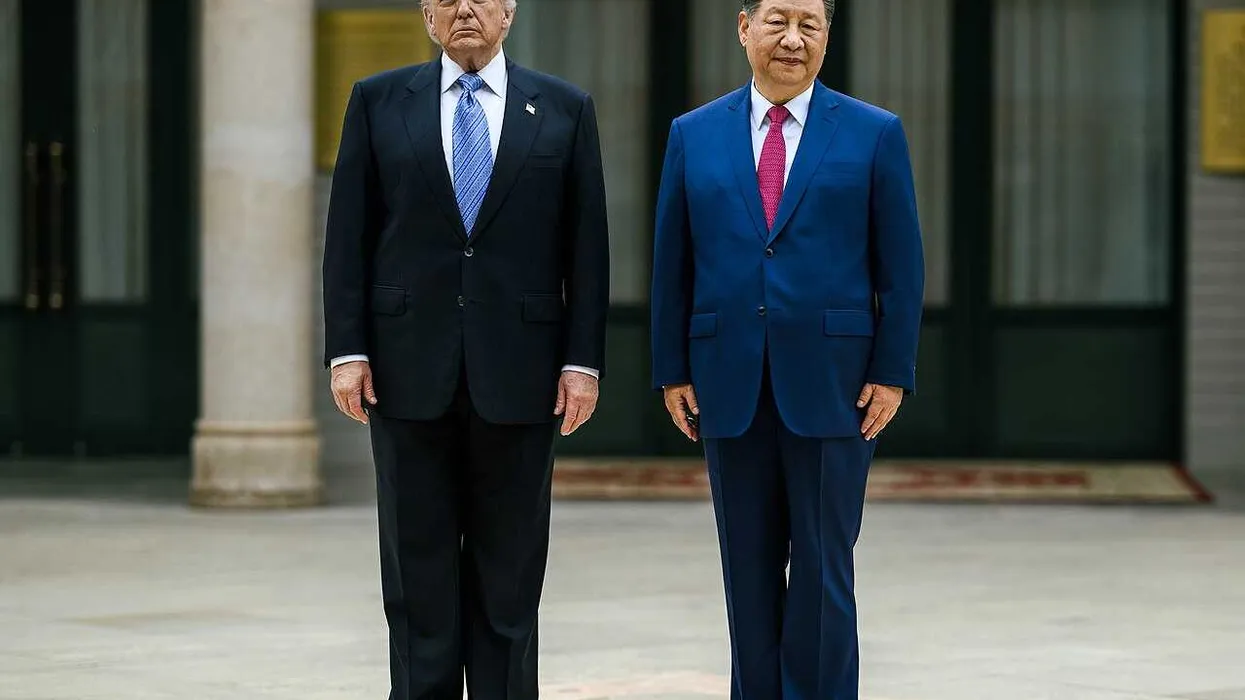
Public criticism of U.S. President Donald Trump's foreign policy has centered largely on his war against Iran, with many detractors arguing that he is weakening the United States militarily by straining its relationships with longtime allies in the North Atlantic Treaty Organization (NATO). But according to Robert D. Kaplan, an author known for his analysis of military affairs and foreign policy, another geopolitical crisis is quietly brewing under Trump — this one involving Mainland China.
Writing in an op-ed for The New York Times, Kaplan contends that no country has been more badly misjudged by the United States than China.
"Before Iran, before Iraq, before Afghanistan, there is no country that America has gotten as wrong as China," Kaplan writes. "If this is mystifying, it is only because historical memories are short. America struggled through the previous fiascos. Getting it wrong again would be catastrophic. This is why it is crucial that President Trump strike the right balance in his summit this week with China's leader, Xi Jinping."
Kaplan traces a long American record of misunderstanding Mainland China, beginning with Washington's shock when the country turned communist under Mao Tse Tung in 1949. In 2026, he argues, it is Trump who is failing to meet the moment.
At the center of his warning is the Shanghai Communiqué — the 1972 joint statement issued at the close of President Richard Nixon's opening to Beijing, which has framed U.S.–China diplomacy and Washington's deliberately ambiguous handling of the Taiwan question for more than five decades.
"For the first time since 1972, the Shanghai Communiqué may be in particularly serious danger," Kaplan writes. "There have been slip-ups, as when President Joe Biden declared he would defend Taiwan, thus abandoning the Nixon formula of ambiguity. But generally, presidents exercised rhetorical restraint. That is no longer the case in the Trump administration, with the president's stated position on Taiwan and the Asia-Pacific forever volatile. As for China, it is no longer governed by a mandarinate of enlightened communist leaders, but by Mr. Xi, a Leninist totalitarian with openly aggressive designs on Taiwan. The guideposts are wobbling."
The "Who Lost China" era he invokes refers to the recriminations that gripped Washington after Mao's 1949 victory, when politicians blamed one another for the fall of the U.S.-backed Nationalist government on the mainland.
"Despite the happy talk at summits, we are back to the Who Lost China era, when fundamental mistakes are possible, this time with incalculable consequences," Kaplan continues. "In addition, because neither China nor the United States seems interested in cooperating to regulate AI, competition over the technology is poised to further destabilize the relationship."
Artificial intelligence has become one of the most consequential arenas of rivalry between Washington and Beijing, spanning industrial policy, national security, and access to advanced computing hardware.
In Kaplan's assessment, the "ultimate geopolitical catastrophe" for the United States "would be a military conflict over Taiwan and the South China Sea" — waters that rank among the world's busiest trade corridors, with Taiwan at the center of the global supply of advanced semiconductors.
"Wars in Ukraine, Gaza and Iran have led to severe differences of opinion among both the public and the elites, but have not fundamentally changed our lives," Kaplan notes. "A high-end military conflict in the Western Pacific fought between the world's largest economies would disrupt the most vital supply chains and change our world profoundly. The comparison with World War I is not an exaggeration … No geopolitical conflict in the world today has the capacity, if miscalculated, of bringing ruin upon us all like the one between the United States and China. China tore through our domestic politics three-quarters of a century ago. It could be worse this time."
The near-term checkpoint comes this week, when Trump and Xi sit down for the summit Kaplan says is crucial to striking the right balance.

