K-Culture Boom Reshapes Seoul's Hotel Market as Global Luxury Brands Expand
Key Takeaways
- •Korea received a record 10.71 million foreign visitors in the first half of 2026, up 21.3 percent from a year earlier, with tourists increasingly traveling for K-pop concerts, drama filming sites and medical services.
- •Lotte Hotels rebranded its flagship property as the Grand Lotte Seoul, cutting main-tower rooms from 737 to 590 to offer larger accommodations and allocating renovated space to outpatient clinics targeting medical tourists.
- •The Ministry of Culture, Sports and Tourism introduced a revised hotel grading system in July that unifies standards on a single 1,000-point scale and imposes a 30-point deduction on hotels caught overcharging guests.
- •Global ultra-luxury brands including Rosewood, Janu, Mandarin Oriental and Capella plan Seoul openings by 2030, a wave Cushman & Wakefield Korea expects to raise average daily room rates across all hotel tiers.
- •New hotel room supply in Seoul has averaged around 1,000 rooms annually since 2023, only a quarter of the previous decade's expansion rate, while hotel transactions totaled approximately 2.1 trillion won last year.
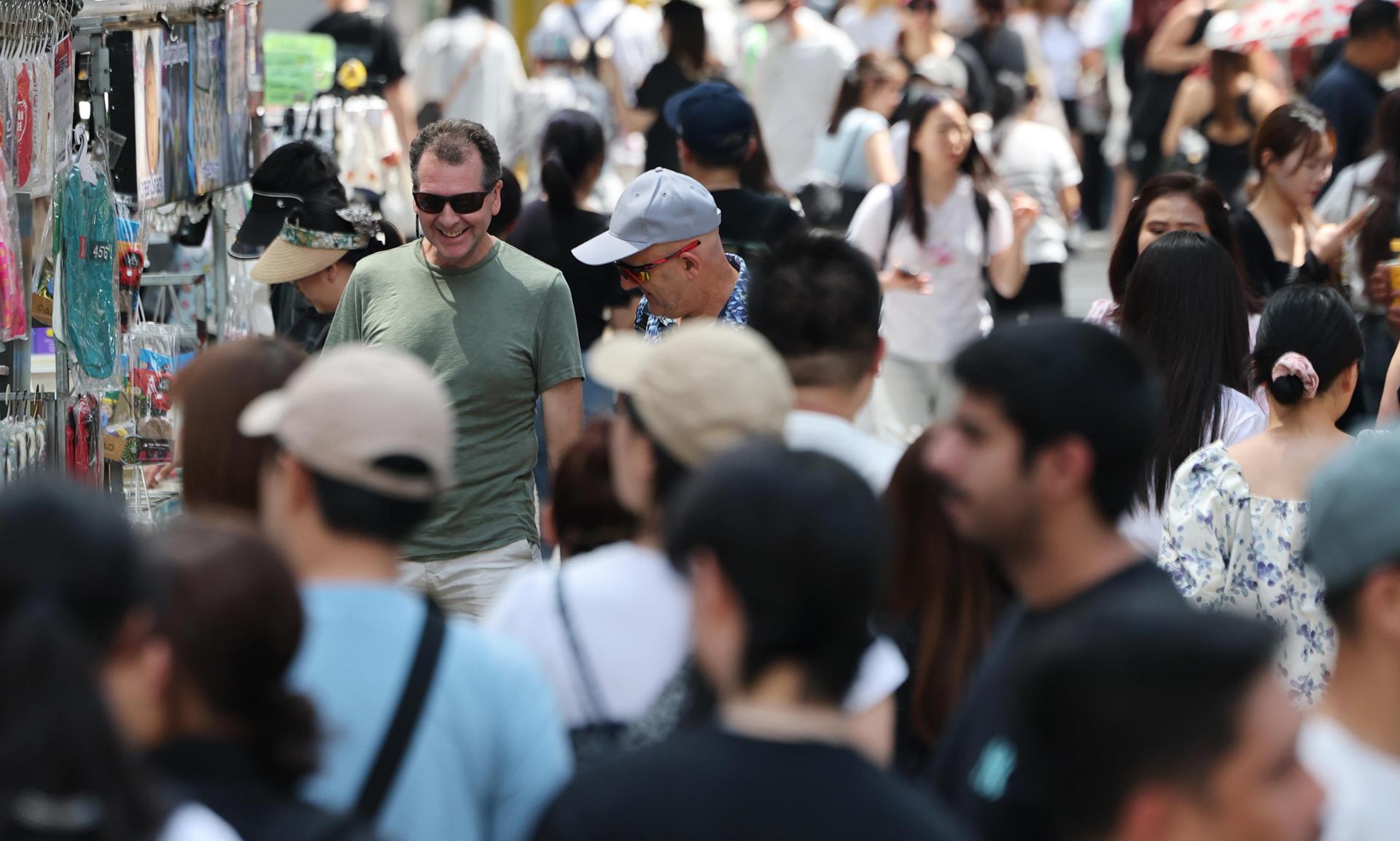
Korean culture is drawing a record surge of foreign visitors to Seoul, reshaping the city's hotel market and leading hotel operators to upgrade facilities and rebrand their properties in an effort to attract higher-spending international travelers.
In the first half of 2026, foreign arrivals to Korea reached a record 10.71 million, up 21.3 percent from a year earlier, according to the Korea Tourism Organization, against a government target of 30 million foreign visitors for this year. The surge builds on the worldwide spread of Korean pop culture — often called Hallyu — from K-pop acts such as BTS and BLACKPINK to streaming hits like Netflix's "Squid Game," which have turned the country itself into a travel destination. The profile of those visitors has also changed: whereas group tours once focused mainly on shopping, foreign tourists now often travel to Korea for K-pop concerts, drama filming sites and medical services — and they arrive with higher expectations for their accommodation.
"As K-culture continues to attract more international tourists to Korea, demand for various hotel options, ranging from budget accommodations to high-end luxury properties, will keep growing," an official at a hotel in Seoul said on condition of anonymity.
Lotte rebrands its flagship hotel
Major hotel operators in Seoul are already shifting their business strategies to align with this changing trend.
In June, Lotte Hotels & Resorts announced the rebranding of its flagship downtown property, Lotte Hotel Seoul, as the Grand Lotte Seoul, officially launching the new brand on Aug. 14. During a 15-month renovation, the hotel reduced the room count in its main tower from 737 to 590 in order to offer larger guest rooms — a strategic move aimed at boosting revenue per room instead of focusing simply on occupancy rates. The redesign was handled by French designer Pierre-Yves Rochon, whose past projects include the Four Seasons George V in Paris and the Savoy in London.
In addition, a portion of the renovated space will accommodate outpatient clinics, including dermatology services, targeting the growing number of medical tourists in Seoul. Korea has long ranked among Asia's leading destinations for foreign patients, with dermatology and cosmetic procedures among the treatments most in demand. Data from BC Card showed that foreign spending on medical services in Korea jumped 98 percent in the first half of this year compared with a year earlier, with nearly 93 percent of those transactions taking place in Seoul.
Industry insiders said the competitive focus among local hotels is shifting from physical scale to guest experience.
"In the past, hotel competitiveness depended on scale, room numbers and facility sizes. Now, it centers on the actual experience provided to guests," an official at a competing hotel said. "Hotels are moving from selling as many rooms as possible to encouraging guests to stay longer and spend more during their visit."
New standard for hotel ratings
Meanwhile, the Ministry of Culture, Sports and Tourism introduced a revised hotel grading system in July to create a more transparent and guest-focused environment for international travelers. The change addresses growing confusion among foreign tourists who struggled with the old, fragmented evaluation standards.
While maintaining the existing one- to five-star rating system, the ministry unified all evaluation standards into a single 1,000-point scale to help visitors make clearer choices based on reliable quality standards.
The new rules also protect tourists from unfair pricing during the current K-culture travel boom. Under the updated system, hotels caught overcharging guests face a 30-point deduction — three times the penalty for fire safety violations and severe enough to lower a hotel's star rating.
Global ultra-luxury brands move in
These shifts come as Seoul's luxury hotel market undergoes a major structural change compared with five years ago. Global ultra-luxury brands that previously favored destinations such as Hong Kong, Singapore and Tokyo are now expanding into the Korean capital.
Hong Kong-based Rosewood Hotels & Resorts plans to open a property at The Parkside Seoul project in Yongsan, while Janu — the sister brand of Switzerland-based Aman Group conceived as a younger, more accessibly priced alternative, which opened its first property in Tokyo in 2024 — will open in Gangnam District in 2027. Hong Kong-based Mandarin Oriental Hotel Group will enter the market near Seoul Station by 2030 through a partnership with Hanwha, and Singapore-based Capella Hotels and Resorts is scheduled to open in Seocho District by 2028.
According to real estate service firm Cushman & Wakefield Korea, the entry of these luxury brands is expected to drive up average daily room rates across all hotel tiers in the city. As top-tier five-star hotels raise their standards and prices, four-star properties are also expected to increase their rates.
Seoul's average hotel occupancy rate stood at 79.2 percent last year, while revenue per available room reached about 207,300 won ($150), marking a 67 percent increase compared to 2019, the last full year before the pandemic and then a record year for Korean inbound tourism.
Tight supply and surging investment
At the same time, hotel room supply has failed to keep pace with rising demand. While Seoul added tens of thousands of hotel rooms during the 2010s, many small and independent hotels closed or converted into office spaces during the pandemic. Annual new room supply has averaged around 1,000 rooms since 2023, representing only a quarter of the expansion rate seen in the previous decade.
An official at a luxury hotel in Seoul emphasized that supply shortages exist across both luxury properties and business hotels.
"Quality hotel supply has not kept up with growing travel demand to Korea," the official said, adding that competition will intensify as more overseas luxury brands enter the market.
Driven by strong consumer demand, hotel investment activity has surged. Seoul hotel transactions totaled approximately 2.1 trillion won last year, with foreign investment funds actively purchasing four-star assets.
Suki Kim, head of research at Cushman & Wakefield Korea, said the market focus is clearly shifting toward high-end hospitality.
"As ultra-luxury brands enter Seoul, the overall room rate ceiling across the city will continue to rise," Kim said, adding that operational efficiency through digital technology and dynamic pricing will become key factors for hotel success.

