Justin Sun Keeps World Liberty Financial Dispute Public as $4 Billion Stablecoin Bank Awaits Final Approval
Key Takeaways
- •Justin Sun, founder of the Tron blockchain, has an unresolved and publicly visible disagreement with World Liberty Financial.
- •The OCC granted World Liberty Financial preliminary conditional approval to establish a national trust bank for its USD1 stablecoin operations.
- •The proposed bank plan is associated with a figure of roughly $4 billion, with terms set out in the OCC's conditional approval decision.
- •The approval remains conditional rather than final, so the bank has not opened and nothing is operating under it yet.
- •A national trust bank under OCC supervision typically focuses on fiduciary and custody activities rather than everyday deposits or lending.
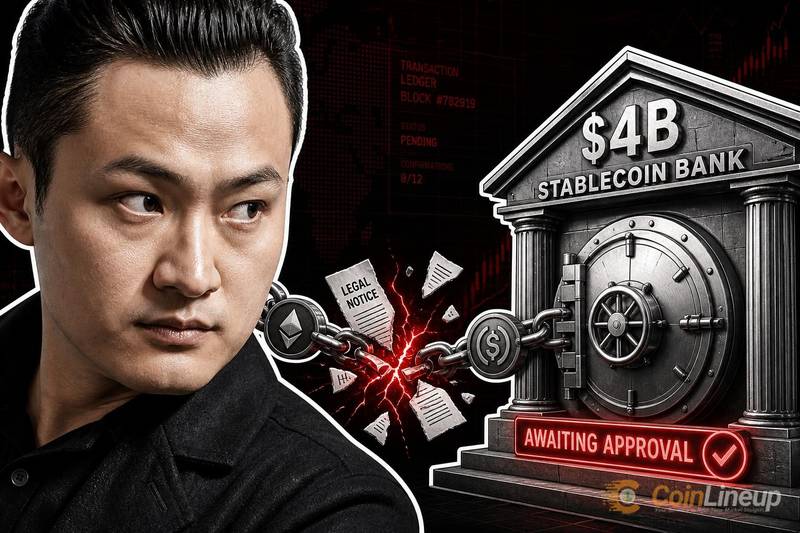
Justin Sun is keeping his disagreement with World Liberty Financial in public view, even as the crypto venture awaits final regulatory sign-off for a proposed stablecoin bank attached to a plan carrying a roughly $4 billion figure. The simultaneous unfolding of a personal conflict and a pending banking approval is the story worth watching.
The World Liberty dispute is still playing out in the open
The disagreement between Justin Sun, the founder of the Tron blockchain, and World Liberty Financial has not been resolved. It remains a public-facing conflict rather than a settled matter.
That is the immediate news hook. When a high-profile crypto figure keeps a dispute visible instead of settling it quietly, the details tend to shape how partners and regulators read the company.
The available evidence does not spell out the cause of the dispute or a timeline for its resolution, so neither will be guessed at here. What is clear is that the disagreement is ongoing and out in the open.
What is actually known about the proposed stablecoin bank
Separately, World Liberty Financial has moved toward becoming a regulated bank. The U.S. Office of the Comptroller of the Currency (OCC), the federal office that charters and supervises national banks, granted the firm preliminary conditional approval to establish a national trust bank for its USD1 stablecoin operations.
Preliminary conditional approval is not the same as a green light to open. The bank is proposed, and it still awaits final approval. In plain terms, the regulator has said "maybe, if you meet our conditions," not "yes, you are open."
The plan carries a roughly $4 billion figure, and the full terms are set out in the OCC's conditional approval decision. That number is presented here as the size attached to the proposal, without speculation on how the bank would be structured or owned.
A national trust bank operates under a federal charter supervised by the OCC, typically focused on fiduciary and custody activities rather than full-service commercial banking. In practice, that points toward safeguarding assets and acting in a trusted capacity, not taking everyday deposits or making loans the way a commercial bank does. Such a charter would let the company operate under federal oversight. That matters for a stablecoin issuer, because a stablecoin is a token designed to hold a steady value, usually pegged to the U.S. dollar, and its credibility rests on the backing behind it. Regulators increasingly want dollar-pegged tokens backed by supervised institutions.
Why the timing of both stories matters together
The reason to connect these two threads is timing. A public dispute involving a well-known crypto figure is unfolding at the same moment the same venture seeks final banking approval.
Regulatory reviews weigh the people and governance behind an applicant, not just the balance sheet. A visible conflict does not automatically change an outcome, but it is the kind of reputational noise that sits in the background of an approval process.
Stablecoin regulation is tightening across markets. The same pattern appears in moves such as Capital.com's licensed spot-crypto launch in the UAE and South Korea's Shinhan Asset Management's tokenized fund test on Solana, where firms pursue formal approvals before scaling. World Liberty Financial's trust-bank application sits in that same lane, which is why its final status is a broader signal about how deep the regulated-stablecoin trend runs.
What a regular crypto holder should take from this
For those who hold a small amount of crypto or are simply curious, here is the practical read: this is a governance and regulatory story, not a price event, and the reporting here does not point to any market move.
Two things are worth watching next. First, whether the World Liberty dispute escalates or quietly cools. Second, whether the OCC approval shifts from conditional to final.
Until the bank clears final approval, it should be treated as a proposal, not a done deal. The conditional approval covers a bank that has not opened, so nothing is operating under it yet. That same caution applies to how newer investors read rising regulatory scrutiny across the crypto industry.
Disclaimer: This article is for informational purposes only and does not constitute financial or investment advice. Cryptocurrency and digital asset markets carry significant risk. Always do your own research before making decisions.

