Trump DOJ Chief of Staff Threatens Senior Advisers With Polygraph Tests Over Press Leaks
Key Takeaways
- •Attorney General Todd Blanche's chief of staff warned top Justice Department officials at a leadership meeting that they may undergo polygraph tests to identify who has been leaking information to the press.
- •The polygraph warning could extend to the core advisers central to the Trump administration's restructuring of the Justice Department, coinciding with President Trump's scheduled speech at the agency on Monday.
- •Blanche removed National Security Division head John Eisenberg earlier this month amid stalled leak investigations that had included subpoenaing journalists.
- •Justice Department spokesperson Emily Covington defended the measure, saying leaks undermine the department's integrity and can jeopardize investigations involving national security and public safety.
- •The Pentagon under Secretary Pete Hegseth has similarly deployed polygraphs to investigate leaks, even though lie detector results are generally inadmissible in federal courts and a 2002 National Academy of Sciences review found the tests too inaccurate for personnel screening.
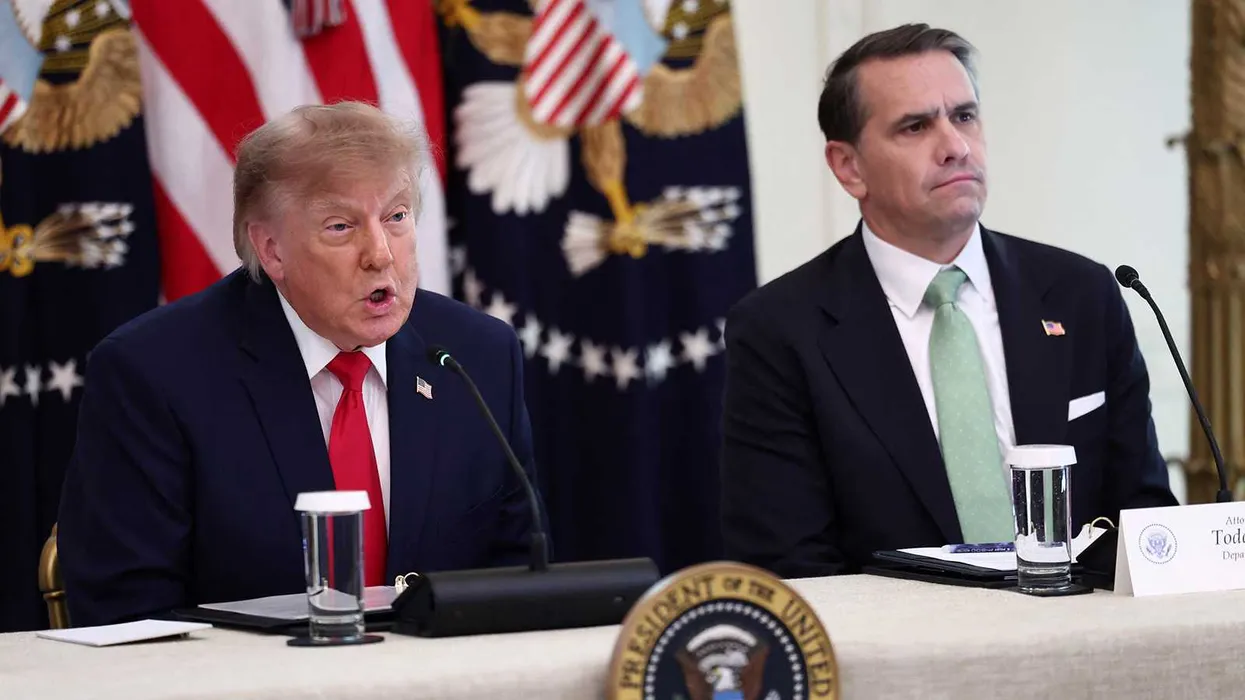
President Donald Trump's Justice Department, which has already weathered controversies over personnel purges and politically charged prosecutions, is now employing another contentious tactic: threatening its own employees with polygraph examinations.
"Attorney General Todd Blanche's chief of staff warned top Justice Department officials that they may be polygraphed to determine who's been leaking information to the press, said people familiar with the matter," reported Bloomberg's Ben Penn on Monday.
Penn reported that the policy was unveiled at a meeting of leadership offices, but that the latest polygraph discussion at Main Justice went further, potentially targeting the core group of advisers who have been integral to the Trump administration's overhaul of the department to align it closely with the White House. That mistrust, he noted, comes as Trump is scheduled to visit the Justice Department later Monday to deliver a speech, according to media reports.
DOJ, Penn wrote, has elsewhere been cracking down on federal employees leaking sensitive information to the media in stories critical of the president. Stalled progress within the National Security Division on leak investigations — including by subpoenaing journalists — led Blanche to oust NSD head John Eisenberg earlier this month. The National Security Division, created in 2006, serves as the department's litigation arm for counterespionage, counterintelligence, and classified-information cases — the category of matters where unauthorized disclosures carry the highest stakes.
The Justice Department argues that the new policy is actually about ensuring it can perform its necessary work effectively.
"Jordan convened members of leadership offices to remind them that leaking information related to ongoing investigations undermines the integrity of this Department," Justice Department spokesperson Emily Covington told Bloomberg in a statement. "This can jeopardize investigations involving national security, public safety, and holding criminals accountable. Leaking information to the media that is not meant to be public distracts from the important work that our law enforcement officers and litigators do each day to protect the American people."
Polygraph exams are a standing feature of federal security-clearance vetting, but lie detector results are generally inadmissible in U.S. federal courts, and a 2002 National Academy of Sciences review found the test's accuracy too limited to justify relying on it for personnel screening.
The department is not the first Trump administration agency to deploy polygraphs to ensure employees remain loyal and discreet. The Pentagon, led by Secretary of Defense Pete Hegseth, has done the same.
"U.S. government investigators have taken the extraordinary step of subjecting ... members of the U.S. military's Joint Staff to polygraph tests over leaks to journalists, including about how the Iran war has created a shortage of crucial munitions, according to officials briefed on the move," the Times wrote in September.
By contrast, FBI Director Kash Patel has drawn controversy for allowing pro-Trump appointees such as Deputy Director Dan Bongino to take office without taking the mandatory polygraph tests. At the same time, Patel did require FBI employees to take lie detector tests after criticisms of his conduct in office began to leak. Whether the warning at Main Justice leads to actual testing of senior advisers, and at what scope, has not been reported.

