US Economy Sheds 23,000 Jobs in July as BLS Revisions Erase 103,000 Positions from Prior Months
Key Takeaways
- •The US economy lost 23,000 jobs in July, falling well short of the 83,000 gain that economists had anticipated.
- •The BLS reduced previously reported job gains for May and June by a combined 103,000 positions, bringing the revised totals to 63,000 and 20,000 respectively.
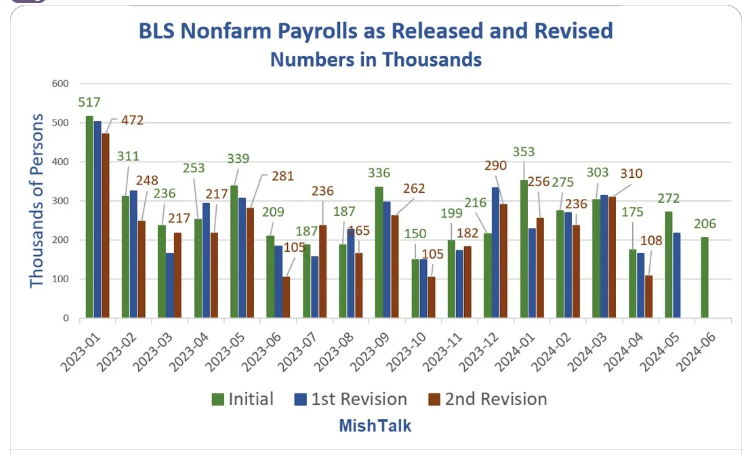
- •Between March 2024 and June 2025, cumulative downward revisions eliminated 911,000 jobs from initially reported figures.
- •Final annual BLS employment numbers came in lower than initial reports in 14 of the 22 years between 2003 and 2024, compared to only seven upward revisions.
- •Critics argue that because financial markets primarily react to initial releases rather than later revisions, the persistent pattern of downward corrections may create an inflated public perception of labor market strength and influence Federal Reserve policy decisions based on overstated data.
US Economy Sheds 23,000 Jobs in July as BLS Revisions Erase 103,000 Positions from Prior Months
The US Bureau of Labor Statistics reported that the economy lost 23,000 jobs in July, a sharp divergence from the 83,000 jobs that economists had forecast. Despite the contraction, the unemployment rate edged down to 4.1 percent, driven by a decline in the labor force participation rate to 61.4 percent — its lowest level since the COVID-19 pandemic. The apparent contradiction between job losses and a falling unemployment rate reflects the structure of the BLS report itself: payroll employment is drawn from the establishment survey of businesses, while the unemployment rate is derived from the separate household survey, which counts individuals rather than positions and is influenced by whether people are actively seeking work.
However, the headline figure was overshadowed by significant downward revisions to prior months' data, which drew unusually broad attention from mainstream media outlets.
Substantial Downward Revisions to May and June Data
The BLS revised May's employment gains downward by 66,000, reducing the initially reported gain of 129,000 to 63,000. June's figures were similarly trimmed by 37,000, bringing the reported gain from 57,000 down to 20,000.
Combined, the revisions mean that job creation in May and June was 103,000 lower than originally reported.
A Pattern of Downward Revisions
Downward revisions have been a recurring feature of BLS employment reports. In January, the bureau conducted its annual adjustment to the "birth-death model" used to estimate job growth from business openings and closings, which removed 403,000 jobs from the economy. December's report was concurrently revised down from 50,000 to 48,000 jobs.
Following that revision, the US economy was shown to have generated an average of just 15,000 jobs per month in 2025 — a figure markedly lower than what initial monthly headline numbers suggested.
Between March 2024 and June 2025, the BLS erased a cumulative 911,000 jobs from its initially reported figures. In 2023, job numbers were revised downward in 10 of the 12 months.
Over the longer term, the trend has been consistent. Between 2003 and 2024, final annual BLS employment numbers came in lower than the initial report on 14 occasions, compared to only seven instances of upward revisions.
Markets Focus on Initial Releases
Financial markets typically react to the initial employment releases rather than subsequent revisions. The quieter nature of revision announcements means they rarely trigger significant market movements. This dynamic, critics note, can create a public perception of labor market strength that is stronger than what revised data ultimately reflects.
GoldSeek columnist Mike Maharrey noted that the July report was a notable exception, with revisions receiving prominent media coverage. He questioned the reliability of data that central bankers and government officials rely upon for policy decisions, pointing to the consistent pattern of downward adjustments as cause for skepticism. Employment data is a key input for the Federal Reserve's dual mandate of maximum employment and stable prices, meaning that systematically overstated initial figures could shape the timing and direction of monetary policy decisions based on data that is later shown to have been weaker.
Compiling comprehensive employment data is inherently complex, and some degree of revision is expected. However, the persistent skew toward downward corrections raises questions about the accuracy of initial BLS estimates and the degree to which policymakers and the public should weigh headline figures.
Source: GoldSeek — Mike Maharrey

