Judge appoints special master in Trump golf-course case over alleged DOJ and Interior misrepresentations
Key Takeaways
- •U.S. District Judge Ana Reyes announced Friday that she will appoint a special master to investigate whether Justice and Interior Department lawyers misled her during litigation over a D.C. golf-course renovation.
- •The dispute stems from President Trump's attempt to take over one of Washington's three public golf courses and rebuild it as a PGA-style course without the required approval process, which ended contracts with the National Links Trust.
- •More than 400 trees over 100 years old, including cherry trees linked to Japan's 1912 gift to the United States, were cut down in October, one day after the administration notified the court late on the Friday before a holiday.
- •The lawsuit challenging the takeover was filed by the D.C. Preservation League and two frequent golfers over the National Park Service-administered East Potomac Park site.
- •Depending on the special master's findings, government lawyers could face sanctions or referrals to the D.D.C. Grievance Committee or the D.C. Bar, while the preservation lawsuit proceeds separately before Reyes.
Lawyers, legal reporters and good-government advocates reacted strongly Friday after U.S. District Judge Ana Reyes said she would appoint a special master to investigate whether the Department of Justice and the Department of the Interior misled her during the past several months of litigation over a Washington, D.C., golf-course renovation.
The case concerns President Donald Trump's effort to take over one of the capital's three public golf courses and convert it into a PGA-style course capable of hosting competitions. The course occupies East Potomac Park, a man-made island in the Potomac River administered by the National Park Service, the Interior Department agency that maintains the capital's federal parkland. The project did not go through the required approval process, and existing contracts with the National Links Trust to renovate and repair the entire man-made island were terminated.
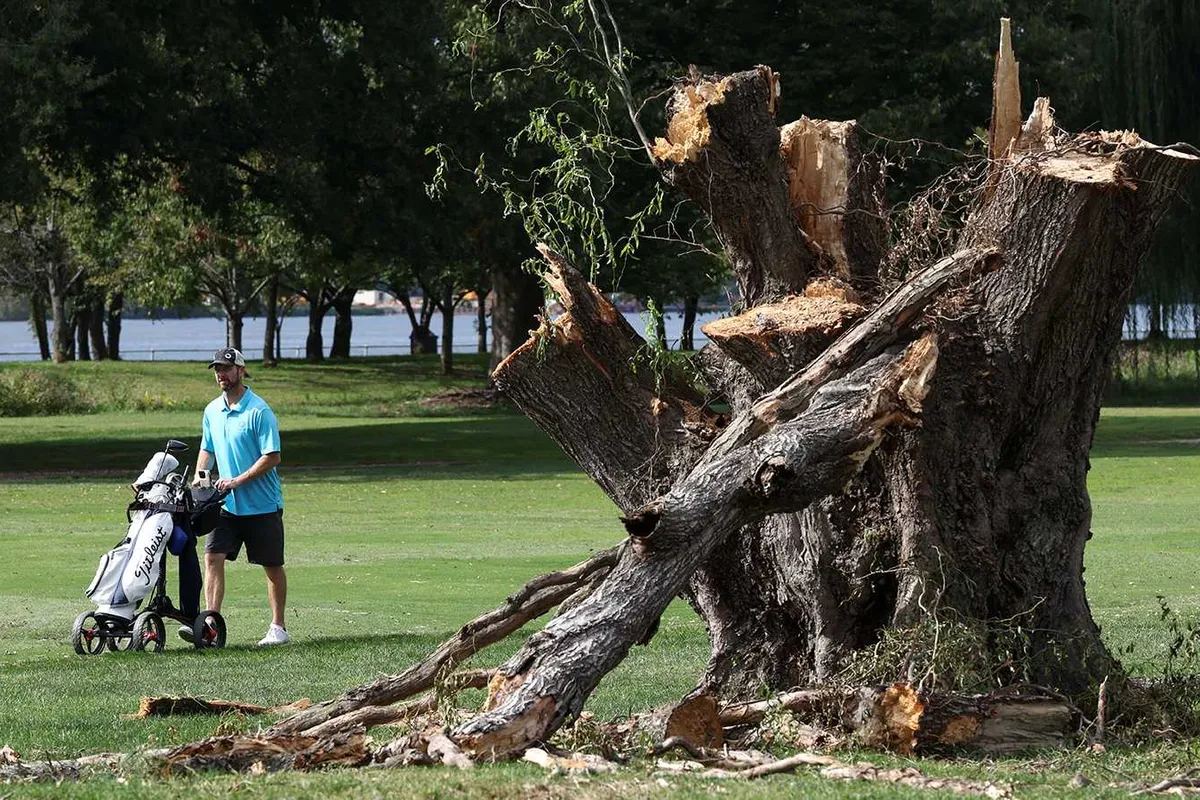
In October, more than 400 cherry and other trees that had stood on the island for more than 100 years were cut down. The cherry trees were part of a 1912 gift from Japan to the United States. Although hundreds of cherry trees grew on the island, the National Park Service said there is evidence that some came from the original gift.
The D.C. Preservation League and two frequent golfers are suing over the Trump administration's takeover. When the case first reached court, Reyes said she trusted the administration to notify her if any major changes were planned. Routine maintenance was permitted, but she said removing more than 400 trees did not qualify as maintenance.
The administration notified the court about the project at 4:55 p.m. on the Friday before a holiday. The trees were gone the next day.
Reyes has expressed anger as she has handled the case and examined multiple instances in which the Justice Department may not have been as forthcoming as attorneys are required to be. After another hearing Friday, she announced that she would appoint a special master to determine whether she had, in fact, been lied to. A special master is a neutral appointee — often an outside lawyer or retired judge — who handles a focused assignment for the court, such as gathering evidence and reporting back with findings, allowing the judge to keep an arm's length from the misconduct question. Because the assignment here targets the government's own lawyers, the findings could carry consequences beyond this litigation, into the sanction and bar-discipline mechanisms outside observers immediately began weighing.
The development prompted broader debate about the separation of powers. “Judge Reyes is questioning how a simple case that would have been difficult for the plaintiffs to win has suddenly become a test of the separation of powers. A constitutional crisis over a golf course, of all things,” one observer wrote on Bluesky while following reporting by legal reporter Chris Geidner.
“Hey, it was a wrong turn in Sarajevo that set off The Great War. A third-rate burglary toppled Nixon. Fitting if the absurd Trump is felled by a golf course,” another person replied.
“From our golf course hearing just now. Court opens investigation into possible misrepresentations by Trump admin lawyers about Trump's plans for E. PotomacPark. This case is not just about preserving this historic public property, cocounsell DF, DDF, L&A are exposing Trump admin corruption,” Norm Eisen wrote. Eisen's firm, the Washington Litigation Group, represents the plaintiffs in the case against the government.
“This is a very smart move by Judge Reyes. It insulates the Court by providing a neutral third party. A special master can have broad powers to investigate misconduct. It ensures that the other issues in the case can move forward independently. A very sound move and very ominous for the DOJ here,” a Minneapolis attorney said.
“It will go from the District Court to the D.C. Bar once the investigation is completed,” litigator Sean Satori said.
“It can be a few things,” law partner Sean Marotta wrote. “1. Reyes can sanction her herself under her inherent authority or Rule 11 or Section 1927. 2. Reyes can refer them to the D.D.C Grievance Committee for action against their D.D.C. bar admissions. 3. Reyes can refer them to the D.C. Bar.” Rule 11 of the Federal Rules of Civil Procedure and 28 U.S.C. § 1927 give federal courts tools to penalize attorneys who file frivolous papers or unreasonably prolong litigation, while the grievance committee and the D.C. Bar handle professional discipline for lawyers practicing in the District.
“Also she's already made an explicit bad faith finding, so that really kicks things up,” another attorney responded.
“Our federal courts just weren't used to/prepared for so much lying from the Department of Justice. But they appear to be learning. Good,” commented Deborah Pearlstein, a department director and professor at Princeton University.
The special master's findings will shape which of those referral paths, if any, are pursued, while the underlying preservation lawsuit itself continues before Reyes.

