Judge April Perry Rejects DOJ Challenge to Hearing in Broadview Six Misconduct Case
Key Takeaways
- •Judge April Perry denied the Justice Department's motion for clarification and reaffirmed her inherent authority to question lawyers who may have misled the court.
- •The charges in the Broadview Six case, which stemmed from arrests of six officials and activists outside the Broadview immigration detention center near Chicago, have been dismissed, but the inquiry into the prosecutors' conduct continues.
- •Senior Justice Department official Stanley Woodward argued in a filing that summoned prosecutors face a Catch-22 between testifying and risking prosecution or invoking the Fifth Amendment and antagonizing the court.
- •U.S. Attorney Andrew Boutros faces possible sanctions or a criminal contempt finding because Judge Perry does not accept his account of the case.
- •Perry struck the November 17 motion hearing, noting the government does not represent at least three of the individuals asked to testify, and open questions remain around the grand jury, prosecutor Sheri Mecklenburg, and possible involvement by senior Justice Department officials or the White House.
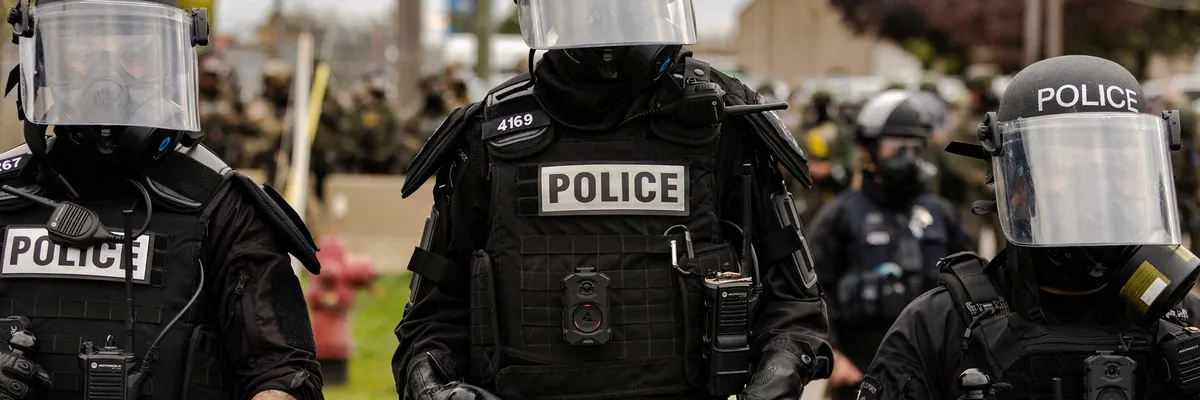
U.S. District Judge April Perry is locked in a clash with senior Justice Department official Stanley Woodward as she works to untangle a scandal that has erupted around the Broadview Six case — and she has rejected the government's latest attempt to blunt her inquiry.
The underlying Broadview Six case is over. It arose from the arrests of six officials and activists outside the Broadview immigration detention center near Chicago. The charges against those individuals have been dismissed, but Judge Perry is now investigating whether the prosecutors who brought the case misled her or concealed misconduct. The Justice Department is challenging how she may conduct that inquiry, particularly because the prosecutors themselves could face criminal consequences.
The dispute has two layers: what went wrong in the original prosecution, and whether officials later gave truthful explanations about it. Questions also remain surrounding the grand jury and prosecutor Sheri Mecklenburg, along with a broader concern that senior Justice Department officials in Washington — or even the White House — were involved in the matter. A hearing has been scheduled to address the issue.
On Tuesday, Woodward challenged the scheduled hearing, which will call prosecutors to court to answer whether anyone intentionally misled or lied to the judge. He went further, questioning Perry's authority to hold it at all. The Chicago Sun-Times reported on Woodward's complaint and filing, noting that anyone called to discuss the matter may simply invoke their Fifth Amendment right against self-incrimination.
The report also made clear that Judge Perry does not accept what U.S. Attorney Andrew Boutros told her about the case. He now faces possible sanctions or a criminal contempt finding — either of which would amount to a formal judicial rebuke of a sitting U.S. attorney.
"The court has presented the United States Attorney and his subordinates with a Catch-22," Woodward said in his five-page filing. "They can testify and risk prosecution, or they can assert their rights under the Fifth Amendment and risk antagonizing the court."
Woodward suggested there is little Judge Perry can do about any Justice Department lawyer who may have lied to her. The judge, however, has made clear that she possesses inherent authority to sanction abuse of the judicial process — a long-recognized power of federal courts to police abuse of their own proceedings.
On Wednesday morning, Perry updated the docket with her own response to Woodward, as Chicago Sun-Times reporter Jon Seidel and national security analyst Marcy Wheeler observed. The judge called the government's "professed" lack of clarity "immaterial."
"The Government's 'motion for clarification' is denied. The Court explained the reasons for the upcoming hearing in open court" in May and again in October, she said. "Moreover, the Court laid out its reasoning in writing in its Order of 11/2/2026. ... Finally, the Government's attorney agreed on 10/5/2026 that 'this Court certainly has the authority to ask witnesses to come testify about factual matters.'"
"Ultimately, the Government's professed lack of clarity about the Court's inherent authority to ask lawyers who have made misstatements to or misled the court to explain their actions is immaterial. The Government does not represent at least 3.4 of the individuals who have been asked to testify, two of whom have expressed their willingness to do so. And there is no indication on this docket that the Government represents the fourth individual. The Court strikes the motion hearing set for 11/17."
With the 11/17 motion hearing struck, the dispute now moves toward the testimony itself. The questions still open around the grand jury, Mecklenburg, and any involvement by senior Justice Department officials in Washington — or even the White House — remain unresolved heading into it, and whether those summoned testify or invoke the Fifth Amendment will shape how much of that record becomes public.
Source: Alternet

