JPMorgan Warns Oil Shock Could Make Super El Niño an Inflation Problem
Key Takeaways
- •JPMorgan assesses an 81% probability that El Niño strengthens into a very strong or super event by year-end, with a 97% chance conditions persist into 2027.
- •The combined effect of a super El Niño and sustained energy price pressures could add roughly 0.3 percentage points to global headline inflation.
- •Brent crude surpassed $100 per barrel this week amid renewed fighting near the Strait of Hormuz, Houthi attacks on Red Sea tankers, and production cuts in Kazakhstan following drone attacks.
- •JPMorgan projects that food inflation could rise between 1.3% and 1.5% if the weather shock coincides with elevated oil, diesel, fertilizer, transportation, and packaging costs.
- •Emerging markets including India, Indonesia, Brazil, and Colombia are identified as most vulnerable to the inflation shock due to food representing a larger share of household spending.
JPMorgan warned Friday that a potential "super" El Niño, combined with higher energy prices linked to the Middle East conflict, could slow the decline in global inflation next year.
The bank said the combination could add roughly 0.3 percentage points to headline inflation worldwide. JPMorgan puts the odds of the current El Niño strengthening into a "very strong" or "super" event at 81% by the end of the year, with a 97% probability that El Niño conditions persist into 2027.
Either development would be manageable on its own, according to the report's framing. Together, a major weather event and a supply-driven oil shock could prove significantly more costly. The risk is centered on headline inflation, which includes food and energy and is often more volatile than underlying inflation measures, but still matters for household budgets and central banks tracking whether price pressures are continuing to ease.
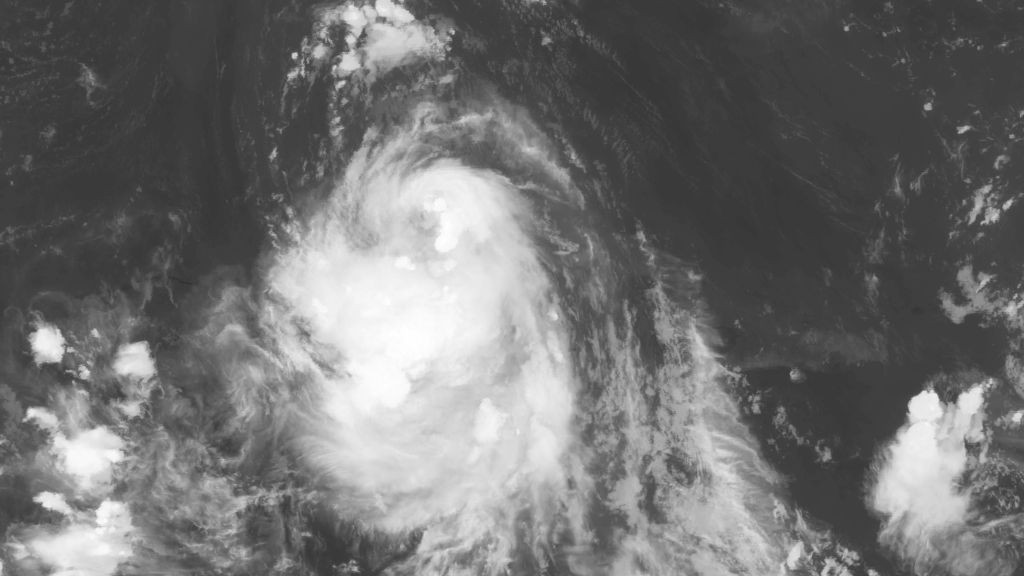
El Niño is a periodic warming of the central and eastern Pacific that can shift rainfall and temperature patterns across major producing regions. A super El Niño typically disrupts agricultural output across Asia and Latin America through drought, excessive rainfall, and shifts in growing seasons. JPMorgan estimates that such disruptions would raise global food inflation by about 0.7 percentage points at the peak.
The inflation impact could be larger if the weather shock coincides with $100 oil, tighter diesel supplies, higher fertilizer prices, more expensive transportation, and elevated packaging costs. Under that scenario, JPMorgan said the rise in food inflation could reach 1.3% to 1.5%.
Oil markets are already contributing to the second part of that equation. Brent crude climbed above $100 a barrel this week after renewed fighting around the Strait of Hormuz and Houthi attacks on tankers in the Red Sea threatened two export routes that Gulf producers have relied on for months.
At the same time, Kazakhstan has begun cutting oil production after drone attacks halted tanker loadings at the Caspian Pipeline Consortium terminal on the Black Sea. The disruption removed another source of internationally traded crude from the market.
Diesel prices remain under even greater pressure than crude. Middle Eastern refining capacity has not yet fully recovered from the war, Russian fuel exports remain constrained after months of Ukrainian drone strikes on refineries, and global refining margins remain near record highs. Diesel is especially important for inflation because it is used in trucking, farming, mining, and shipping, linking fuel costs directly to food production and distribution.
JPMorgan expects emerging markets to bear most of the inflation shock because food represents a larger share of household spending in those economies. India, Indonesia, Brazil, and Colombia are among the countries the bank ranks as most exposed.
Advanced economies would not be insulated from the impact. Europe and the United States may avoid the most severe crop losses, but they would still import higher food costs through more expensive fuel, fertilizer, transportation, and global commodity markets.
By Julianne Geiger for Oilprice.com.

