JPMorgan Debanked Polymarket but Still Eyes IPO Underwriting Role
Key Takeaways
- •JPMorgan ended its banking relationship with Polymarket in October 2025 over regulatory concerns, but it continues to cultivate business ties and hopes to win an underwriting role if the company goes public.
- •Polymarket is reportedly close to completing a funding round at a $20 billion valuation, after its annualized revenue reached $1 billion in June.
- •Polymarket handled more than $11.6 billion in transactions last quarter, slightly below the previous quarter's $11.7 billion.
- •A more lenient CFTC allowed Polymarket to return to the U.S., but New York is investigating whether Polymarket and Kalshi targeted minors in advertising, and a Seattle judge ordered Kalshi to stop operating in Washington state.
- •The industry faces an unresolved jurisdictional clash between the CFTC, which claims sole regulatory authority, and states including New York and Nevada, alongside ongoing insider-trading concerns.
JPMorgan ended its banking relationship with Polymarket in October 2025 over regulatory concerns, but the largest U.S. bank has remained close to the prediction market company as it considers an initial public offering.
The split highlights an unusual relationship between the two firms. JPMorgan stopped providing banking services, yet it continued cultivating other business ties, and Polymarket now works with another lender while maintaining its other connections to the bank. The episode is a familiar one in crypto finance, where "debanking" — large banks dropping digital-asset clients to limit compliance and reputational risk — has long strained ties between the sector and Wall Street. According to the Financial Times, JPMorgan wants to remain under consideration for an underwriting role if Polymarket eventually goes public. Underwriting mandates for major listings rank among Wall Street's most competitive sources of fees, and banks routinely court private companies long before any paperwork is filed. Polymarket has not formally announced an IPO, and any listing would follow a funding round that is reportedly close to being completed.
JPMorgan Debanked Polymarket
According to the Financial Times, the Jamie Dimon-led bank asked Polymarket to withdraw its funds last October, and the company has since been working to find a new banker.
In its letter, JPMorgan cited regulatory concerns when it determined it would terminate the banking relationship. The prediction market industry had long remained under legal scrutiny in the United States, and Polymarket itself paid a $1.4 million penalty in 2022 to settle CFTC charges that it operated an unregistered trading facility serving U.S. users. The letter arrived at a time when Polymarket was banned from the U.S. under the Joe Biden administration. The platform returned to the country last year.
Despite those concerns, JPMorgan's bankers have remained in close contact with Polymarket as the company considers going public, and the bank recently invited its CEO to speak at a banking event for wealthy clients in Miami.
Media reports suggest the company is about to raise funds at a $20 billion valuation as its annualized revenue jumped to $1 billion in June, according to Reuters, citing Bloomberg News. If Polymarket selects JPMorgan to underwrite its IPO, the bank stands to earn millions of dollars in fees.
Prediction Market Regulatory Concerns Persist
The prediction market has performed well over the past few months, a trend that surged during the World Cup event. Polymarket, where users trade on the outcomes of real-world events, and Kalshi, a CFTC-registered exchange that won a 2024 federal appeals court ruling clearing it to list U.S. election contracts, handled billions of dollars in bets during the tournament, and both companies have become major beneficiaries of the booming perpetual futures market.
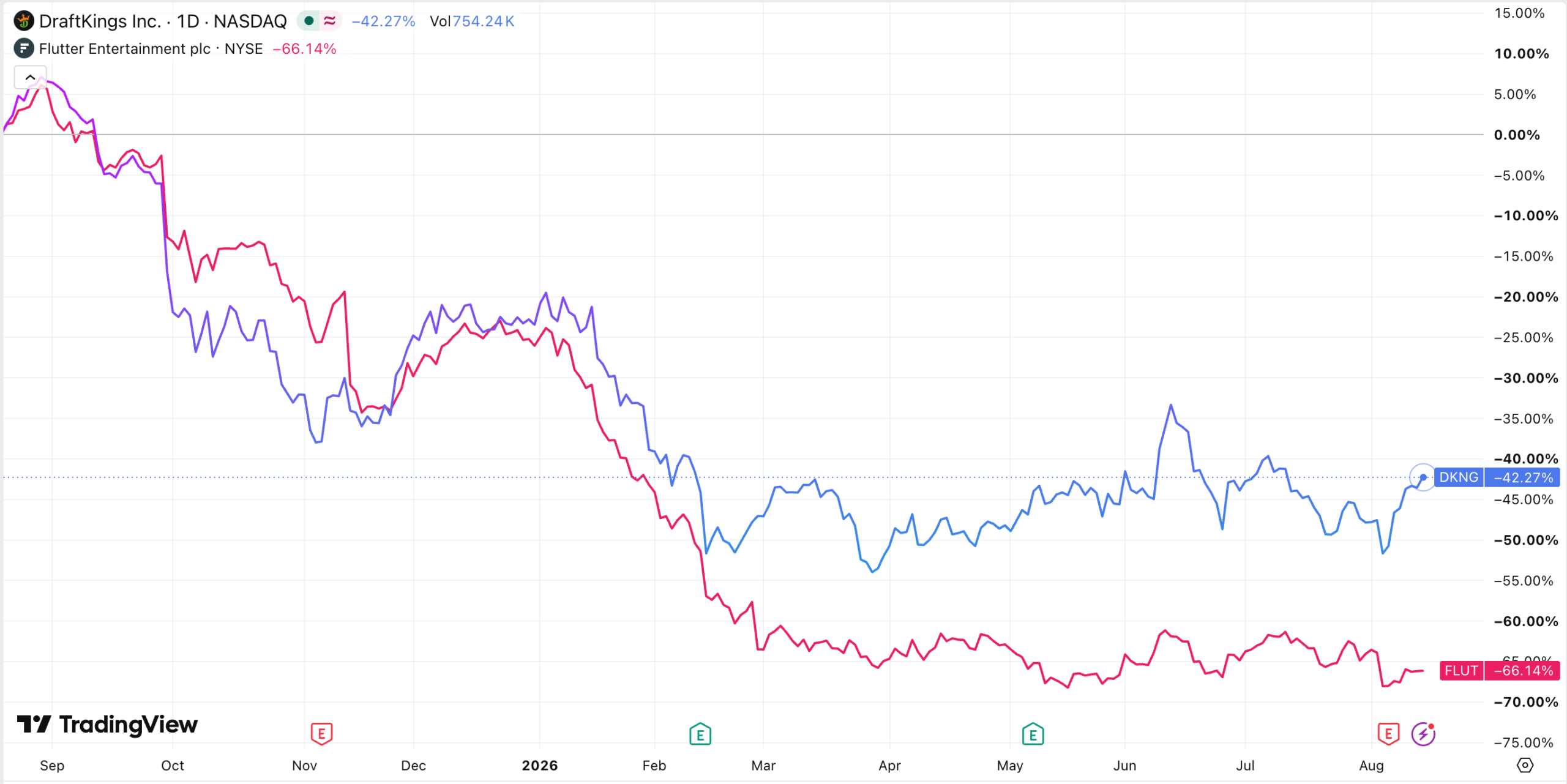
DeFi Llama data shows that the company handled over $11.6 billion in transactions in the last quarter, slightly lower than the previous quarter's $11.7 billion. This growth has coincided with significant underperformance by publicly traded betting companies such as DraftKings and Flutter Entertainment.
The regulatory environment has improved substantially in the United States, with the Commodity Futures Trading Commission (CFTC) taking a more lenient approach. That shift allowed Polymarket to move back to the country, where it is slowly gaining market share.
Some challenges remain. The state of New York has launched an investigation into Polymarket and Kalshi, with officials assessing whether the companies targeted minors in their advertising campaigns.
Meanwhile, a judge in Seattle has asked Kalshi to stop operating in Washington state, a ruling that dealt a major blow to the industry. The decision came after the state's attorney general argued that the platform was operating illegally there, as Washington prohibits online sports betting. The ruling means Polymarket may also find it difficult to expand in the state.
Nevada has also challenged the ability of these companies to operate in the state. However, the companies have found a receptive CFTC, which has argued that it is the sole regulator of the industry, even as states from New York to Nevada assert their own authority — a jurisdictional clash that remains unresolved.
The industry is also facing concerns about insider trading. The person who used to operate Donald Trump's teleprompter was recently accused of placing bets on what he would say, one of the episodes that have kept insider-trading concerns focused on the sector.

