Former Maritime Commissioner Warns Trump's Jones Act Waiver Undermines America First Agenda
Key Takeaways
- •The Jones Act, a century-old federal law, requires cargo shipped between U.S. ports to be carried on vessels that are American-built, owned, crewed, and flagged.
- •Doyle contends that after approximately 200 foreign vessel voyages under the waiver, no public evidence shows the policy has lowered gasoline prices for consumers.
- •The waiver has permitted Chinese-owned and Russian-crewed vessels to transport cargo between U.S. ports, while extending tax exemptions that disadvantage domestic shipping companies.
- •Doyle warns that repeated blanket waivers could freeze billions in investment toward American shipyards by creating uncertainty about federal commitment to the domestic maritime industry.
- •An existing statute, 46 U.S.C. § 501(b), allows targeted vessel-specific waivers for national defense needs when U.S. capacity is unavailable, which Doyle recommends using instead of broad suspensions.
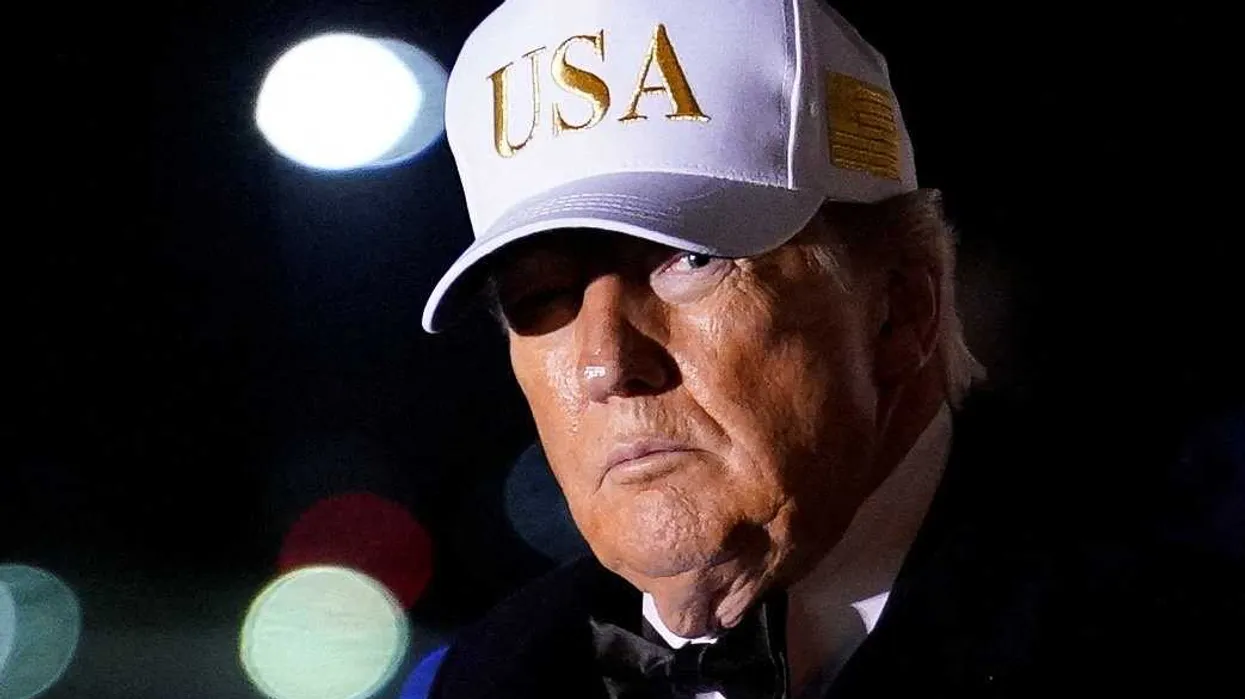
Former Federal Maritime Commissioner William P. Doyle has argued in an op-ed published Monday by the Washington Examiner that President Donald Trump's suspension of the Jones Act betrays core "America First" principles and creates what he described as "troubling" national security risks by empowering U.S. adversaries.
The Jones Act, formally Section 27 of the Merchant Marine Act of 1920, is a century-old federal law requiring that cargo shipped between U.S. ports be carried on vessels that are built, owned, and crewed by American citizens. Broad waivers of the statute have been historically rare and typically limited in scope, making the current suspension a notable departure from past practice. Trump's decision to temporarily waive the law came amid escalating tensions with Iran, as the administration sought to cushion the economic fallout from disruptions in the Strait of Hormuz, a chokepoint through which roughly a fifth of global oil consumption transits daily.
"The Trump administration acted quickly after the crisis in the Strait of Hormuz, temporarily waiving the Jones Act in hopes of easing pressure on American fuel markets," Doyle writes. "That was an emergency decision. The question now is whether the facts still justify it. They do not."
The waiver is set to expire on August 16, and the administration is reportedly weighing whether to extend it. Doyle contends that after nearly five months and approximately 200 foreign vessel voyages, the policy has failed to deliver tangible benefits to consumers. "There is no public evidence that the waiver has delivered any savings at the gasoline pump," he writes.
Under the waiver, foreign ships and crews have taken on work legally reserved for American-built, American-owned, American-crewed, and American-flagged vessels. Doyle highlights specific examples: "The waiver has allowed a Chinese-owned, Chinese-operated, Chinese-built and Chinese-crewed vessel to carry cargo between Baltimore and Mississippi. It has also allowed a Russian-crewed vessel to operate between Florida and Louisiana." He notes that the waiver simultaneously extends tax exemptions to foreign shipping operators, placing domestic companies at a competitive disadvantage.
"That is difficult to reconcile with an America First economic and national security agenda," Doyle states.
Beyond the immediate loss of cargo to foreign operators, Doyle warns of long-term consequences for the domestic maritime industry. "The broader damage will be measured not only in cargoes lost today, but also in ships never built tomorrow," he argues. "Investors, lenders and vessel operators will not commit billions of dollars to American shipyards if they believe the federal government will suspend the Jones Act whenever an international crisis disrupts global markets, even when the disruption has no connection to the availability or capacity of the domestic maritime industry."
"Uncertainty in federal policy can freeze long-term investment," Doyle adds. "Markets respond to clear rules. So do shipbuilders, vessel operators, lenders and the skilled workers they employ."
White House National Economic Council Director Kevin Hassett, a longstanding critic of the Jones Act, has defended the waiver as a measure to reduce gasoline prices. Doyle pushes back on that rationale: "The waiver should be judged by results, not theory. The promised consumer benefit has not been demonstrated. Foreign operators have gained domestic cargoes. American mariners have lost work. And uncertainty is discouraging investment in the maritime industrial base that Trump has pledged to rebuild."
Doyle also argues that the waiver contradicts Trump's own Maritime Action Plan, which he describes as a strategy that "calls for rebuilding shipyards, expanding the U.S.-flagged fleet, and strengthening the nation's maritime workforce." He asserts: "Those goals cannot be achieved while federal policy transfers domestic cargo to foreign ships and discourages investment in American vessels."
However, Doyle emphasizes that the administration does not need to choose between national security flexibility and protecting maritime jobs. He points to an existing statutory mechanism — 46 U.S.C. § 501(b) — which authorizes waivers for specific vessels when the president determines it is necessary for national defense and the Maritime Administration confirms that qualified U.S. vessel capacity is unavailable.
This narrower authority, Doyle explains, would allow "the government to respond to a genuine emergency without turning an exceptional waiver into a standing invitation for foreign operators to enter routine domestic commerce."
In his conclusion, Doyle issues a stark warning: "Trump's goal of restoring America's maritime industrial base cannot succeed if investors believe blanket Jones Act waivers may become the new normal. Allowing the current waiver to expire, while relying on the targeted authority Congress provided for genuine needs, would send a powerful signal. Emergency powers remain available when truly necessary, but America's domestic commerce belongs to American ships, American companies, and American mariners. That is what America First should look like."

