Speaker Mike Johnson Cancels Final Two Weeks of September House Session, Drawing Sharp Criticism From Democrats
Key Takeaways
- •Speaker Mike Johnson canceled the last two weeks of September's House session, and the chamber will not reconvene until mid-November.
- •The House passed a government funding measure that expires in December, setting up another spending deadline upon lawmakers' return.
- •Reps. Thomas Massie and Ro Khanna introduced the Epstein Files Transparency Act II, which would allow victims and prosecutors to sue the U.S. Attorney General over unlawfully withheld or delayed Epstein-related records.
- •A prior discharge petition by Massie and Khanna forced passage of the first Epstein Files Transparency Act, which led the Justice Department to release roughly 3 million files publicly.
- •Because members can only sign discharge petitions while the House is in session, critics like Rep. Veronica Escobar argue the extended recess slows the new measure's signature-gathering effort.
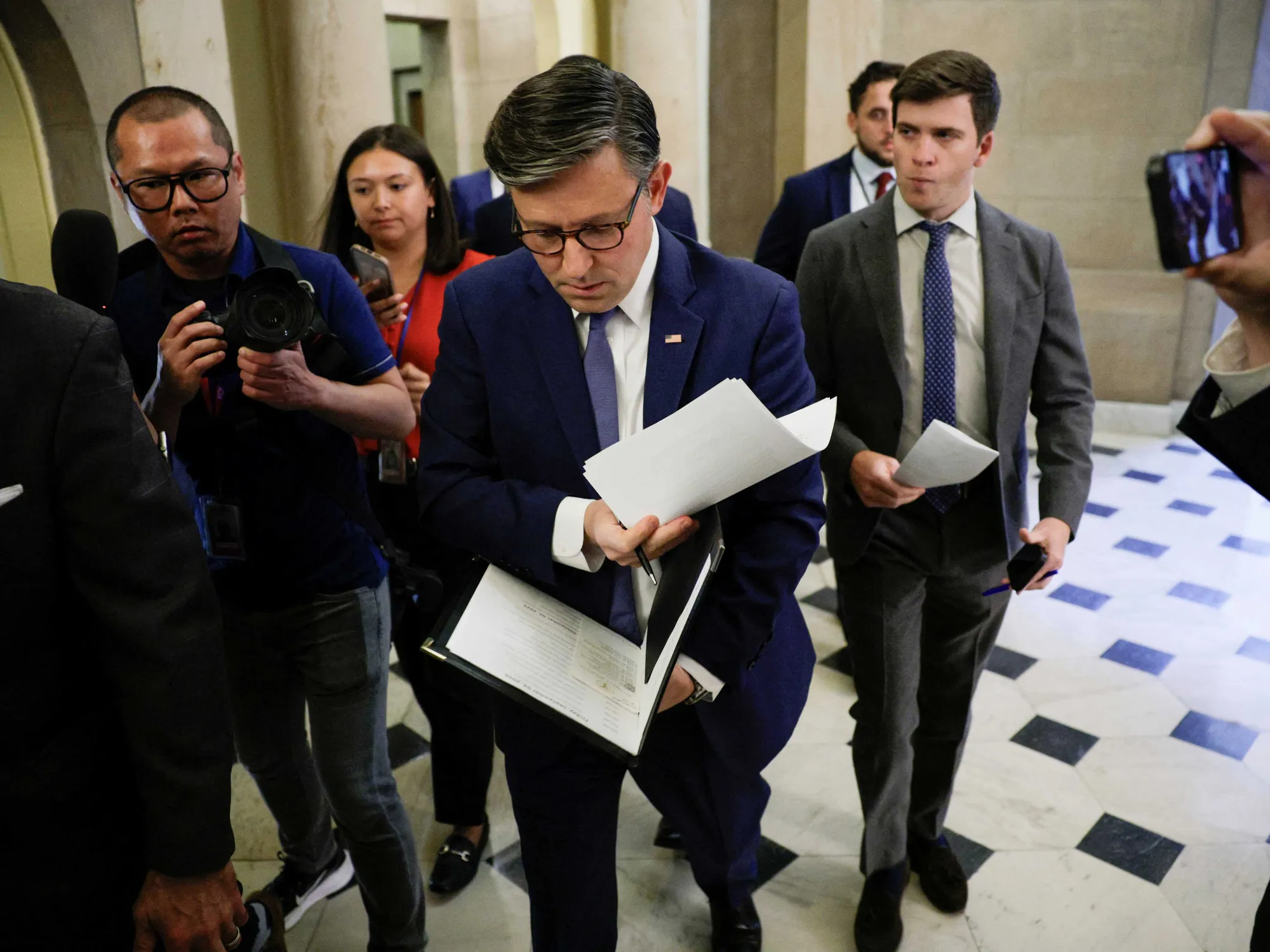
WASHINGTON — Members of the U.S. House of Representatives returned from their annual monthlong August recess this week and worked three and a half days before Speaker Mike Johnson sent them home again.
Once the House passed a measure funding the government through December, Johnson decided to give Congress an extra two weeks off, canceling the last two weeks of September. After that, the chamber will not reconvene until mid-November. The move leaves a compressed fall legislative calendar: with government funding only secured through December, lawmakers will face another spending deadline shortly after they return, alongside other pending business such as annual defense authorization and disaster aid measures that typically require action before year's end.
"It's a pretty stunning self-indictment of their lack of performance," recently retired Rep. Dan Kildee (D-MI) told Raw Story. "When the speaker thinks that they are better off not working than actually legislating, in a way that works against their political interests, which would be the effect. That's amazing."
Following the brief Washington work week, the House was immediately gaveled out of session for the next 10 days, joining Senate colleagues in taking all of Labor Day week off. The break came days after a year-old message from President Donald Trump, in which he complained that regular Americans get too many holidays, recirculated (Snopes). Congressional recesses are scheduled by party leaders in each chamber, and speakers have wide latitude to set the House calendar — a prerogative Johnson has used before, including during past spending fights when votes were short.
No sitting Republican responded to Raw Story's requests for comment. According to Kildee, the former Michigan congressman, that is no coincidence.
"When not showing up for work is better than showing up for work, you got a problem," Kildee added.
To other Democrats, the timing is beyond suspicious, particularly after Reps. Thomas Massie (R-KY) and Ro Khanna (D-CA) introduced their Epstein Files Transparency Act II at the start of August, while the House was in recess (press release).
Last year, the bipartisan duo of Massie and Khanna already bested Johnson and Trump when they gathered the necessary 218 signatures on a discharge petition, enabling them and the Jeffrey Epstein survivors to bypass opponents and pass the law. A discharge petition is a procedural tool that forces a bill to the floor once a majority of the House — 218 members — signs it, bypassing leadership's control over the agenda.
That first Epstein Files Transparency Act forced the Justice Department to release some 3 million files publicly. In a sense, the first measure was aimed at empowering survivors, and while they were seen and some felt heard for the first time, no one was prosecuted.
The second Epstein transparency act creates a private right of action for victims and prosecutors alike "to challenge and sue the U.S. Attorney General for unlawfully withholding, redacting, delaying, concealing, removing, or failing to publish Epstein-related records," the pair said.
"It will be a very tangible impact on the perpetrators," Massie told Raw Story at the Capitol earlier this week.
"We don't need to release any more names," Massie continued. "What we need is for the names that have been released to be prosecuted, and I'm sure there will be more names that show up."
The new anti-Epstein act picked up steam as members returned from their August recess earlier this week and were finally able to sign onto the measure. That is why critics such as Rep. Veronica Escobar (D-TX) are now accusing the speaker of stonewalling survivors once again. Members can only sign discharge petitions while the House is in session, meaning an extended recess directly slows the signature-gathering process for such efforts.
"I think he's afraid of discharge petitions, of continuing war in Iran, the million other examples of f------ up by the administration," Escobar texted Raw Story. "And he is afraid of his own conference and doesn't want anyone to have to answer to what Trump is doing."
Even with Congress out of session, Washington remains divided along party lines, and some Republicans are coming to Johnson's defense — just not publicly.
"Guessing it's because of the election," a Republican lawmaker, who asked for anonymity, texted Raw Story when asked about the impromptu shutdown. "Members wanting to campaign back home. My guess is."
