Jim Cramer Announces Bitcoin Sale Over Quantum Computing Concerns
Key Takeaways
- •Jim Cramer decided to sell his Bitcoin after IBM CEO Arvind Krishna suggested quantum computers could crack cryptocurrency encryption within three to four years.
- •The Coldcard exploit, attributed to AI-driven vulnerability discovery, has caused over $100 million in losses and may push the crypto industry to take quantum threats more seriously.
- •Bitcoin ETFs recorded $211 million in net inflows on Tuesday, bringing the weekly total to $380 million, while ETH ETFs attracted $53 million.
- •Circle reported $701 million in Q2 revenue with USDC circulation growing 19% to $73.3 billion, and its Arc mainnet is scheduled to launch on September 16.
- •Ethereum researchers proposed EIP-8361, which would progressively burn validator rewards as staking participation increases, potentially reducing yields to zero once half of all ETH is staked.
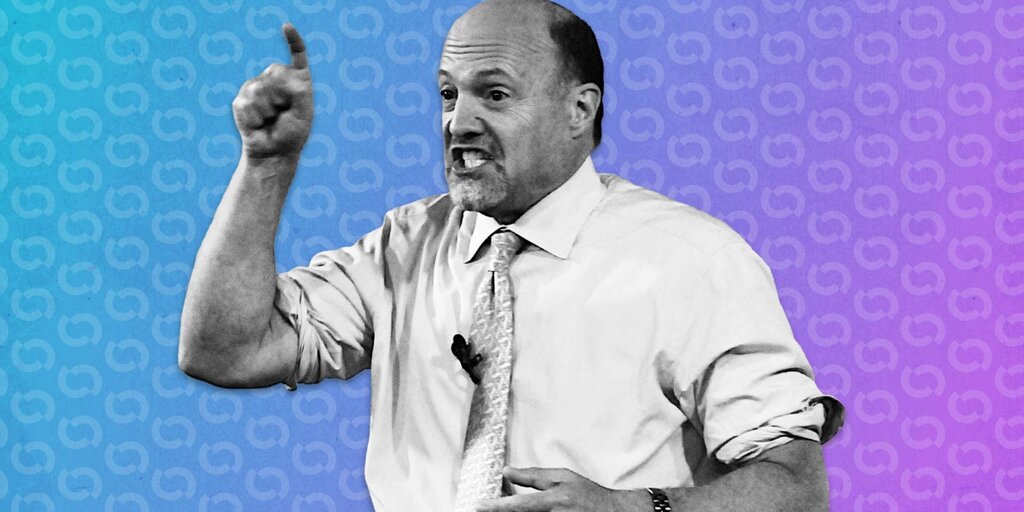
CNBC host Jim Cramer announced he is selling his Bitcoin, this time citing concerns that quantum computing could eventually break the cryptography protecting digital assets.
The decision came during an on-air interview with IBM CEO Arvind Krishna. Cramer asked whether quantum computers could ultimately crack the encryption safeguarding his holdings. "I think that you should give yourself three or four years," Krishna replied, "and at that point, I would get rather paranoid about it." Decrypt reported on the exchange.
The concern centers on the fact that Bitcoin relies on elliptic curve digital signatures (ECDSA via the secp256k1 curve) to authorize transactions. A sufficiently powerful quantum computer running Shor's algorithm could, in theory, derive private keys from public keys, allowing an attacker to spend funds from any address whose public key has been exposed. NIST has been standardizing post-quantum cryptographic algorithms since 2016, and the broader cybersecurity industry is already preparing migrations, though Bitcoin and most other blockchains have not yet committed to specific upgrades.
Cramer acted without hesitation. "Arvind Krishna knows quantum incredibly. He knows Bitcoin and quantum. And I'm going to sell mine," he said, adding that Ethereum might be "even worse." Bitcoin rose approximately 1.6% on the day he made the announcement.
Crypto traders responded with enthusiasm, invoking the "inverse Cramer" trade — the widely circulated notion that the reliable move is to take the opposite position of whatever Cramer recommends. The concept gained enough cultural traction in 2022–2023 that mainstream financial outlets covered it as a persistent market meme, and a dedicated social media account tracking his calls amassed a large following. "Thank you Jim!" read one top reply on social media.
Cramer has a documented history of exiting crypto at market lows. In December 2022, with Bitcoin trading near $16,800, he stated he had dumped all his cryptocurrency and would not touch it "in a million years." Bitcoin subsequently gained more than 400% over the following three years.
Beyond Cramer's market timing, the quantum computing threat to cryptocurrency is a recognized concern within the industry. AI was credited with the recent Coldcard exploit, which has surpassed $100 million in losses. The incident followed a series of DeFi hacks and exploits totaling well over $300 million. Notably, these AI models represent a baseline — their capabilities will only improve over time.
A major security incident like the Coldcard exploit may serve as a catalyst for crypto projects to take quantum threats more seriously. Zcash (ZEC) proactively deployed frontier AI to identify exploit vectors in its own cryptography, discovering and patching vulnerabilities before they could be exploited. ZEC initially sold off following the disclosure but has since rebounded swiftly. Decrypt has previously covered the quantum threat to Bitcoin in detail.
Macro Crypto and Markets
Crypto majors posted modest gains while equities reached new all-time highs. BTC rose 0.5% to $64,100; ETH held flat at $1,868; SOL was unchanged at $73.70; and HYPE gained 3% to $57.
Top altcoin movers included PUMP (+13%), ZEC (+6%), and LIT (+3%).
Oil declined 5% to $76.20, while Gold advanced 1.9% to $4,230.
U.S. stock futures were positive after reaching new all-time highs on Tuesday, with the DOW up 0.4% and the Nasdaq up 0.2%.
SpaceX exceeded Wall Street revenue forecasts but recorded a $540 million Bitcoin markdown, as its 18,712 BTC holdings declined in value from $1.64 billion to $1.10 billion.
Justin Drake and five other researchers proposed EIP-8361 to curb Ethereum inflation. The "Tapered Issuance Burn" proposal would destroy an increasing share of validator rewards as staking grows, reducing yield to approximately 1% at the current ~33% staking rate and to 0% once half of all ETH is staked. The proposal reflects a broader debate within Ethereum governance over whether high staking participation could reduce ETH's circulating supply too aggressively — a dynamic often described as the "ultrasound money" thesis — and whether diminishing yields might weaken the economic security of the network.
Cloudflare launched Cloudflare Wallets, enabling AI agents to autonomously pay for APIs and content through x402 stablecoin micropayments within human-defined spending limits. The launch aligns with a growing push to give autonomous AI agents financial autonomy, a use case that stablecoin infrastructure is uniquely positioned to serve given its programmability and near-instant settlement.
Circle reported $701 million in Q2 revenue, with USDC circulation growing 19% to $73.3 billion and adjusted EBITDA rising 8% to $143 million. Its Arc mainnet is scheduled for September 16 (CRCL +5%).
Ledger weighed in on the Coldcard exploit, arguing the attack represents a turning point where AI-driven vulnerability discovery forces hardware manufacturers to rethink how they audit and defend their firmware.
Wells Fargo will offer tokenized deposits for 24/7 corporate payments, joining JPMorgan and Citi in the effort to move Wall Street settlement rails onchain. The trend of major banks building tokenized deposit infrastructure reflects competitive pressure from stablecoin issuers and blockchain-based payment networks, which have demonstrated that onchain settlement can operate continuously without traditional banking-hour constraints.
Samsung is positioned to become a dominant stablecoin distributor, according to analysts, with its wallet's reach across hundreds of millions of devices serving as a major on-ramp for stablecoin payments.
BitGo's WBTC moved to Chainlink, pushing the LayerZero-to-Chainlink tally near $15 billion.
Corporate Treasuries and ETFs
Bitcoin ETFs recorded $211 million in net inflows on Tuesday, bringing the total to $380 million across the first two sessions of the week. ETH ETFs saw $53 million in inflows.
Meme Coin Tracker
Meme coin leaders were mostly lower: DOGE -1%, SHIB -3%, PEPE -2%, PENGU -1%, TRUMP -1%, BONK flat.
Robinhood Chain posted broad gains led by Cashcat (+40% to $96 million market cap), Tendies (+38%), and Frong (+78%). PONS held steady at $20 million following its V2 release.
Solana meme leaders included Cupsey (+58%), Stonk (+165%), and Kimchi (+90%). CATE fell another 40% to $18 million, while ANSEM declined 7% to $170 million.
Token, Airdrop and Protocol Tracker
Uniswap teased its new product "pools.trade," launching today.
StonkFun, a new Solana launchpad, gained momentum on Tuesday by pairing pre-IPO stocks with memecoins.
Proof of Play is winding down after failing to find a sustainable model. The project is open-sourcing its code and releasing its Pirate Nation IP under CC0, while the PIRATE token continues independently (PIRATE at $1 million market cap after reaching above $100 million).
The Eliza project, founded by Shaw Walters, is officially shutting down and dissolving its foundation, turning the token and remaining treasury over to a group of holders. Both shutdowns reflect a broader reckoning for crypto-native projects that raised and launched during the 2023–2024 bull cycle but struggled to sustain engagement and revenue as speculative enthusiasm cooled.
NFTs
NFT market leaders were slightly lower: CryptoPunks -1% at 31.7 ETH, BAYC -1% at 8.33 ETH, Pudgy Penguins flat at 3.87 ETH, and Stonkbrokers -8% to 5.9 ETH.
Top NFT movers included Merry Men (+550%), pyo (+50%), and Zaibatsu (+15%).
TokenWorks announced 30% buybacks for FWA using historical platform fees, alongside the previously stated 80% go-forward buybacks. The token went live for trading at 3:00 PM ET yesterday (FWA -20% to $7 million).
This article is based on the Morning Minute newsletter by Tyler Warner. The analysis and opinions expressed in the original newsletter are those of the author and do not necessarily reflect those of Decrypt.

