Nvidia CEO Jensen Huang to Testify Before Senate Banking Committee on AI Chip Export Controls
Key Takeaways
- •Nvidia CEO Jensen Huang will appear as the only witness before the US Senate Banking Committee on December 3, 2026, at a hearing examining US export controls on advanced AI chips.
- •The hearing will investigate whether Nvidia's most advanced AI chips, which have been subject to China export restrictions since 2022, may have been diverted to Chinese buyers through intermediaries.
- •Prior to the public session, Huang will take part in closed-door interviews with three House committees on December 1 and 2, 2026, none of which will be livestreamed.
- •Sen. Tim Scott requested Huang's testimony around November 12, 2026, after the Nvidia CEO voluntarily agreed to appear.
- •Sen. Elizabeth Warren's anticipated leadership role in 2027 suggests the hearing may be the first of several on chip export oversight, signaling sustained compliance scrutiny for chipmakers.
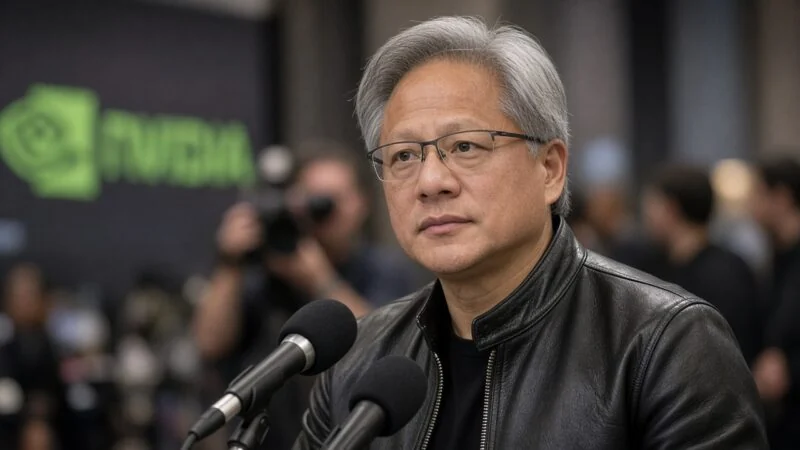
Nvidia CEO Jensen Huang will appear as the sole witness at a Senate hearing examining whether US export rules are keeping advanced AI chips out of China.
Huang is scheduled to give public testimony before the US Senate Banking Committee on Thursday, December 3, 2026, at 10 a.m. ET. He will be alone at the witness table: he is the only witness on the schedule, so every question from lawmakers will be directed at him.
The hearing is titled "Protecting America's AI Advantage: Oversight of U.S. Export Controls." It focuses on national security, and specifically on whether advanced AI chips may have ended up in China despite US restrictions. Export controls are the licensing rules Washington uses to keep sensitive technology out of restricted countries, and they have applied to Nvidia's most advanced AI chips bound for China since 2022. Thursday's session is an oversight check on how those rules are holding up in practice.
A Packed Week in Washington
Thursday's public session closes out a busy stretch on Capitol Hill. Before it, Huang is scheduled for closed-door interviews with three House committees on December 1 and 2, 2026.
Those committees are examining national security and Chinese influence on US businesses. None of the closed-door sessions is planned to be livestreamed, meaning Thursday is the only part of the proceedings the public will see. For readers following the issue, that makes Thursday the session to watch: it is the only point at which Nvidia's answers will land on the public record.
The Senate appearance traces back to Sen. Tim Scott, who requested Huang's testimony around November 12, 2026, after Huang voluntarily agreed to appear, according to CryptoBriefing.
Lawmakers from both parties have been pushing for accountability. Their concern is Nvidia's compliance with export regulations and how closely the company tracks where its chips go after they ship.
Why a Chip CEO Is Facing the Banking Committee
The hearing's title states the purpose: an oversight session on US export controls.
The underlying worry is that advanced AI hardware can reach restricted buyers through intermediaries. Senators want to know whether advanced AI chips may have been diverted to China and whether Nvidia's safeguards were adequate to prevent it.
Sessions like this typically open with prepared remarks from the witness, followed by rounds of questions from committee members, and the full exchange becomes part of the congressional record. That gives Thursday more weight than a single news cycle: whatever Huang says about Nvidia's safeguards and shipment tracking will stand as the committee's official public accounting of the company's position.
What It Means for Nvidia and the Chip Sector
The political calendar matters as well. Sen. Elizabeth Warren is anticipated to increase scrutiny of national security risks, as she is likely to gain a leadership role in 2027. That suggests Thursday may be the first of several hearings, with chip export oversight returning to the committee's agenda repeatedly if Warren takes on a bigger role. For chipmakers, that points to sustained compliance scrutiny rather than a one-off session.
Huang has spent years explaining to investors why demand for Nvidia's chips keeps climbing. On Thursday, he will need to explain to senators why that demand isn't reaching buyers it was never supposed to reach.
This article is based on reporting published by CryptoBriefing on November 29, 2026. The original article was edited by John Chen.

