Nvidia's Jensen Huang Confessed to More Affairs, and the Board Took Him Back Anyway
Key Takeaways
- •Jensen Huang returned as Nvidia's CEO after an 11-day absence, telling the board about additional affairs beyond the two that had been widely reported.
- •President Trump pressed Nvidia's directors to reinstate Huang and personally realized $15 million in gains as the stock rebounded.
- •Nvidia's stock climbed about 32% and the company added nearly $1 trillion in market value on news of the reinstatement, though shares fell in overnight trading the next day.
- •Huang, Nvidia, and its customers remain under investigation by the SEC, FBI, Commerce and Justice departments, multiple congressional committees, and the California attorney general.
- •Nvidia has deployed $700 billion in vendor financing to AI companies over the past three years, and startups had feared those funds would cease without Huang at the helm.
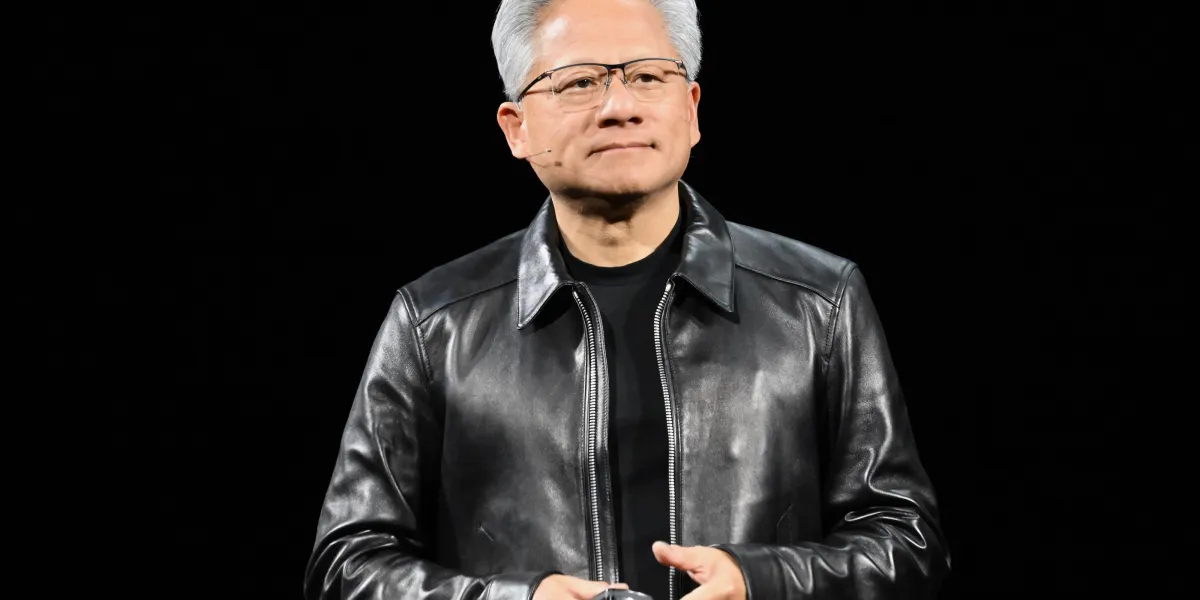
One big thing: Huang confessed to more affairs, and the board took him back anyway
Jensen Huang may be back as Nvidia's chief executive, but the book is not closed on his infidelities — or on whether his affair with a suspected intelligence asset for China posed a national security risk.
Huang, his company, and its customers remain under investigation by the Securities and Exchange Commission, the FBI, the Commerce and Justice departments, three House committees, one Senate committee, an internal corporate probe conducted by Nvidia's outside counsel, and the California attorney general's office. That list does not include the civil litigation.
It has been a head-spinning 24 hours, and reporting has surfaced striking details about how Huang clawed his way back into the CEO's office.
More affairs. On Sunday night, "Huang disclosed to the board additional affairs beyond the two that had been widely reported," the Wall Street Journal reported.
Trump's stock gains. President Donald Trump called into the company's board meeting to urge the directors to take Huang back. Trump was not concerned by the affairs, he told White House advisers — rather, he wanted the markets to rebound, the Journal said. Trump personally made $15 million in gains as the stock rebounded, according to the Financial Times.
CFO Kress sidelined. Trump had also seen interim CEO Colette Kress on CNBC a few days earlier and was not impressed. "You interviewed the young woman, I thought she was very good, but she's not a chip person. She doesn't know. She knows less about chips than I do," Trump later said in a CNBC interview. Kress has been the company's CFO for 13 years. Sunday's board meeting was kept a secret from her, the FT reported.
A humiliating reversal. Although the board had begun a search to replace Huang, it found few candidates willing to step into his shoes, the Journal said. On Wednesday, after categorically ruling out Huang's return, the company held an all-hands meeting at which management played the Tom Petty song "I Won't Back Down." Five days later, Huang walked back into Nvidia's headquarters to a standing ovation from employees. "This is my first day of work," he told them, according to the New York Times. "I don't have a computer, so the I.T. department is going to give me a new P.C."
Vance lobbied. During his 11-day exile, Huang had a 45-minute phone call with Vice President J.D. Vance. The vice president "was seemingly persuaded by the entreaties of Huang and his allies, who are probably a crucial source of funding if Vance decides to run for president," the FT reported.
'Deep state' narrative. Huang's Silicon Valley allies also played upon Trump's historic mistrust of the U.S. intelligence community, portraying Huang as the persecuted victim of the "deep state," Axios reported.
Crude humor. Finally, when the board reversed its decision, Trump posted a photo taken of himself raising a fist after he narrowly avoided assassination in Pennsylvania — except that his face had been replaced by Huang's, and the fist was holding a red bra.
Not everyone was impressed. "The legal and reputational risk of hiring a CEO who may very well be convicted in the United States or other nations of violating espionage and export control laws is now borne by the board of Nvidia, but the national security risk is passed along to the United States military and its citizens. The risk of extortion by a Chinese asset who's been banned by Singapore is risk enough to not rehire Huang. The worst part of this is what we may never know," Sen. Kevin Cramer (R-N.D.) said on Facebook.
In a separate report, Fortune gathered reactions from 14 business leaders to Huang's return under the headline "'Accountability becomes negotiable'" (Diane Brady).
SpaceX's Gwynne Shotwell: The Musk whisperer
In 2002, Gwynne Shotwell had a lunch that would change her life — and the trajectory of the business world. At 38, she had spent a decade working at a rocket startup, frustrated by the pace of innovation on the ground. "It wasn't a vibrant industry, and we hadn't gotten back to the moon [in 30 years]," she said in 2022. "The systems were designed to eliminate risk, so they took forever and cost too much."
A former colleague had just departed for another rocket startup, and she met him to celebrate at a favorite Austrian restaurant in the coastal Los Angeles suburb of El Segundo. Afterward, her friend suggested Shotwell stop by his new company to meet the owner.
The owner was Elon Musk. Fresh off making a fortune at PayPal, Musk laid out his vision to the curious Shotwell: build rockets far more cheaply than NASA; sell launches to commercial satellite companies at bargain prices; slash costs even further by making the rockets reusable. Shotwell blurted out that he needed a "business developer" — effectively a sales leader who could win the pre-product contracts needed to fund the vision. Musk called her with an offer, and within days, Shotwell joined SpaceX. "I knew that working for Elon would be my last job in aerospace," she has often said.
More from Fortune
- Anthropic's $1.5 Trillion IPO: Who Cashes Out and Who Pays?
- TSMC gains $158 billion in value in one day as Jensen Huang returns as Nvidia CEO (Jay Ganglani)
- Nvidia stock soars 30% on Jensen Huang's return as CEO, but now he must grapple with a wave of investigations amid the still unfolding spy scandal (Jason Ma)
- Hunger Games: Sunrise on the Reaping opens to $120 million despite GTA VI — and its audience explains why (Andrew McGowan)
- On a $1,000 Social Security check, Medicare's 2027 premium hike eats 18% of the COLA raise — and hits small checks the hardest (Jessica Gibson)
- Women's football has a $1 billion opportunity — and the WSL wants a slice of the pie (Sam Forsdick)
- Why is gas suddenly cheaper? Five factors driving the drop to $3.64 a gallon (Jordan Blum)
- A selloff, a POTUS, or a recession: What really made Nvidia bring Jensen Huang back as CEO? (Morgan Chittum)
- 'Voluntary, revocable': The fine print behind Anthropic founders' $112 billion giving pledge (Nicole Canelakes)
- 'Doesn't answer the big questions': The stock market is still $5 trillion below its AI-fueled peak despite Monday's rally (Marco Quiroz-Gutierrez)
The markets: Tech futures hit the brakes after yesterday's roller-coaster
U.S. stocks rose sharply yesterday after Nvidia decided to reinstate Jensen Huang as CEO. The tech-heavy Nasdaq 100 was up 6.86% — a massive move for an index its size.
This morning, however, traders appear to be nursing a hangover from the rally. S&P 500 futures were down before the open in New York. Nvidia stock, which had climbed 32% yesterday, lost 4.27% in overnight trading. Nasdaq 100 futures were down 1.23% — a relatively big step down for one day's trade.
Some on Wall Street urged calm. "IG's analysis of 75 years of U.S. stock market data reveals that the S&P 500 has risen in 86% of Decembers following a negative November," said IG Chief Market Analyst Chris Beauchamp.
Deutsche Bank also released its official outlook for 2027. "Our equity strategists see the S&P 500 reaching 9,000 by end-2027 on extremely supportive earnings," said Deutsche's Jim Reid.
S&P 500 futures were down 0.43% this morning, after the index rose 4.73% yesterday. In Europe, the Stoxx 600 was down 0.25% in early trading, and the U.K.'s FTSE 100 rose 0.03% before lunch.
In Asia, South Korea's KOSPI was up 6.32%, Japan's Nikkei 225 was up 3.91%, and China's CSI 300 was up 0.14%. India's Nifty 50 was closed for a national holiday. Brent crude fell to $89 per barrel, and Bitcoin fell to $60,005.
Why the entire stock market stumbled when one man lost his job: Circular financing is real
The return of Jensen Huang to Nvidia's CEO office added nearly $1 trillion to the company's market capitalization yesterday — a reminder that this saga was as much about the value of equity as it was about national security.
"That financial markets moved on the employment prospects of one individual suggests either equity valuation models or current pricing might need to be examined," said UBS's Paul Donovan this morning.
A note published by Bryce Anderson at Morningstar before Nvidia's U-turn described why the AI trade is so fragile. The industry's circular financing is very real, he said: "Money goes in as equity and comes back as spending on cloud and chips, so a stumble at one lab would hit its investors' earnings, its cloud backlog and its suppliers' orders at the same time. The arrangement works for as long as every party keeps spending, but if any link in the chain breaks, investors could be left disappointed."
The scale of Nvidia's support for the AI industry is enormous: the company spent $700 billion in "vendor financing" — giving companies money so they can purchase Nvidia products — over the last three years, per the Financial Times. AI startups had feared Nvidia's money would dry up without Huang at the helm; his return as CEO has put those fears to rest, as Fortune's Beatrice Nolan reported.
Chart of the day: Big album drops are linked to more fatal car crashes
When music's biggest stars release new albums, online music streaming increases by 43%, according to a Boston study highlighted by Joachim Klement of Panmure Liberum. That, in turn, has a literal knock-on effect on the number of car crashes in the U.S., as distracted drivers listen to their favorite artist's new release.
The researchers examined the 10 most-streamed albums between 2017 and 2022 and found that there are, on average, 20 more fatal accidents on days when the biggest albums are released. That is particularly unfortunate for Taylor Swift: three of those 10 albums were hers.
Number of the day: 48%
The year-on-year increase in mentions of Nvidia across all global corporate earnings transcripts of companies worth $1 billion or more, as measured by AlphaSense. Back in 2022, the company was barely mentioned, AlphaSense told Fortune.
The front pages today
- OpenAI Engineer Secretly Recorded Dozens of Meetings, Prosecutors Say (New York Times)
- Pentagon delays Patriot missile shipments to Ukraine (Financial Times)
- Signal joins United Airlines, banks in limiting AI agents over customer risks (CNBC)
- Ilhan Omar Investigation Covers Most of Her Life, Unsealed Records Show (Wall Street Journal)
- StanChart Probed Top Banker After Complaints About His Conduct (Bloomberg)
- Russia warns of 'preventive nuclear attack' as Medvedev claims Ukraine, NATO crossed line (New York Post)
One more thing: Among Gen Z, 'Friendsgiving' is slowly replacing traditional family Thanksgiving
"Friendsgiving" — spending the Thanksgiving holiday with friends instead of going home to be with family — predates Gen Z, but it has become an established part of young adults' holiday calendars, according to research from Ogilvy Consulting and Ideally.
The firms surveyed 1,198 U.S. adults and found that 41% of Gen Z consider Friendsgiving equally or more meaningful than Thanksgiving with family or relatives. Gen Zers are also almost twice as likely as the general population to choose Friendsgiving outright as their most meaningful celebration.

