NVIDIA Shares Fall 9.7% as Jensen Huang Resigns as CEO After 33 Years
Key Takeaways
- •Jensen Huang resigned with immediate effect as NVIDIA's chief executive officer, president, and board member on November 12, ending a 33-year tenure at the company he co-founded in 1993.
- •Chief Financial Officer Colette Kress has assumed the interim CEO role while the board, now guided by newly appointed first-ever chair Harvey C. Jones, considers both internal and external candidates for a permanent successor.
- •NVIDIA's board launched an independent investigation on November 8 into national security concerns, including reports of an alleged relationship between Huang and a businesswoman suspected of links to Beijing, while stating it had no reason to believe company secrets had been compromised.
- •NVIDIA shares declined 9.7% on Thursday following the resignation, and other AI-related companies also came under market pressure.
- •Kress is scheduled to lead NVIDIA's fiscal third-quarter 2027 earnings announcement on November 17, the first financial report under her interim leadership.
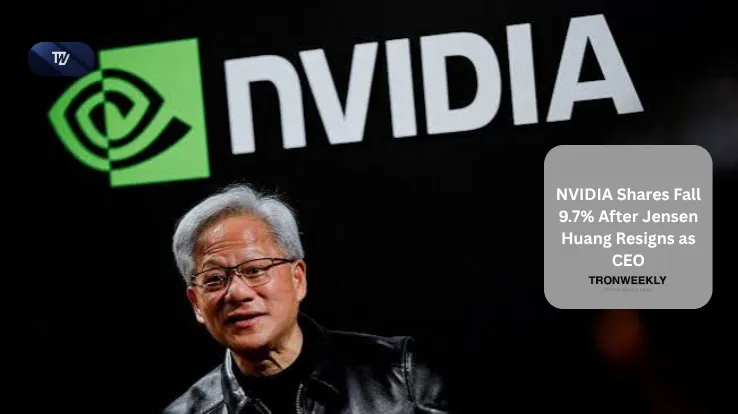
NVIDIA has announced the immediate resignation of co-founder Jensen Huang as chief executive officer, president, and board member, ending his 33-year leadership of the artificial intelligence chipmaker he co-founded in 1993. Chief Financial Officer Colette Kress has been appointed interim CEO while the board searches for a permanent successor. The unexpected transition comes amid a board investigation into national security concerns involving Huang and raises pressing questions about leadership continuity at the center of the global AI industry.
NVIDIA Confirms Huang's Exit After 33 Years as CEO
NVIDIA confirmed on November 12 that Huang had stepped down from all three positions with immediate effect. His exit ends one of the longest-serving chief executive tenures in the technology industry, spanning the company's rise from graphics chip startup to a central supplier of AI computing hardware. Kress, who joined the company in September 2013, will assume the interim CEO role on top of her existing responsibilities as executive vice president and CFO. The board said it will weigh both internal and external candidates when selecting a permanent replacement.
The company also appointed Harvey C. Jones as its first-ever board chair, a newly created position that gives the directors designated leadership as they oversee the independent review and the succession process. The leadership changes follow a period of mounting scrutiny after reports raised concerns about Huang's alleged personal relationships and a possible foreign intelligence connection. On November 8, the board announced an independent investigation, stating that it had no reason to believe company secrets or national security had been compromised, according to a statement from NVIDIA's board of directors.
Why the Board Investigation Preceded the CEO Transition
The leadership change follows reports concerning an alleged relationship between Huang and a businesswoman suspected by U.S. intelligence of having links to Beijing. Reports also raised allegations involving an NVIDIA employee. Together, the disclosures pushed corporate governance and national security concerns into focus for a company whose technology plays a significant role in the global semiconductor industry.
In its November 8 statement, NVIDIA said an independent committee of directors, supported by outside legal counsel, would oversee the review. Huang had previously expressed support for the process and committed to cooperating. The board's subsequent decision to appoint an interim CEO marks a significant shift from its earlier public expression of confidence in Huang's leadership.
NVDA Stock Drops 9.7% as Investors Assess Leadership Risk
NVIDIA shares declined 9.7% on Thursday following Huang's resignation, according to Associated Press market coverage. The decline reflects investor concerns about the company's leadership transition and the uncertainty surrounding its future strategic direction, underscoring how closely market confidence in NVIDIA has been tied to its co-founder.
The impact extended beyond NVIDIA's own stock, with other AI-related companies also coming under market pressure. The development is particularly significant because NVIDIA supplies the advanced processors used by major cloud providers, data center operators, and AI developers. Any lingering uncertainty around its leadership could influence investor expectations about technology partnerships, future product development, and semiconductor supply commitments.
Colette Kress Takes Charge Ahead of Earnings Report
Kress assumes leadership at a critical point in NVIDIA's business cycle. As CFO since 2013, she has overseen the company's financial operations through its expansion into one of the world's most important AI infrastructure suppliers. Her dual responsibility as interim CEO and CFO provides leadership continuity, although the permanent appointment remains unresolved.
NVIDIA's next major event is its third-quarter fiscal 2027 earnings announcement on November 17. The company had scheduled a conference call for that date, with financial commentary from Kress. The report will be the first under her interim leadership, and investors will be watching for updates on revenue, AI chip demand, and the company's outlook, alongside any indication of how the transition could affect business operations.
The longer-term impact will depend on the board's permanent CEO appointment and its ability to maintain NVIDIA's existing technology roadmap and customer relationships. The transition also raises broader questions about succession planning at major AI companies, where leadership decisions can move investor confidence and industry expectations. The outcome of the board's independent review is a further development to track as the transition unfolds. For now, Kress faces the immediate responsibility of maintaining operational stability while the board works through the leadership transition.
This article was reported by Tron Weekly.

