Jensen Huang Out as Nvidia CEO After 33 Years Amid Affair Reports and Espionage Probe
Key Takeaways
- •Jensen Huang's resignation ended his 33-year leadership of Nvidia, which he co-founded in 1993 and grew into a company valued at roughly $4 trillion.
- •Reports tied Huang to three extramarital affairs, including one with Megaspeed executive Alice Huang, whom U.S. intelligence officials reportedly suspected of gathering information for Beijing.
- •Nvidia's board investigated whether Huang had been the target of a foreign intelligence operation but said it had no reason to believe company secrets or national security were compromised.
- •Nvidia shares fell more than 14% at Thursday's open before recovering to close down about 4.6%, while rivals such as AMD and Broadcom fared better.
- •CFO Colette Kress was appointed interim CEO, and the board reportedly approached Arm CEO Rene Haas as a potential permanent successor with earnings due Nov. 17.
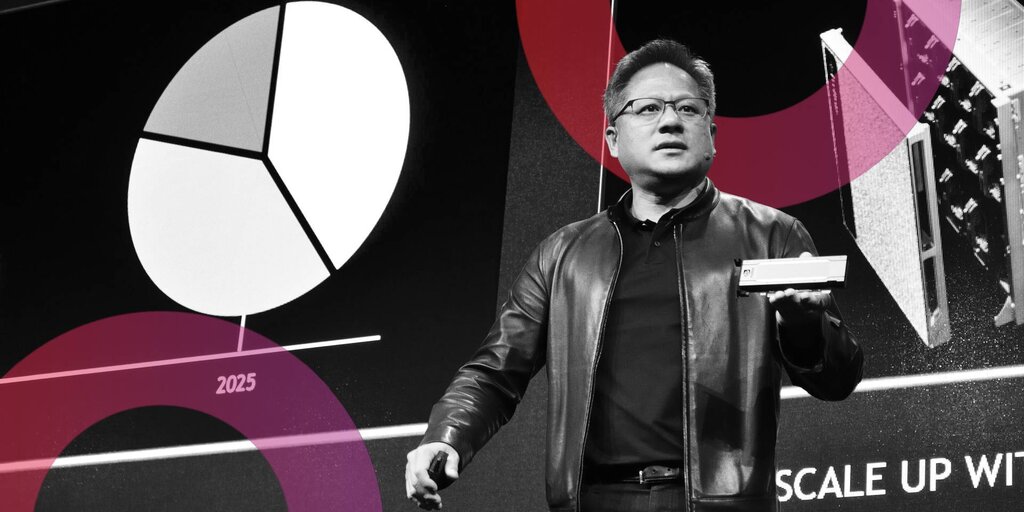
Jensen Huang resigned Thursday as Nvidia's president, CEO and board member, bringing an abrupt end to a 33-year tenure at the company he co-founded in 1993 and built from a graphics-card maker into the roughly $4 trillion engine of the AI boom. The departure came not amid a weak earnings report but following reports of three extramarital affairs—one involving an executive whom U.S. intelligence officials reportedly suspected of gathering information for Beijing.
In a matter of days, the most powerful executive in artificial intelligence went from untouchable to unemployed. Nvidia shares plunged more than 14% at Thursday's open before recovering to close down about 4.6%, and the fallout spread rapidly across the AI sector—and the crypto market that increasingly trades in step with it.
How the Crisis Began
According to reports, Huang had grown close to Alice Huang (no relation), an executive at Singapore-based Megaspeed, one of Nvidia's largest Southeast Asian customers, whom U.S. intelligence officials reportedly suspected of gathering information for Beijing. For a company at the center of the U.S.-China chip fight and a looming debate over tighter export controls, the national-security overtones were impossible to ignore.
Nvidia's board opened an independent investigation into whether Huang had been the target of a foreign intelligence operation, though it said it had no reason to believe company secrets or national security had been compromised. On Nov. 8, Huang apologized for being "unfaithful" to his wife, acknowledging the relationship.
A Rapid Fall
What might have remained a single lapse quickly snowballed. The New York Times reported a second affair, with Kimberly Powell, Nvidia's vice president of health care, who reported directly to Huang. By Thursday, he was out as president, CEO and board member. Chief Financial Officer Colette Kress, who has held Nvidia's CFO post since 2013, was named interim CEO, and longtime director Harvey Jones took over as board chair. The abruptness stunned an industry long accustomed to treating Huang as synonymous with Nvidia itself.
A day after his resignation, Reuters reported a third relationship—an "intimate" one with a second unnamed Nvidia employee, citing two people familiar with the matter. Reuters did not identify her, and Nvidia declined to comment. Huang has acknowledged only the Alice Huang affair, deflecting when the Times asked about Powell.
Market Reaction
Nvidia's stock cratered more than 14% at the open Thursday before clawing back to close down about 4.6%. Wall Street quickly sorted winners from losers: rivals such as AMD and Broadcom fared better, while companies tightly tied to Nvidia's business took the brunt of the selling. The move underscored how much of the AI trade—and the crypto market that increasingly moves with it—rests on a single company.
The scandal then rippled outward. Singapore barred Alice Huang from returning to the country, Alibaba shares slid on reports it was a Megaspeed customer, and congressional committees had already sought a closed-door briefing from Huang over his Megaspeed ties.
Prominent voices in tech, AI and crypto called the ouster a blunder, with one founder branding it "a massive mistake." Inside Nvidia, an internal suggestion-box post drew more than 1,600 comments, many pleading for Huang's return. "If you believe in the mission, bring back THE boss," one employee wrote.
The Search for a Successor
The board has moved on regardless. According to the Financial Times, it approached Arm CEO Rene Haas—a former Nvidia executive who led Arm through its 2023 IPO—as a potential successor, though Nvidia described speculation about any candidate as "premature." Analysts have also floated Nvidia's Ian Buck, the engineer behind its CUDA software platform, and AMD Chief Executive Lisa Su.
Why It Matters for Crypto
Nvidia's chips power the AI data centers whose explosive buildout has become intertwined with crypto, from AI-agent commerce to mining firms pivoting to host AI workloads. Leadership turmoil at the company supplying the industry's picks and shovels ripples outward, and it lands amid a broader reckoning over AI's role in everything from cyberattacks to data-center politics.
Nvidia reports earnings Nov. 17, with Kress at the helm and the permanent CEO search still underway—an uncomfortable moment for a market already rattled by a sharp week-ending selloff.
For now, the company that defined the AI era is leaderless at the top, its founder's legacy clouded by scandal, and the question hanging over Silicon Valley is whether anyone can fill a role Huang made uniquely his own.
This article originally appeared on Decrypt.

