JD Vance's Podcast Remarks Reveal an Apocalyptic Theological Framework Shaping His Approach to Governing
Key Takeaways
- •Vice President JD Vance told podcaster Bryce Crawford that he perceives "spiritual dark energy" surrounding Artificial Intelligence and would not be surprised if the Antichrist were present in the world today.
- •Vance described his governing mission in providential terms, saying he focuses on doing as much of God's work as possible and would accept it if his efforts led to the end times.
- •The interview occurred as Vance promotes his June memoir, "Communion: Finding My Way Back to Faith," following his 2016 bestseller "Hillbilly Elegy."
- •Vance has previously criticized Pope Leo XIV over the Pope's condemnation of U.S. military involvement in Iran, arguing God was on the side of Allied forces in World War II.
- •Commentary author Ray Richmond contends that Vance's frequent invocations of God function as a means of control and that his apocalyptic theological framework could be used to justify a wide range of governmental actions.
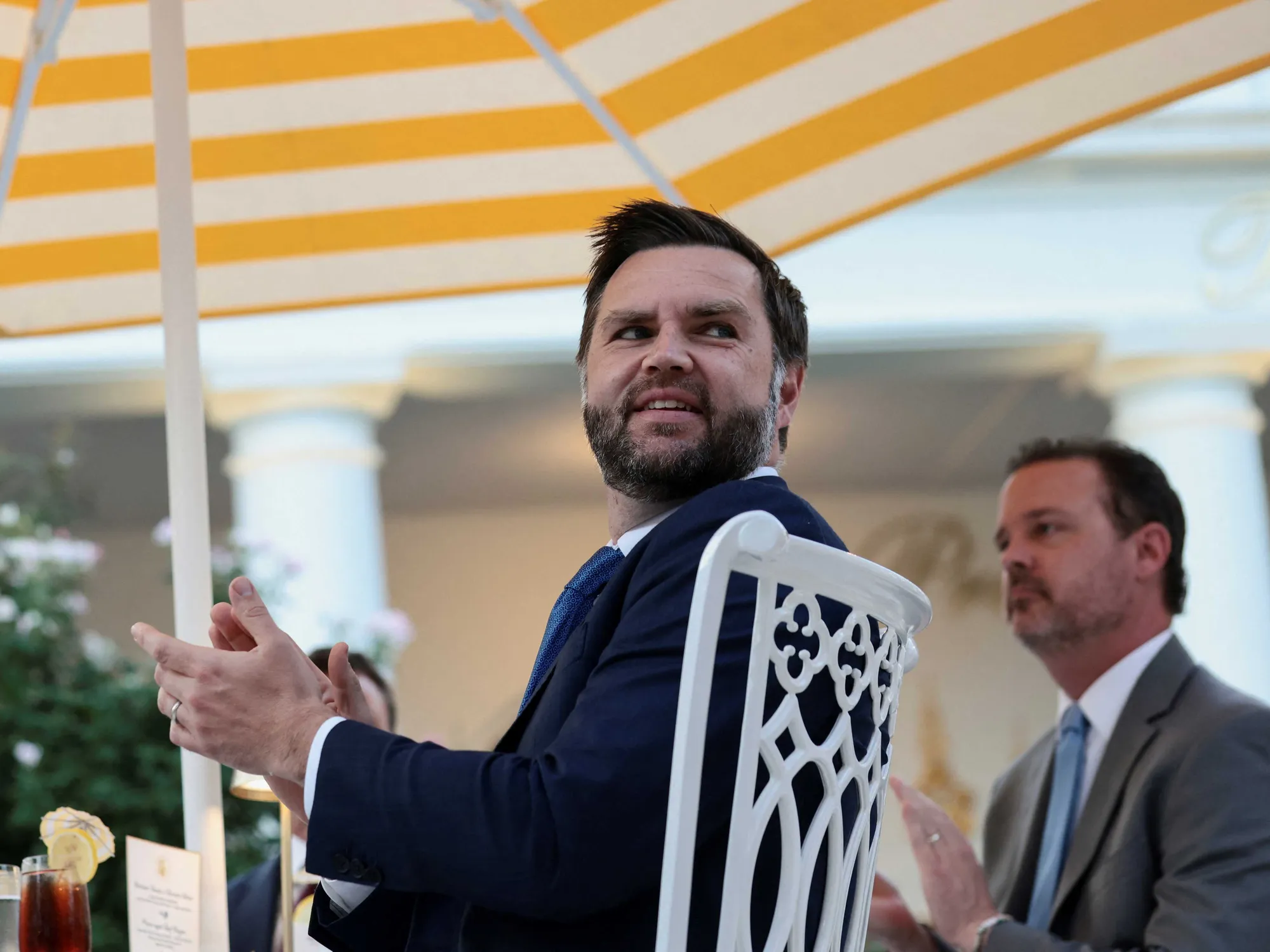
Vice President JD Vance, in a Monday interview with Christian podcaster Bryce Crawford, theorized that there is "some really, really weird spiritual dark energy" surrounding the use of Artificial Intelligence. In the same conversation, Vance said he was unsure whether humanity is living in the "end times," but noted there are things "about the world" that would leave him "not shocked if the Antichrist was walking among us."
The interview came as Vance continues to promote his memoir, "Communion: Finding My Way Back to Faith," which was published in June. Vance is already a bestselling author, having written the 2016 memoir "Hillbilly Elegy," which chronicled his Appalachian upbringing and was adapted into a 2020 Netflix film.
Speaking with Crawford, Vance discussed his belief in "otherworldly" forces and referenced a "burial ceremony" that was held for a retired AI model. "That makes me very uncomfortable," he admitted. He also addressed the practice of people using AI for marital advice, which he described as "kind of Satanic."
The remarks add to a pattern of public religious commentary by the Vice President. This past April, Vance publicly criticized Pope Leo XIV after the pontiff condemned U.S. military involvement in the war in Iran. The Pope had stated that God is never on the side of those who use the sword or drop bombs, and called the violence in Iran inhuman.
Vance, who was raised in a Protestant household, went through a period of atheism as an adult, and later converted to Catholicism in 2019. He argued at a Turning Point USA event in Georgia that the Pope was wrong, and that God had been on the side of Allied forces during World War II when they stopped the Nazi atrocities. He also said the Pope needed to be very careful when discussing theology to ensure that his words are anchored in truth.
In the Monday podcast interview, Vance framed his approach to governing in explicitly providential terms. He said Christians are commanded to try to make the world the way God wants it to be, and that he is concentrating on doing "as much of God's work as possible." When the discussion turned to whether his efforts on behalf of God could actually contribute to the apocalypse, his basic answer was that if what he is doing on behalf of God leads to end times, that is acceptable, because those end times will eventually happen anyway.
The comments come in a country where the separation of church and state remains the law of the land. Earlier this summer, Vance made a related argument: that Satan wants Christians to believe religion should be kept separate from politics. That claim aligns with his declaration that America is "a Christian nation," a characterization at odds with the country's multifaith, pluralistic, multireligious composition.
The podcast remarks also carry implications for how a sitting Vice President interprets real-world technological and political phenomena. By invoking the devil and supernatural causation so freely and often, Vance appears willing to treat supernatural forces as a serious interpretive framework for contemporary events. He interprets political reality through an apocalyptic religious lens in which Satan, the Antichrist, divine purpose, and paranormal forces of "dark energy" are treated as plausible forces operating in modern American life.
More consequentially, he explicitly connects that worldview to governing, arguing for a "more fully Christian politics" while describing his political mission as doing "God's will." Within such a framework, a wide range of actions could be justified as something God would want.
The original commentary, published by Raw Story, was written by Ray Richmond, a longtime journalist and author and an adjunct professor at Chapman University in Orange, California. Richmond argues that when a politician invokes God frequently in public declarations, it often functions as a substitute for the pronouns "me" or "I," and can serve as a means of exerting control over people, particularly the devout. He contends that the Vice President, who is a heartbeat away from the presidency, is publicly discussing his exercise of worldly responsibility within an apocalyptic theological framework — one in which, Richmond writes, decisions up to and including the use of nuclear weapons could be framed as confirming an "end times" prediction.
Richmond also notes that Vance has defended white supremacists and white nationalists despite his own family circumstances, while claiming a position of superior godliness. In Richmond's assessment, figures of this type use religion as a means to control and dominate rather than as a matter of character.
The interview underscores the degree to which apocalyptic theology has entered the Vice President's public reasoning about technology, governance, and American national identity.
(Ray Richmond is a longtime journalist/author and an adjunct professor at Chapman University in Orange, CA.)
