20 Japanese Students Complete Intensive Comics and Webtoon Program at Sejong University
Key Takeaways
- •Sejong University ran an intensive comics and webtoons program for 20 Japanese university students on its northeastern Seoul campus.
- •The course was tied to the 2026 Korea-Japan Joint Higher Education Student Exchange Program after the university was selected by Korea’s National Institute for International Education in February.
- •Participants learned the full webtoon workflow, from original IP planning and character design to storyboarding and manuscript production.
- •The program included a lecture by webtoon artist Choi Ji-su, a visit to AI-powered production company Toonsquare and a tour of the university’s Motion Capture Studio.
- •Students presented their finished works at a showcase on Aug. 21, where outstanding projects were recognized with awards.
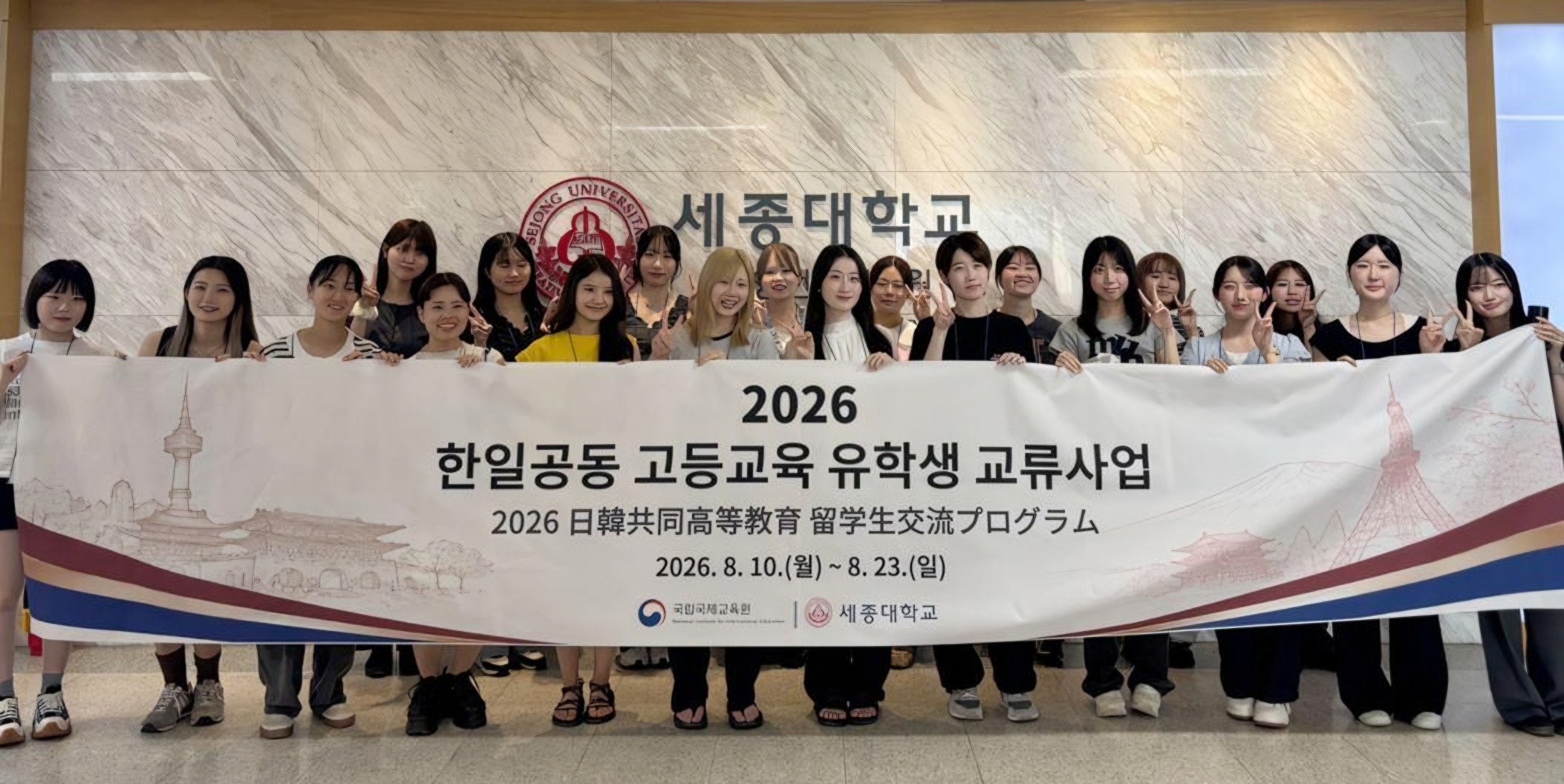
Part of Korea-Japan student exchange initiative
Sejong University hosted 20 Japanese university students for an intensive program centered on comics and webtoons — a field in which the institution specializes — from Aug. 10 to 23, the university announced Tuesday. The course took place on the university's campus in northeastern Seoul.
The short-term undergraduate course followed the National Institute for International Education's selection of Sejong University in February as a participating institution in the 2026 Korea-Japan Joint Higher Education Student Exchange Program. The institute, an agency under Korea's Ministry of Education, administers the country's government-backed international education and scholarship programs, and the joint scheme with Japan is one strand of state-supported educational exchange between the two countries, which marked 60 years of normalized diplomatic relations in 2025.
The Japanese students received hands-on training built on the curriculum of the university's Department of Comics and Animation Technology. Over the two weeks, they worked through the entire webtoon production process — from webtoon intellectual property (IP) development and character design to storytelling, direction, storyboarding and manuscript production.
According to the university, the students planned their own webtoon IPs and produced storyboards and manuscripts through five core classes and accompanying hands-on sessions. Rather than simply experiencing Korean webtoon content, the program was designed to help students develop their own ideas into original IPs and carry them through to finished works.
The program also featured industry-linked activities. Students gained first-hand exposure to professional creators and the content industry through a special lecture by Choi Ji-su, a webtoon artist who works with Naver Webtoon and Line Manga; a field visit to Toonsquare, an AI-powered webtoon production company; and a tour of the university's Motion Capture Studio. Through these activities, the students developed a broad understanding of the production process and the latest technological trends in Korea's webtoon industry, the university said.
The industry exposure carries weight beyond the classroom. Webtoons — vertically scrolled, smartphone-optimized digital comics — emerged in Korea in the early 2000s through portal services such as Daum and Naver, and the domestic industry has grown into a market whose annual sales surpassed 1 trillion won in recent years, according to the Korea Creative Content Agency. Webtoon IP has become a source of adaptations for Korean films and dramas, and Korean platforms have built readerships abroad, including in Japan — a reach reflected in Choi Ji-su's work across both Naver Webtoon and Line Manga. For students from Japan, home to a manga industry rooted in weekly print magazines, the program offered a close look at a digital-first, platform-driven production model and its extension into AI-assisted tools such as those in use at Toonsquare.
"We designed the curriculum so that students could experience the entire process of developing their own ideas into webtoon IPs, rather than simply being exposed to Korean webtoons," said Lee Soon-ki, a professor of comics and animation technology who oversaw the program.
"We hope the program will provide an opportunity for young creators from Korea and Japan to better understand each other's content and industries, drawing on Sejong University's accumulated expertise in comics and webtoon education," he added.
Alongside the major-specific coursework, the program offered special Korean-language sessions that used Korean webtoon and animation content as teaching material. Participants learned Korean through dialogue and expressions of emotion featured in the works, and broadened their understanding of Korean society and culture through a range of cultural experiences — including visits to Lotte World Aquarium, Hangang Park and Myeongdong Nanta Theater, as well as a Demilitarized Zone (DMZ) tour in Paju.
The program's educational outcomes were highlighted at a showcase event held on Aug. 21. The Japanese students presented the webtoon works they had planned and produced over the two-week program before a panel composed of faculty members and industry professionals, with outstanding works recognized with awards.
"This program is an example of international education cooperation that combines the Korea-Japan higher education exchange initiative led by the National Institute for International Education with Sejong University's strengths in K-content education," said Lee Chung-hoon, head of external affairs at the university.
"We will continue to expand exchanges with Japanese universities beyond student exchanges alone and develop substantive partnerships that connect academic education with industry," he added.
Source: The Korea Times

