Japan's Long Road Back: Zero Rates, a Weaker Yen, and the Hormuz Shock
Key Takeaways
- •Japan's central bank ended a 25-year zero and negative interest rate policy in March 2024, with rates now at 1%, the highest level since 1995.
- •Prime Minister Takaichi Sanae's Liberal Democratic Party won a historic two-thirds supermajority in February, enabling her to pursue a statist agenda of fiscal expansion, industrial rebuilding, and expanded defense capabilities.
- •Real wages in Japan fell 1.3% in 2025, marking a fourth consecutive year of decline, with temporary positive figures driven largely by government energy subsidies suppressing headline inflation.
- •The yen has depreciated to a 40-year low against the dollar while long-term Japanese government bond yields have climbed to 2.81%, producing what analysts describe as a 'Honebuto shock.'
- •China imposed comprehensive export controls on dual-use goods, rare earth minerals, and critical materials after Takaichi described a potential Chinese attack on or blockade of Taiwan as a survival-threatening situation for Japan.
Japan's Long Road Back: Zero Rates, a Weaker Yen, and the Hormuz Shock
By Jacob Shapiro
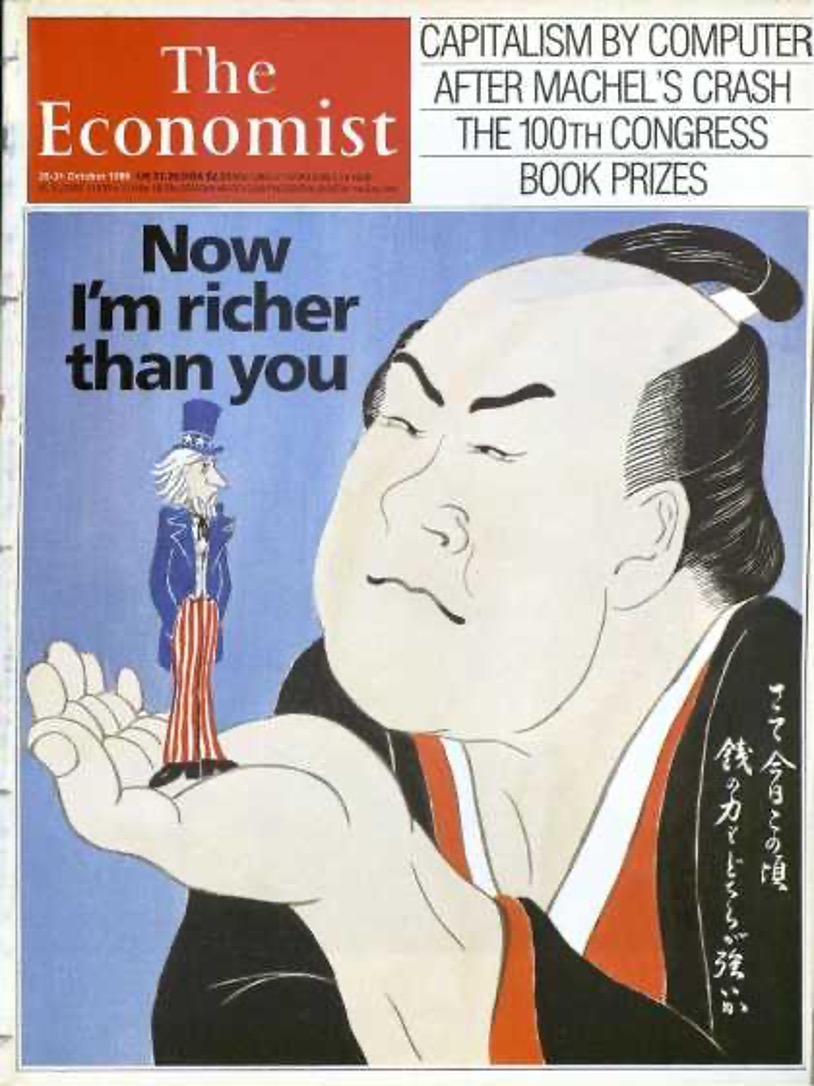
In February 1999, the Bank of Japan (BOJ) took what was then considered an unthinkable step: in response to stagnating growth and persistent deflation, it cut interest rates to zero. The move marked a dramatic reversal for a country that during the 1980s had appeared to be on the verge of global economic supremacy. By 1989, however, what many regarded as an inevitable ascent was revealed to be a bubble, and the Nikkei collapsed by more than 50%.
The index required 34 years to return to its previous peak. While the 1990s are now remembered as a lost decade, then–Bank of Japan Governor Masaru Hayami insisted at the time that the Zero Interest Rate Policy was a temporary measure that would remain in place “until deflationary concerns [were] dispelled.”
In practice, “temporary” stretched to 25 years. Rates stayed near zero—and occasionally turned negative—until March 2024, when, buoyed by rising wages and higher prices, the BOJ raised short-term rates to a range of 0.0–0.1%. Rates now stand at 1%, the highest level since 1995. Japan's experiment with zero and negative rates was the longest sustained period of unconventional monetary policy any major economy has undertaken, and it became a reference point for other central banks—most notably the European Central Bank and the Swiss National Bank—that later adopted sub-zero rates of their own.
Japan's prolonged unorthodox monetary policy produced several unusual consequences. Japan became the world's largest creditor nation, a position it held for 34 years. The era also gave rise to the so-called yen carry trade, in which investors borrowed yen at zero or negative rates to invest in currencies offering higher yields. Estimates of the carry trade's size vary widely, ranging from $350 billion to $14 trillion. Because yen-funded positions were embedded across emerging-market currencies, equities, and high-yield debt, any sharp yen appreciation risked forced unwinds that could transmit volatility across global asset classes—a dynamic glimpsed during the August 2024 sell-off that followed the BOJ's rate hike. On the opposite side of that trade sat investors who had long bet that Japan would eventually be forced to raise rates—a wager commonly dubbed the “widowmaker.”
Japan's Geopolitical Position
Japan has long presented a geopolitical paradox. The country imports roughly 60% of its food and approximately 90% of its energy. It is also one of the world's oldest nations, with nearly 30% of its population over the age of 65. Nevertheless, Japan boasts the fourth-largest GDP globally. Investors who assumed that Japan's debt-to-GDP ratio exceeding 200%—the highest among major developed economies—would compel the BOJ to raise rates prematurely joined a long line of analysts, investors, and economists who have repeatedly misjudged the country.
Japan's history is marked by internal divisions and periods of instability, punctuated by brief but intense eras of unity, national pride, and outsized power projection. There are emerging indications that Japan may be entering another such transformative period. On February 8, Japan held a general election in which Prime Minister Takaichi Sanae and her Liberal Democratic Party (LDP) became the first party to secure a two-thirds majority in the House of Representatives—a supermajority sufficient to bypass the upper House of Councillors. The outcome surprised even the LDP, which ran out of candidates for the number of seats it won and was compelled to cede 14 seats to rival parties.
Takaichi's stated objective is not to make marginal adjustments but to rebuild the Japanese state for what she views as a dangerous century. She positions herself as a transformative leader seeking to restore national strength in a world where, in her assessment, no country other than Japan itself will come to its aid. She regards Japan as strategically vulnerable, and her prescription is unapologetically statist: deploy public spending to draw private capital off the sidelines, rebuild critical industries, expand defense capabilities, and prioritize economic security over fiscal orthodoxy. That posture aligns with a broader regional trend: South Korea, Australia, and Taiwan have each moved to deepen industrial-policy frameworks and defense spending in response to an intensifying U.S.–China rivalry.
In June, the Takaichi government unveiled its Basic Policy on Economic and Fiscal Management and Reform (known as the honebuto), articulating a shift away from conventional austerity toward a “responsible proactive fiscal policy.” Two weeks ago, Japanese Finance Minister Satsuki Katayama stated she would press the Government Pension Investment Fund—the world's largest pension fund—to increase its allocation to domestic financial assets.
Inflation Complicates the Agenda
In a twist of fate, the very inflation that successive Japanese governments and the central bank pursued for decades is now undermining Takaichi's plans. Although nominal wages have been rising, real wages in Japan fell 1.3% in 2025, marking a fourth consecutive year of decline. They were down in every month of the prior year.
There was a brief window in which a turnaround appeared underway. By May, total cash earnings were up 3.2% year-on-year, and real wages had risen for a fifth straight month. However, that improvement is largely engineered, as it depends on headline inflation cooling to approximately 1.4%—a figure the government has been suppressing through energy subsidies even as producer prices run at 7.1%.
Once the subsidy is stripped out and rising social-insurance premiums along with a new childcare levy are factored in, Japanese households continue to lose ground. The positive real-wage figure is technically accurate on paper but conceals a cost shock that intensifies with every day the status of the Strait of Hormuz remains uncertain. Roughly 20% of global oil consumption transits Hormuz daily, making any disruption there an acute threat to a country dependent on imports for approximately 90% of its energy.
The Policy Trilemma
In February, Jacob Shapiro wrote that Takaichi confronted a policy trilemma. She seeks cheap government borrowing, a stable yen, and higher growth-and-defense spending, but from a policy standpoint she can only achieve two of the three objectives. His base case was that she would accept a weaker yen to preserve low borrowing costs, with success contingent on whether wages could outpace imported inflation. He cautioned at the time that “Japan is one geopolitical shock—a US–Iran conflict, for example—away from inflation looking ugly again.”
That assessment proved prescient. The yen has fallen to a 40-year low against the dollar. Long-term Japanese government bond yields have climbed as high as 2.81%—described as a “Honebuto shock” and a direct reaction to the “responsible proactivity” Takaichi has championed.
Takaichi initially enjoyed approval ratings above 60%, but recent polling indicates support for her government has dropped below 50%. The inability to resolve the inflation issue was ultimately what doomed her predecessor, Shigeru Ishiba, and now appears to be stalling her own progress.
Compounding the difficulty is a diplomatic dispute with China stemming from Takaichi's November remark that a Chinese attack on or blockade of Taiwan would constitute a “survival-threatening situation” for Japan. China retaliated by imposing comprehensive export controls on dual-use goods, rare earth minerals, and critical materials. China is Japan's largest trading partner and is exerting its economic leverage at the most challenging moment for Takaichi's agenda.
The Hormuz Connection
Japan spent 34 years climbing back to a stock market level it first reached in 1989 and 25 years attempting to extricate itself from a zero-rate policy it insisted was temporary—only to arrive at the exit in the worst possible condition: a currency at a 40-year low, real wages that appear positive only if the underlying arithmetic is ignored, and a prime minister whose approval is eroding.
The straightforward interpretation is that Takaichi is overwhelmed and that the widowmaker trade is finally paying off. However, that conclusion warrants caution. The larger story is that the shock now disrupting Japan's reinvention has almost nothing to do with Japan itself—it originates from a war in the Persian Gulf. What happens in Hormuz does not stay in Hormuz. Japan's current difficulties represent a second-order Hormuz disruption, which raises a broader question: What will the third- and fourth-order disruptions look like, and will they be recognized before they arrive?
Chart of the Week
According to Morgan Stanley, half of Russia's oil refining capacity is offline as a result of Ukrainian attacks.
Blind Spot: Commerzbank
For decades, Commerzbank was considered untouchable. Germany bailed out the bank in 2008, took an ownership stake, and defended it as a strategic asset. This week, Berlin ceased its opposition. Chancellor Friedrich Merz, who continues to characterize UniCredit's pursuit as “hostile,” conceded the pivotal point: “We are not preventing this merger.” Italy's UniCredit is now likely to acquire Germany's second-largest bank, and the German government has shifted from blocking the transaction to negotiating the terms of its own withdrawal.
Cross-border bank consolidation has been a stated objective of European banking union since the eurozone debt crisis, but national governments have repeatedly blocked deals that crossed borders. If UniCredit succeeds, it would represent one of the first major tests of whether Europe's political barriers to pan-EU banking mergers are finally eroding.
The key questions to watch are whether other institutions will follow UniCredit's lead in cross-border consolidation or whether this remains an isolated case, and whether UniCredit ultimately grows Commerzbank or quietly reduces its footprint.
Bonus: China vs. U.S. AI
On July 16, the Chinese AI lab Moonshot released Kimi K3, a 2.8-trillion-parameter open-weight model—the largest of its kind to date. Kimi K3 reportedly matches Claude Opus 4.8 on coding and reasoning benchmarks, surpasses Anthropic's Fable 5, and operates at approximately 40% lower cost per token.
This development aligns with a previously articulated argument: Washington can disable an American AI model, but it cannot shut down the open-weight frontier, because capability no longer resides within any single system. Unlike API-controlled models, open-weight releases can be downloaded, modified, and self-hosted, making any subsequent attempt to restrict access effectively unenforceable. Six weeks after the U.S. Commerce Department moved to restrict access to Mythos and Fable, China's AI ecosystem responded by matching the American frontier and releasing the model for free—demonstrating the limited durability of that regulatory off switch.
*Jacob Shapiro is an independent geopolitical analyst who advises investment firms and corporate leadership teams on how a multipolar world is reshaping markets and strategy. He publishes the free newsletter “The World Isn't Ending” through Mauldin Economics and hosts The Jacob Shapiro Podcast. This article originally appeared at GoldSeek.

