Japan, South Korea and the U.S. Forge a New Nuclear Alliance
Key Takeaways
- •Japan reversed its post-Fukushima plan to decommission its nuclear sector and, alongside South Korea, has set ambitious targets for rapid long-term nuclear growth.
- •The United States, Japan, and South Korea signed a cooperation agreement in July for deploying small modular reactors, covering supply chains, licensing, and private investment.
- •Surging power demand from AI data centers and fossil fuel supply disruptions are key drivers behind nuclear's renewed appeal as a round-the-clock, emissions-free baseload source.
- •Washington wants Japan and South Korea to become the region's default reactor suppliers instead of China or Russia, which currently dominate nuclear exports to developing countries.
- •Whoever supplies the region's reactors gains long-term influence over fuel supply chains, maintenance, and training, raising the geopolitical stakes of nuclear export competition.
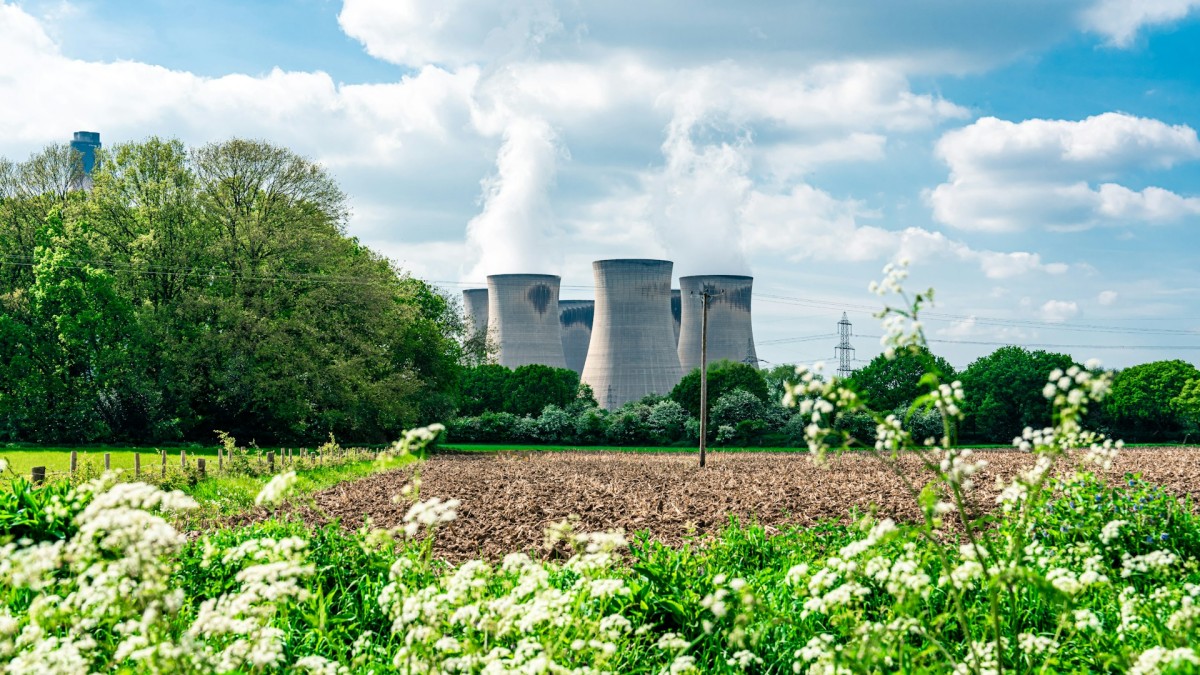
Northeast Asia is undergoing a rapid nuclear energy revival as Japan and South Korea move to prioritize the baseload clean energy source within their energy security strategies. The two major economies are not only ramping up nuclear expansion, but also reshaping the geopolitics of how and with whom they plan these expansions. As the artificial intelligence boom drives an all-of-the-above approach to energy expansion and the war in Iran accelerates a shift away from reliance on international fossil fuel supply chains, a new nuclear energy alliance is emerging between Japan, South Korea, and the United States.
After the 2011 nuclear disaster in Fukushima, Japan swore off nuclear energy entirely, planning to swiftly decommission its entire sector. But over the past decade and a half, the relative merits of nuclear energy for the country's energy security, independence, and climate goals have pushed the technology back into the spotlight. South Korea's nuclear industry, meanwhile, has seen steady growth for years, continuing to develop even as successive governments with diverging views on nuclear power have come and gone. Both nations have now set extremely ambitious targets to continue growing their respective sectors at a rapid pace over the coming decades.
The stakes of this competition are considerable. South Korea has already proven itself as a nuclear exporter, having built the Barakah nuclear power plant in the United Arab Emirates, while Russia's state-owned Rosatom has for years been among the world's most active reactor vendors abroad, and China has been rapidly expanding its nuclear export ambitions. Whoever supplies the region's reactors gains long-term influence over fuel supply chains, maintenance, and training. "Together, the two countries are reshaping the nuclear politics of Northeast Asia and doing so increasingly in concert with Washington, as energy policy folds into the broader architecture of trilateral security cooperation," The Diplomat recently reported.
The alliance offers strategic economic and political benefits for all involved, with a particularly strong geopolitical incentive for the United States. "With Russia and China as the only realistic nuclear vendors for many developing countries, Washington has a clear interest in ensuring that Japan and South Korea enter the race. It would benefit Washington if its two Northeast Asian allies, rather than Beijing or Moscow, become the default suppliers of reactor technology to the rest of the region."
This logic also extends to the national security concerns of Japanese and Korean leadership. It is in both nations' best interest to limit China's reach and influence in their energy markets. One way to do that is to ensure that these markets' nuclear reactors are not made in China — or Russia, for that matter.
Nuclear energy is experiencing a renaissance across the globe, as energy demand from AI hyperscalers, continued fossil fuel supply chain disruptions from the wars in Russia and Iran, and climate concerns highlight its many benefits. Nuclear power is a proven technology capable of producing emissions-free energy around the clock, without any need to build energy storage capacity — a necessity where utility-scale solar and wind power are concerned. Data centers being built to serve AI workloads require large, steady supplies of firm power, which is precisely the role nuclear plants have traditionally played in electricity grids.
"With energy security now ranking alongside climate commitments as a top policy priority, nuclear power appears positioned to play a central role in the global electricity landscape through mid-century," the Foreign Policy Journal reported earlier this year. At the same time, this development is also giving China and Russia new opportunities to expand their influence over international critical infrastructure.
While traditional nuclear reactors continue to dominate new capacity additions, there is growing interest in next-generation nuclear technologies, including nuclear fusion and small modular reactors (SMRs). SMRs are designed to be built in factories and assembled on site, with the aim of reducing the cost overruns and construction delays that have plagued some large reactor projects. The United States, Japan, and South Korea signed a cooperation agreement for the deployment of SMRs in July of this year, solidifying the new nuclear triumvirate. According to the U.S. Department of State, the memorandum "outlines opportunities for our three countries, which have complementary advantages in the civil nuclear field, to encourage mutually beneficial cooperation among their respective nuclear industries."
"This framework aims to foster fleet deployment models that de-risk project development, achieve economies of scale, catalyse private investment, streamline licensing processes, and optimise supply chains," the official statement continued. "A coordinated trilateral approach positions American, Japanese, and Korean firms to provide partners in the region with more competitive alternatives to meet their growing energy demands and to uphold the highest standards of nuclear safety, security, and non-proliferation as new reactor technology increasingly comes online."
By Haley Zaremba for Oilprice.com

