Twelve January 6 Defendants Sue Federal Government for $1 Million Each, Alleging Capitol Breach Was a Government 'Trap'
Key Takeaways
- •Twelve former January 6 defendants are suing the federal government for $12 million in total, claiming the Capitol riot was a government-engineered operation.
- •The lawsuit alleges that the Capitol breach was orchestrated months in advance by conspirators to manipulate peaceful protesters into entering the building.
- •All twelve plaintiffs had their previous January 6 criminal cases resolved through pardons, acquittals, or dismissals.
- •The civil complaint directly challenges official accounts by asserting that no police officers died from injuries sustained during the riot.
- •The suit was filed just days after U.S. District Judge Amit Mehta reluctantly dismissed the final remaining January 6 criminal case at the Justice Department's urging.
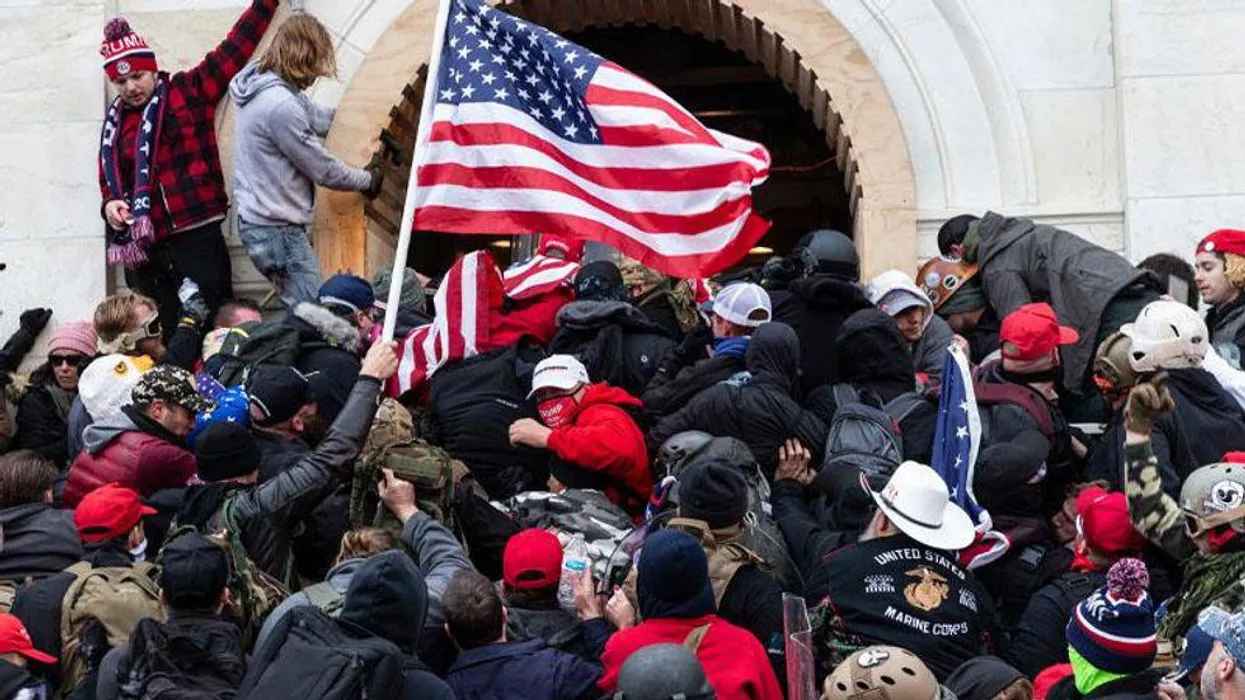
Twelve January 6 defendants filed a lawsuit against the federal government on Friday, seeking $1 million each in damages and alleging that the Capitol riot was a government-engineered "trap" designed to manufacture the "appearance of a riot." The civil action opens a new legal front in the January 6 saga, shifting from criminal prosecutions — more than 1,500 of which were brought by the Justice Department over the past four years — to affirmative claims for monetary damages against the federal government itself.
The complaint was filed in federal court in Washington under a statute that permits citizens to sue the government for wrongful acts committed by its employees. All 12 plaintiffs had their January 6-related prosecutions resolved through pardons, acquittals, or dismissals. The suit was filed by the Ticktin Law Group. Such claims typically face steep legal hurdles under the doctrine of sovereign immunity, which shields the federal government from most lawsuits unless it has explicitly consented to be sued.
The filing arrived three days after U.S. District Judge Amit Mehta dismissed the final remaining January 6 criminal case at the urging of President Donald Trump's Justice Department. Mehta stated he did so "reluctantly." That same case had previously resulted in one of the 12 plaintiffs spending more than four years behind bars.
Allegations of a Premeditated Operation
The lawsuit alleges that the Capitol breach was orchestrated months in advance. According to the complaint, "Long before January 6th, in fact, going back at least to September of 2020," conspirators held Zoom meetings and plotted "to turn a peaceful protest of the conservative J6ers...into the appearance of a riot."
The complaint further claims that "those seditionists...actually plotted to break some of the windows of the Capitol Building so that their compatriots and foreign participants would enter the Capitol Building to unlock and open the doors of the Capitol so that the anticipated protestors outside would be herded into the Capitol Building."
The filing identifies a specific but never-publicly-named window-breaker as a key instigator. "Another never-identified instigator, wearing a red 'MAGA' cap with a price tag still affixed, broke and smashed the first window of the Capitol on the West side, to allow infiltrators to climb through the windows," the complaint states.
"The plan was a trap to identify and destroy the tip of the spear of opposition to the election rigging," the filing asserts. "The psy-op was genius."
Pardons and the Final Case Dismissal
The lawsuit repeatedly references the pardons Trump issued to January 6 defendants upon taking office in January 2025. On his first day back in the White House, Trump granted clemency to approximately 1,500 individuals charged or convicted in connection with the Capitol breach, issuing full pardons to most and commuting the sentences of others, including leaders of the Oath Keepers and Proud Boys convicted of seditious conspiracy.
One of the 12 plaintiffs, Oath Keepers member Roberto Minuta, was convicted of seditious conspiracy and sentenced to 54 months in prison by Judge Mehta. Trump commuted Minuta's sentence on January 20, 2025. Minuta's convictions were subsequently vacated when Mehta dismissed the final January 6 case on Tuesday at the Justice Department's request.
In his dismissal order, Mehta expressed sharp disagreement with the outcome.
"Today's epilogue diminishes the gravity of that day, denigrates the work of the prosecutors and law enforcement officers who secured these convictions, and excuses criminal acts that caused a centuries-long pillar of our democracy — the peaceful transfer of presidential power — to buckle," Mehta wrote.
Disputing the Government's Account of Officer Injuries
The complaint also directly challenges the government's official account of law enforcement injuries sustained on January 6.
"The most serious injury to any officer was a broken finger. The most common injury was 'pain.' No officers died as a result of injuries from J6," the filing states. Capitol Police Officer Brian Sicknick died on January 7, 2021, of natural causes, according to the medical examiner's office.
Mehta concluded his dismissal order by writing, "That book is now closed." Three days later, the plaintiffs opened a new legal chapter with their civil suit.
