Former Friend Says Kimberly Guilfoyle's Public Downfall Is a Tragic Warning
Key Takeaways
- •Jami Floyd, who befriended Kimberly Guilfoyle in the early 1990s when both were rising lawyers in San Francisco, has written an opinion piece for The Daily Beast describing Guilfoyle's personal and political transformation.
- •Guilfoyle worked as a lingerie model to fund her education, championed her then-husband Gavin Newsom's political rise, and gained national attention after winning a prominent legal case before relocating to New York and divorcing Newsom.
- •Floyd attributes Guilfoyle's shift to her tenure at Fox News, where she co-hosted The Five before leaving in 2018 to serve as a senior adviser on Trump's 2020 reelection campaign, a path that led to her nomination as U.S. ambassador to Greece.
- •Floyd explains her empathy for Guilfoyle by pointing to the loss of her mother to leukemia in childhood and the apparent internal struggle she faced between power and morality on her path to success.
- •Floyd views Guilfoyle's story as a tragic warning about how cable-news personalities construct public personas that can carry them into political power at considerable cost.
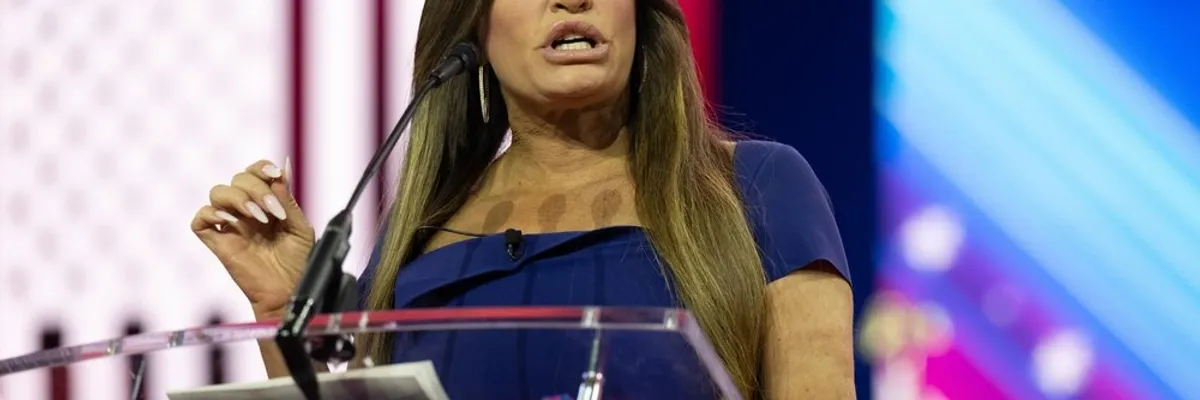
Jami Floyd, a former friend and colleague of Kimberly Guilfoyle, says the onetime U.S. ambassador to Greece began her career as an ambitious woman with moral intent — and that something changed drastically somewhere between her divorce from California Governor Gavin Newsom and her years at Fox News. Floyd details Guilfoyle's transformation in an opinion piece for The Daily Beast.
The two women met in the early 1990s, when both were up-and-coming lawyers in the San Francisco area. Floyd writes that she initially admired Guilfoyle's hustle. Guilfoyle worked as a lingerie model to put herself through school and was a staunch supporter of her then-husband Newsom — a rising San Francisco politician who would go on to serve as the city's mayor and, later, as California's governor — at one point even calling herself his “sugar mama.” After winning a legal case that drew national media attention, Floyd says, Guilfoyle became a hot commodity who was widely respected — an ego boost that may have fueled her continued rise, whatever the cost.
At some point, Guilfoyle relocated to New York, leaving the West Coast, and Newsom, behind. It was there that she and Floyd reconnected, often sharing red carpets and seats at the table at political events and in the newsroom. When Guilfoyle confided to Floyd that she planned to divorce Newsom, Floyd was taken aback and warned her that Newsom was, in a sense, a good investment, given his eventual successes.
But Guilfoyle appeared to have other ideas, which Floyd attributes to her time at Fox News amid the network's ever-escalating support for now-President Trump and his allies. Guilfoyle went on to marry businessman Eric Villency and have a child. She and Floyd both worked with Fox in some capacity and remained friendly to a degree. Guilfoyle's own Fox tenure included a long run as a co-host of the roundtable program The Five, and she left the network in 2018 for a senior adviser role with Trump's 2020 reelection campaign — the president who would later nominate her as U.S. ambassador to Greece. But as Guilfoyle's changing views opened distance between them, Floyd writes candidly about losing touch: “From a distance, I worried she was. Her face, her personality, her politics.”
Throughout the op-ed, Floyd explains why she holds more empathy for Guilfoyle than most former friends and colleagues do, despite what they regard as her obvious pivot — publicly and politically — for personal gain. One reason, Floyd writes, is that Guilfoyle lost her mother to leukemia as a child and grew up without a maternal figure to help guide her. Another is the internal battle Guilfoyle seemed to wage before her shift, when she appeared to face a choice between power and morality on her quest for success.
Floyd believes that, much like Guilfoyle's infamous teleprompter stumble at the 2020 Republican National Convention, what the public sees from Guilfoyle is a farce — one that Guilfoyle herself does not fully grasp, so caught up is she in her own bubble. And while many people relish Guilfoyle's failures, Floyd says she does not. Instead, she views the story as a tragic warning to anyone on a similar path. It is also, at a moment when cable-news personalities have repeatedly crossed into political power, a portrait of how public personas get built — and what they can cost.

