James Lavish: Bitcoin Price Target, $400K–$500K by Mid-2029
Key Takeaways
- •Bitcoin strategist James Lavish maintains that the market bottom is already in place even after rate-hike expectations rose and technology stocks wobbled.
- •Lavish maps Bitcoin's historical highs to three overlapping cycles — the halving, the four-year U.S. election calendar, and the broader economic cycle — which in his framework converge on a market peak in mid-2029.
- •Based on the power-law model, a one-standard-deviation move above the mean would put Bitcoin at $400,000 to $500,000, and Lavish said he would be "absolutely shocked" if Bitcoin were not in the $200,000 to $300,000 range by mid-2029.
- •The interview identified near-term checkpoints including a near-certain December rate hike of possibly 50 basis points, a Federal Reserve balance sheet growing again, and $13 trillion in U.S. debt due to be refinanced.
- •The conversation also covered JPMorgan's assessment that Bitcoin outperforms stocks, bonds, and gold, as well as why Bitcoin and gold are struggling in the current cycle.
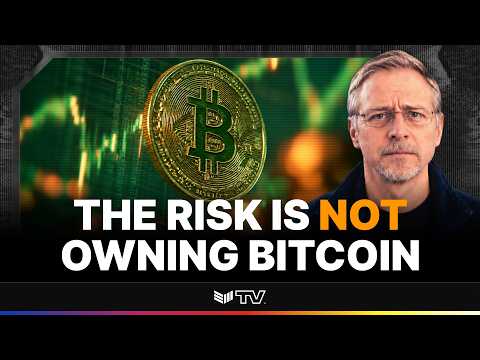
Bitcoin strategist James Lavish told BMTV last month that he believes the bottom is already in for Bitcoin, and he says that cycle call still holds even after rate-hike odds spiked and technology stocks wobbled.
In the interview, Lavish maps Bitcoin's historical highs to three overlapping rhythms: the halving cycle, the four-year U.S. election calendar, and the broader economic cycle. The halving — a scheduled protocol event that cuts the new supply of Bitcoin issued to miners roughly in half about every four years — serves as the fixed clock behind such frameworks, which is why analysts who use them line up price history against political and economic calendars. Within his framework, those cycles still converge on a market peak in mid-2029.
Drawing on Bitcoin's power law — a log-linear model often used to trace its long-term price trajectory — Lavish said a one-standard-deviation move above the mean, the statistical band one step above the model's long-term trend line, would be consistent with a $400,000 to $500,000 range. He added that he “would be absolutely shocked” if Bitcoin were not in the $200,000 to $300,000 range by mid-2029.
Short-term interest-rate jitters, in his view, are no reason to abandon that cycle work. Rate expectations carry weight in this framing because the episode dedicates a segment to Bitcoin's sensitivity to short-term interest rates, placing central bank decisions alongside the long-cycle outlook.
According to the episode's chapter list, the conversation covered fiscal dominance and the $2 trillion U.S. deficit; the Federal Reserve's balance sheet growing again; a hot CPI print and a near-certain December rate hike; Bitcoin's sensitivity to short-term interest rates; and the Fed's inability to print oil or fix home prices. Lavish also revisited the periods when the Fed "called uncle" in 2018 and 2022, discussed a December hike of possibly 50 basis points, and examined the Treasury's quasi-twist operation alongside the $13 trillion in debt due to be refinanced. Later segments addressed why Bitcoin and gold are struggling this cycle, JPMorgan's assessment that Bitcoin beats stocks, bonds, and gold, and the shift "from career risk to a risk not to have any," before returning to the cycle outlook pointing to a mid-2029 high. For readers weighing the call against current events, those segments outline the near-term checkpoints — the December rate decision, a Fed balance sheet growing again, and a large Treasury refinancing pipeline — that the discussion sets alongside the longer cycle view.
The full interview is available on BMTV: https://www.youtube.com/watch?v=wVb51WmQ2Os
This article was written by Patrick Green and first appeared on Bitcoin Magazine.
DISCLAIMER: The views and opinions expressed in this show are those of the participants and do not necessarily reflect the official policy or position of BTC Inc., Bitcoin Magazine, or any affiliated entities. This content is provided for informational and educational purposes only and should not be construed as investment, legal, tax, or accounting advice. Nothing contained in this show constitutes a solicitation, recommendation, endorsement, or offer to buy or sell any securities or financial instruments. Viewers should consult their own advisors before making financial or business decisions.

